
Why Email Marketing Delivers Best ROI
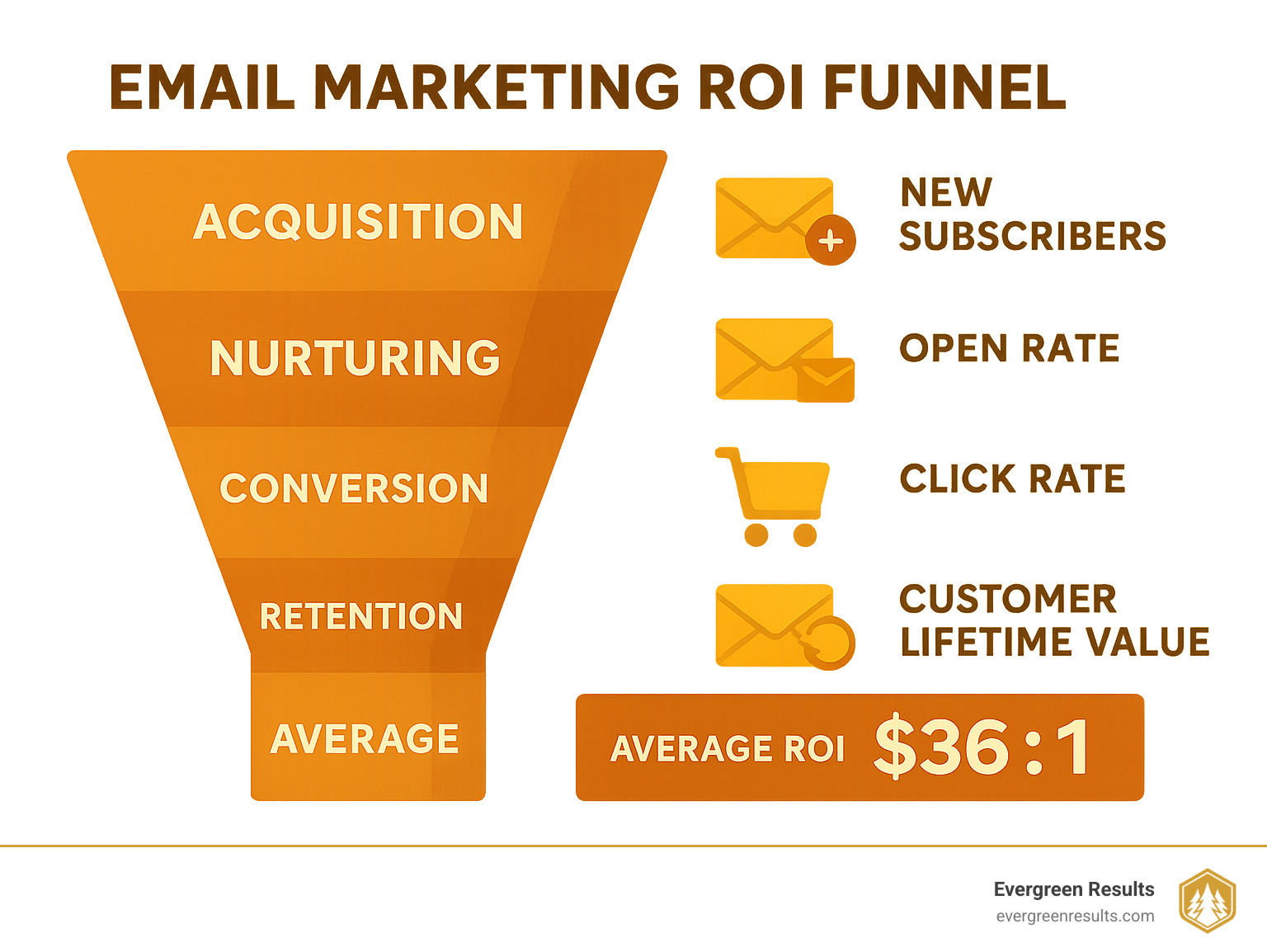
Email marketing is a direct digital marketing strategy that uses email to communicate with prospects and customers to build relationships, drive sales, and increase loyalty. It remains one of the most powerful tools in your marketing arsenal, delivering an average return of $36 for every $1 spent.
“Not doing any email marketing is like leaving money lying out on the table.”
What is email marketing?
* Definition: The practice of sending commercial messages via email to a group of people who have given permission to receive them
* Purpose: Build relationships, promote products/services, share content, and drive conversions
* Key components: Subscriber list, email service provider (ESP), compelling content, and strategic automation
* Average ROI: $36 for every $1 spent, making it one of the highest-ROI marketing channels
Despite the rise of social media and other digital channels, email marketing continues to thrive for good reason. With 4.48 billion global email users in 2024 (projected to reach 4.7 billion by 2026), email provides direct access to your audience without algorithm interference. Unlike social platforms where you’re on “rented land,” your email list is an owned asset that no platform changes can take away.
Email marketing works because it’s:
- Permission-based – Recipients have actively opted in
- Direct and personal – Lands directly in personal inboxes
- Highly measurable – Provides clear metrics on engagement
- Customizable – Can be segmented and personalized at scale
- Automated – Delivers timely messages based on behavior
Whether you’re looking to welcome new customers, announce products, recover abandoned carts, or nurture long-term relationships, a strategic email program helps you connect with your audience at every stage of their journey.
I’m Adam Bocik, founder of Evergreen Results, where I’ve helped dozens of active lifestyle brands implement email marketing strategies that drive sustainable growth and foster authentic connections with their audiences. Throughout this guide, I’ll share proven email marketing tactics specifically custom for brands like yours that want to build community while driving revenue.
Glossary for email marketing:
– email marketing customer journey
– email marketing for startups
Understanding Email Marketing in 2024
The email marketing landscape has evolved significantly, but its fundamental power remains unchanged. In 2024, email marketing continues to be the backbone of digital communication strategies for businesses of all sizes, especially those in the active lifestyle and food/beverage industries.
With worldwide email usage projected to reach 4.7 billion users by 2026, the channel’s reach is undeniable. What makes email particularly valuable is its role as the connective tissue between your website, social media, in-person events, and direct sales efforts. It’s the digital glue that holds your marketing ecosystem together.
What Is Email Marketing & How Does It Work?
At its core, email marketing is a permission-based conversation. It’s you speaking directly to people who’ve raised their hands and said, “Yes, I want to hear from you!” This opt-in nature is what makes email so powerful compared to interruptive advertising that fights for attention.
Think of it as a digital handshake that starts a relationship. Someone visits your website, enjoys your content, and decides they want more – so they share their email address. That simple exchange opens a direct channel to their inbox.
Behind the scenes, the process is straightforward but powerful. You collect email addresses through your website, in-store signups, or events. These addresses live in your Email Service Provider (ESP) platform – think Mailchimp, Klaviyo, or ConvertKit. When you craft a message and hit send, your ESP uses SMTP (Simple Mail Transfer Protocol) to deliver your message to recipients’ inboxes. Your ESP then tracks who opens, clicks, and engages with your content.
As we often tell our outdoor brand clients at Evergreen Results, “Your email list is like your campfire – it’s where your true community gathers to hear your best stories.”
Why Email Marketing Still Reigns in 2024
Despite predictions of its demise (which have been happening since social media emerged), email marketing continues to dominate digital channels for several compelling reasons:
Email is where decisions happen. While people browse social media for entertainment, they open their inbox with purpose. This is why email consistently delivers the highest conversion rates of any digital channel. For every $1 you invest, you can expect an average return of $36 – a number that makes other channels jealous.
Your list is truly yours. Unlike social platforms where algorithms control who sees your content, email gives you direct access to your audience. No middleman, no mysterious algorithm changes overnight.
It’s incredibly cost-effective. Once you’ve built your list, the cost of sending another email is negligible. This makes it perfect for brands of all sizes, from startup food companies to established outdoor gear manufacturers.
Email adapts and evolves. Email has existed for over 50 years, outlasting countless “email killers.” It continues to evolve with interactive elements, personalization, and mobile optimization.
When we work with hiking, climbing, and outdoor nutrition brands at Evergreen Results, we find email particularly effective for sharing sustainability stories and brand values that might get lost in the noise of social media. Your most engaged customers want to know the “why” behind your brand – email gives you the space to tell that story.
Main Email Types You Must Master
To maximize your email marketing success, you need to understand and implement five core email types, each serving a distinct purpose in your customer relationship:
Promotional emails announce your sales and special offers. They’re the revenue drivers that highlight your latest product drops or limited-time discounts. REI does this brilliantly with their member-exclusive events that create urgency without feeling pushy.
Informational emails build connection through valuable content. They might showcase how to use your products, share outdoor trip tips, or highlight environmental initiatives. Patagonia excels here, using email to rally their community around conservation causes.
Transactional emails confirm actions and provide updates. These include order confirmations, shipping notifications, and receipts. While utilitarian, they’re actually your most-opened emails and provide opportunities to improve the customer experience. Think of AllTrails’ helpful confirmations when you save a new hiking route.
Retention emails keep your relationship strong. They include re-engagement campaigns, loyalty rewards, and win-back offers for customers who haven’t purchased recently. Strava’s monthly activity recaps are a perfect example – they celebrate your achievements and keep you connected to the platform.
Lifecycle emails are triggered by specific customer actions or milestones. From welcome sequences for new subscribers to birthday discounts to anniversary celebrations, these automated touches make customers feel seen. Hydro Flask does this well with personalized birthday offers that feel genuinely thoughtful.
The magic happens when you blend these email types into a cohesive strategy that nurtures relationships while driving revenue. Like a well-planned hiking route, your email marketing should take subscribers on a journey that’s both enjoyable and purposeful.
Building & Growing an Engaged List
The heart of successful email marketing lies in cultivating a healthy, engaged subscriber list. Unlike social followers who might scroll past your content, email subscribers have actively raised their hands to hear from your brand.
Chris Dickerson, Director of Digital at Verde Brand Communications, puts it perfectly: “Don’t buy email lists. Build your list organically — however slowly — and you’ll reap the benefits in the long run.” This wisdom resonates especially true for active lifestyle and outdoor brands, where authenticity isn’t just preferred—it’s expected.
At Evergreen Results, we’ve watched this play out countless times with our clients. A focused list of 1,000 truly engaged subscribers who genuinely connect with your brand will consistently outperform a purchased list of 10,000 uninterested contacts. Quality trumps quantity every time when it comes to email marketing.
Creating Irresistible Lead Magnets & Forms
The secret to building a quality list isn’t complicated—offer something genuinely valuable in exchange for that email address. When someone gives you access to their inbox, they’re offering valuable real estate. Make it worth their while!
For active lifestyle and food/beverage brands, we’ve seen remarkable success with lead magnets that truly serve your audience. Trail guides or workout plans work beautifully for outdoor and fitness brands, while exclusive recipes or pairing guides perform wonderfully for food and beverage companies. Sustainability checklists and impact reports resonate with conscious consumers, while early product access appeals to enthusiasts and collectors. Community-oriented brands find great success with interactive challenges that include prizes.
Where you place your signup forms matters tremendously. Exit-intent popups can be surprisingly effective when someone is about to leave your site—Neil Patel found they increased conversions by 46%, and our outdoor industry clients have seen similar results. Sidebar opt-ins, post-checkout subscription options, event registrations, and even in-store QR codes all create natural moments to invite someone into your email community.
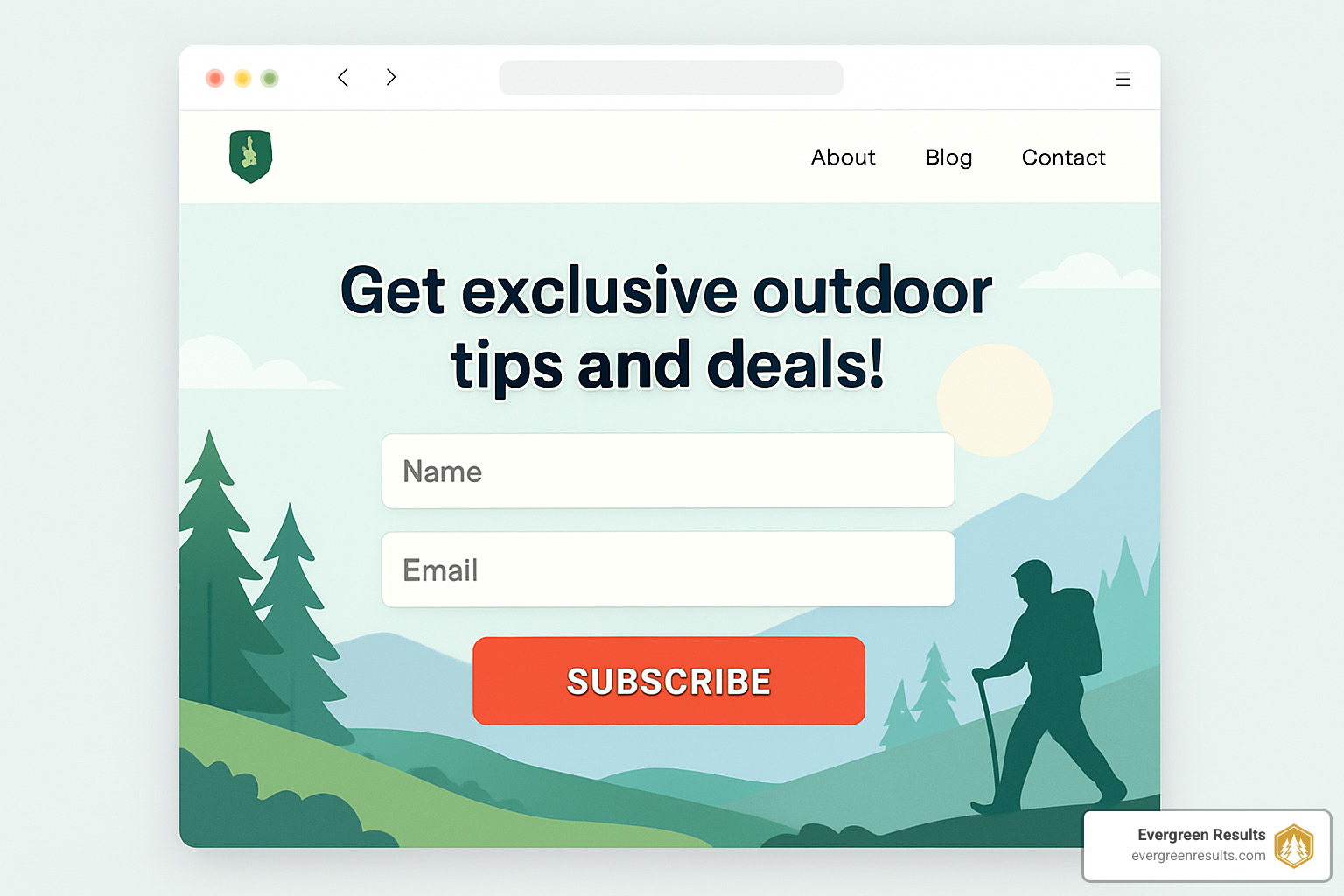
When designing your forms, simplicity wins. Stick to collecting just name and email initially—you can always gather more information later. Make your value proposition crystal clear (“Get three free trail guides for Colorado’s hidden gems”), maintain brand consistency in your design, include social proof when possible (“Join 5,000+ outdoor enthusiasts”), and ensure your call-to-action button stands out visually.
Always implement double opt-in (requiring email confirmation) to maintain list quality and comply with regulations like GDPR and CAN-SPAM. This extra step might slightly reduce initial signups but dramatically improves long-term engagement.
Email Marketing Across the Buyer’s Journey
Email marketing truly shines when it aligns with where someone stands in their relationship with your brand. The right message at the right time can transform casual browsers into loyal advocates.
During the Awareness Stage, focus on welcoming new subscribers with a series introducing your brand values and story. Educational content about your product category and thoughtful perspectives on industry trends help establish your expertise without pushing for a sale.
As subscribers enter the Consideration Stage, they’re evaluating options. This is when product comparisons, buying guides, and customer testimonials become powerful tools. Behind-the-scenes content showing your products in action helps people visualize themselves using what you offer.
The Decision Stage calls for more direct approaches—limited-time offers, free shipping codes, and thoughtfully curated product bundles can provide the final nudge toward purchase.
Your Post-Purchase communications are just as crucial. Order confirmations, tracking updates, usage tips, and care instructions all reinforce that they’ve made a smart choice. Well-timed cross-sell recommendations based on purchase history can naturally expand their relationship with your brand.
We saw this approach work beautifully with a Denver-based outdoor gear company client. Rather than immediately pitching products to new subscribers, we implemented a nurture sequence that gradually introduced their unique sustainability practices first. The result? A 32% higher conversion rate compared to immediate promotional messages. By respecting where customers were in their journey, we built trust before asking for the sale.
Crafting High-Converting Marketing Emails
The magic of email marketing happens when your message truly connects with readers. Even with a perfect subscriber list, lackluster content will fall flat and fail to drive results.
Nathan Barry, founder of ConvertKit, provocatively claims that “beautiful email templates are bad for business.” While this might be a bit extreme, there’s wisdom here—substance should always come before style. Your emails need clarity, relevance, and genuine value more than flashy design elements.
Email Subject Lines That Get Opened
Think of your subject line as the digital doorway to your message. It’s your first impression, and often determines whether your carefully crafted email ever sees the light of day.
Good subject lines follow some clear principles: keep them under 60 characters so they display fully on mobile devices, create a sense of curiosity or urgency, and include personalization when it makes sense. Using specific numbers and consistently testing different approaches (A/B testing) can dramatically improve your results.
Some of our clients’ highest-performing subject lines include personalized touches like “John, your trail recommendations are ready” or create urgency with “⏰ Last day to register for the Denver climbing event.” We’ve seen great success with specific, intriguing angles like “3 sustainability myths we need to talk about” and cart abandonment reminders that create urgency: “We saved your cart (but only for 24 hours).”
Our data at Evergreen Results shows that personalized subject lines can boost open rates by 26% or more, especially when we combine personalization with location-specific content for outdoor brands.
Just as important is knowing what to avoid: steer clear of ALL CAPS, excessive punctuation, misleading clickbait, generic newsletter titles, and spam-trigger words like “Free” or “Cash.”
Email Body, Visuals & CTAs That Drive Clicks
Once someone opens your email, the content needs to deliver on your subject line’s promise and guide readers toward taking action.
Start with a strong, personal opening that immediately connects. Use short paragraphs and strategic bullet points to make your email scannable—most people skim rather than read every word. Telling authentic stories creates emotional connections that pure product information never will. Whenever possible, include social proof like reviews or testimonials, and balance your text with thoughtful visuals.
The visual elements that work hardest include high-quality lifestyle images showing your products being used in real situations. Occasional GIFs can demonstrate features effectively, while simple infographics explain complex concepts at a glance. Many of our outdoor and active lifestyle clients find tremendous success incorporating user-generated content from their communities, which feels authentic and builds trust.
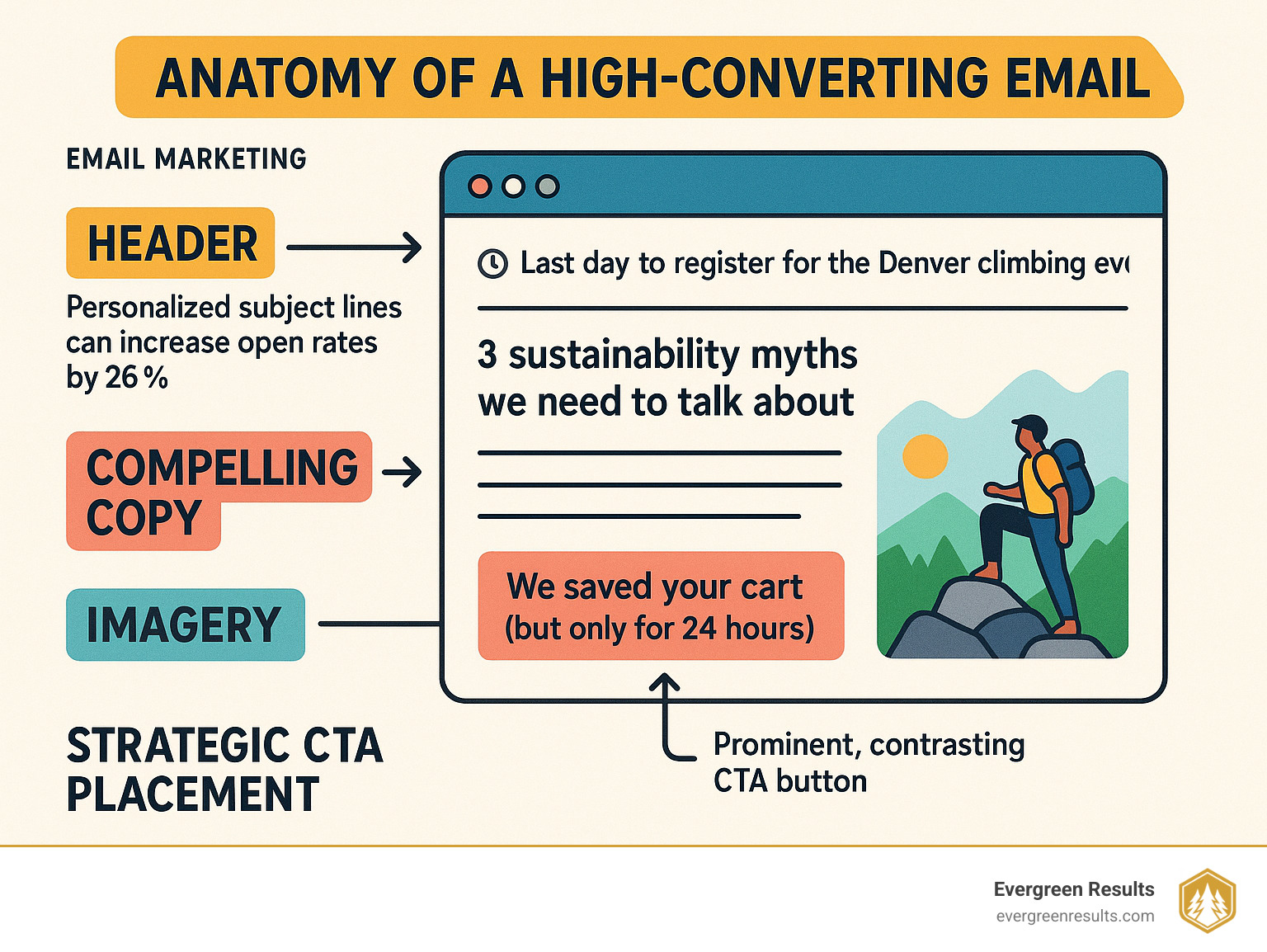
Your call-to-action (CTA) deserves special attention. Focus on a single, clear primary CTA rather than overwhelming readers with options. Make buttons large enough for easy tapping on mobile (at least 44×44 pixels) and use action-oriented, first-person language. “Save My Spot” converts better than “Register” because it feels more personal and active. Create visual contrast so your CTA stands out, and position it strategically after you’ve built desire for your offer.
While Digital Doughnut research suggests right-side CTA placement drives higher click-through rates, we’ve found that testing with your specific audience is always the best approach.
Accessibility & Mobile Optimization
With 67% of emails now opened on mobile devices, optimizing for smaller screens isn’t optional—it’s essential. Making your emails accessible to all users is both the right thing to do ethically and smart business practice.
For mobile optimization, start with responsive design that adapts to different screen sizes. Use single-column layouts that read easily on phones, and keep your font size at minimum 14px for body text. Size your buttons for fingertip tapping (not mouse clicks), and compress images to ensure faster loading times.
For accessibility, include meaningful alt text for all images so screen readers can describe them to visually impaired users. Ensure sufficient color contrast for readability, use descriptive link text instead of generic “click here” phrases, maintain logical heading structure, and provide text alternatives for any important information contained in images.
We’ve noticed that mobile optimization is particularly crucial for active lifestyle brands. Their audiences often check email on the go—between hikes, during lunch breaks at the ski lodge, or while waiting for friends at the climbing gym. When your emails work beautifully on mobile, you meet your audience where they already are.
Automation, Personalization & Segmentation
The true power of modern email marketing comes from its ability to deliver the right message to the right person at the right time—automatically. This is where small teams can actually compete with large corporations, creating personalized experiences that feel human at scale.
Getting Started with Email Automation
Think of email automation as your hardest-working team member who never sleeps. These pre-programmed sequences work silently in the background, nurturing relationships while you focus on other aspects of your business.
Welcome series emails are your digital handshake. When someone joins your list, they’re at peak interest in your brand. This is your chance to shine! A thoughtful 3-5 email sequence over a week or two helps set expectations and deliver immediate value. These friendly introductions average a remarkable 50% open rate and generate 320% more revenue than standard promotional emails.
Remember those abandoned carts? They represent customers who were this close to purchasing. A gentle reminder sequence (2-3 emails over 24-72 hours) can recover these potential sales. In fact, nearly 28.3% of all eCommerce revenue comes from these recovery emails. For our outdoor gear clients, we’ve found that adding a touch of humor in the first reminder works wonders.
Post-purchase sequences are often overlooked, but they’re incredibly powerful. These 3-4 emails help reduce buyer’s remorse, encourage product use, and naturally request reviews. When we implemented these for a Denver-based nutrition brand, they saw their repeat purchase rate climb by nearly 40%.
And don’t forget about re-engagement campaigns for subscribers who’ve gone quiet. A well-crafted sequence can recover 5-10% of inactive subscribers, keeping your list healthy and engaged.
Segmentation Strategies That Boost Revenue
Sending the same email to everyone is like shouting in a crowded room—few will feel you’re speaking directly to them. Segmentation changes this dynamic completely.
Email marketing becomes truly powerful when you divide your audience based on specific criteria. Think beyond basic demographics to include:
Behavioral patterns reveal what people actually do—their purchase history, how they engage with your emails, and their website activity. For outdoor brands, this might mean separating hikers from climbers, or day-trippers from serious backpackers.
Psychographic segmentation considers values and lifestyle choices. For food and beverage brands, this could mean separating health-conscious consumers from indulgence seekers.
RFM analysis (Recency, Frequency, Monetary value) helps identify your VIP customers versus those who need more nurturing.
The results speak for themselves. According to the Data & Marketing Association, segmented campaigns have produced up to a 760% increase in revenue. I saw this with a Colorado craft brewery client. By simply segmenting their list by beer style preferences, their click-through rates jumped 43% on new release announcements.
Personalization Tactics at Scale
True personalization goes far beyond “Hi [First Name]” (though that’s still important). Today’s consumers expect emails that feel like they were crafted just for them.
Dynamic content blocks can automatically change based on subscriber data. For a hiking apparel brand, we created emails that displayed different product recommendations based on the subscriber’s favorite activities and local terrain.
Location-specific content creates immediate relevance. Imagine receiving trail recommendations for places within driving distance of your home, or weather-appropriate gear suggestions based on your local forecast.
Anniversary emails celebrate milestones in your customer relationship. One outdoor retailer we work with sends special offers on customers’ “trip anniversaries” – marking one year since their first major purchase.
Despite the clear benefits – 80% of consumers are more likely to purchase when offered personalized experiences – a surprising 70% of brands still don’t use even basic personalization in their emails.
At Evergreen Results, we’ve helped active lifestyle brands implement sophisticated personalization that feels natural, not creepy. For example, recommending appropriate hiking trails based on past activity levels and locations has resulted in significantly higher engagement and brand loyalty for our clients.
The beauty of these strategies is that they work while you sleep, creating connections that feel personal while requiring minimal ongoing effort once properly set up.
Measuring Success & Continuous Optimization
The beauty of email marketing lies in its transparency. Unlike billboards or TV commercials where results remain fuzzy, email gives you crystal-clear feedback on what’s working and what isn’t. This measurability is your secret weapon for continuous improvement.
Key Email Marketing Metrics to Track
When I work with outdoor brands in Colorado, I always emphasize that numbers tell stories – if you know how to listen. Your email metrics reveal how your audience feels about your messages.
Open Rate shows whether your subject lines are hitting the mark. While most industries hover around 20-25%, active lifestyle brands often enjoy higher engagement – typically 25-30%. Why? Your audience is passionate about their interests!
Click-Through Rate (CTR) reveals if your content compels action. Industry averages sit around 2.5%, but outdoor and fitness brands typically see 3-4% when messaging resonates with their community’s values.
Conversion Rate is where the rubber meets the trail. This varies widely depending on your goals, but it answers the ultimate question: did recipients take the desired action after clicking?
Revenue Per Email (RPE) cuts through vanity metrics to show the actual business impact. A campaign with a lower open rate but higher RPE is often more valuable than a widely-opened email that generates no sales.
List Growth Rate indicates your brand’s momentum. Healthy lists typically grow 3-5% monthly. Though – quality trumps quantity every time.
Beyond these primary metrics, keep an eye on your bounce rate (keep under 2%), unsubscribe rate (under 0.5% per send), and spam complaint rate (the danger zone begins at 0.1%). These health indicators help ensure your messages continue reaching inboxes.
At Evergreen Results, we build custom dashboards for our clients that connect these metrics to actual business outcomes, making the ROI of their email marketing crystal clear.
Interpreting Data & Running Experiments
Numbers without insight are just digits on a screen. The magic happens when you turn data into action through thoughtful experimentation.
A/B testing is your laboratory for improvement, but it requires discipline. Test just one variable at a time (multiple changes make it impossible to know what worked). Ensure you have enough participants for statistical significance – a test with 50 recipients simply isn’t reliable.
Before testing, form a clear hypothesis: “I believe changing our subject line from ‘Sale Now On’ to ’24-Hour Flash Sale: 30% Off Hiking Gear’ will increase open rates by at least 15%.” Document your results religiously – your future self will thank you.
What should you test? Start with high-impact elements:
– Subject lines (personalized vs. standard, question vs. statement)
– Send times (we found early mornings work for outdoor brands, but test with YOUR audience)
– CTA buttons (color, placement, and especially the language – “Get My Trail Guide” outperforms “Download” every time)
– Email length (shorter isn’t always better – test what your audience prefers)
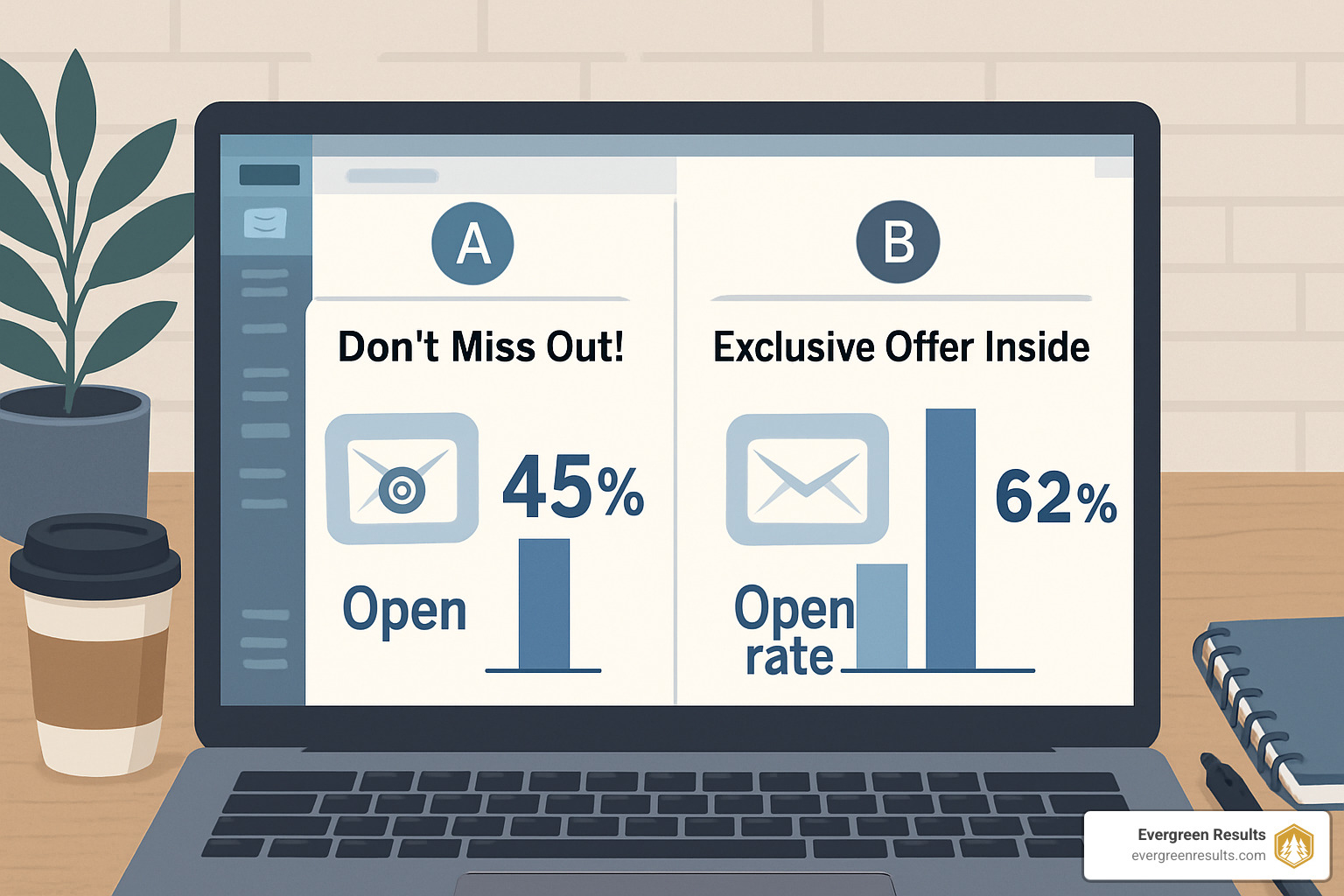
Remember the Obama campaign? Their email team’s obsessive A/B testing of subject lines generated an additional $2.2 million in donations. Small tweaks can yield remarkable results.
As for send times, forget those “best time to send” articles. It depends entirely on your specific audience. For outdoor recreation brands, we typically see strong engagement early morning (5-7am) when enthusiasts are planning their day, and evenings (7-9pm) when they’re dreaming about their next trip. Food and beverage brands often perform better in late afternoon (3-5pm) when people are thinking about dinner or weekend plans.
The only way to know for sure? Test, test, test with your specific audience.
Avoiding Common Mistakes
After helping dozens of active lifestyle brands optimize their email programs, I’ve seen the same pitfalls trip up even experienced marketers. Avoiding these common mistakes will put you miles ahead of competitors.
Deliverability killers can sabotage even the most brilliant campaigns. Never purchase email lists – they’re the marketing equivalent of wearing cotton on a rainy hike. Avoid spammy language that triggers filters (excessive exclamation points, ALL CAPS, or phrases like “free money”). Send from a professional domain, not a free email provider, and ensure proper authentication protocols (SPF, DKIM, DMARC) are in place.
List maintenance is like gear maintenance – neglect it at your peril. Regularly clean inactive subscribers (we typically recommend quarterly), pay attention to bounce rates, and segment based on engagement. A small, engaged list will always outperform a large, uninterested one.
Strategic balance matters tremendously. Finding your sending rhythm takes time – too frequent and you’ll exhaust your audience; too sporadic and they’ll forget you exist. Be consistent, focus on revenue metrics rather than vanity stats, and always optimize for mobile (where 67% of emails are now opened).
According to Litmus research on email ROI, brands that regularly test and optimize their email programs see up to 20% higher revenue than those who take a set-it-and-forget-it approach.
At Evergreen Results, we conduct regular email audits for our clients to catch these issues before they impact performance. Small corrections early can prevent major problems down the trail.
Email marketing is a journey, not a destination. The brands that consistently measure, test, and refine their approach are the ones that ultimately reach the summit.
Compliance, Integration & Future Trends
Email marketing isn’t just about crafting great messages—it’s also about playing by the rules, working with your other marketing tools, and keeping an eye on what’s coming next. Let’s explore these important aspects that will keep your email program running smoothly for years to come.
Staying Legal & Ethical
Think of email regulations like the rules of the trail—they’re there to protect everyone and ensure a positive experience. Following these guidelines isn’t just about avoiding fines; it’s about building trust with your audience.
The email marketing landscape is governed by several important regulations. In the US, the CAN-SPAM Act requires you to include your physical address, provide a clear way to unsubscribe, and use honest subject lines. For European subscribers, GDPR raises the bar even higher, requiring explicit consent before sending marketing emails.
“We’ve found that following the strictest standards—usually GDPR—across all email programs actually improves results,” I often tell our clients at Evergreen Results. “When you respect people’s inboxes, they’re more likely to engage with your messages.”
Beyond the legal requirements, ethical email marketing means:
- Using double opt-in to confirm subscriptions
- Making unsubscribe options obvious (not hidden in tiny text)
- Processing unsubscribe requests immediately
- Being transparent about how you’ll use subscriber data
- Offering preference centers where subscribers can choose what they receive
For outdoor and active lifestyle brands especially, authenticity is everything. Your email practices should reflect the same values you bring to your products and customer service.
Integrating Email with Other Channels
Email marketing works best when it’s not isolated from your other marketing efforts. Think of email as part of an ecosystem rather than a standalone tactic.
When we helped a Denver-based outdoor retailer connect their in-store purchase data with their email system, magic happened. Customers who bought hiking boots in-store automatically received emails with trail recommendations and care tips. This integration increased their customer lifetime value by 28% within six months.
Your email program can work hand-in-hand with:
Social media – Share snippets of your email content on social platforms to drive signups, and include social sharing buttons in your emails to extend their reach. For one of our active lifestyle clients, adding “share this deal” buttons to emails increased their social following by 15% in just three months.
SMS marketing – Use text messages for urgent, time-sensitive communications (“Last day to register for Saturday’s trail clean-up!”) while using email for more detailed content. The combination gives you the best of both worlds.
Content marketing – Your blog posts and videos deserve more attention than they’ll get from organic traffic alone. Email gives this content a second life and helps you understand which topics resonate most with your audience.
Events – Whether you’re hosting a product demo, community gathering, or virtual workshop, email drives registrations before the event and helps you follow up afterward to continue the conversation.
The key is making sure all these channels talk to each other through your CRM or marketing platform. When they do, you’ll gain a complete picture of how customers interact with your brand across touchpoints.
What’s Next for Email Marketing?
The future of email marketing is exciting, with new technologies making emails more interactive, personalized, and effective than ever before.
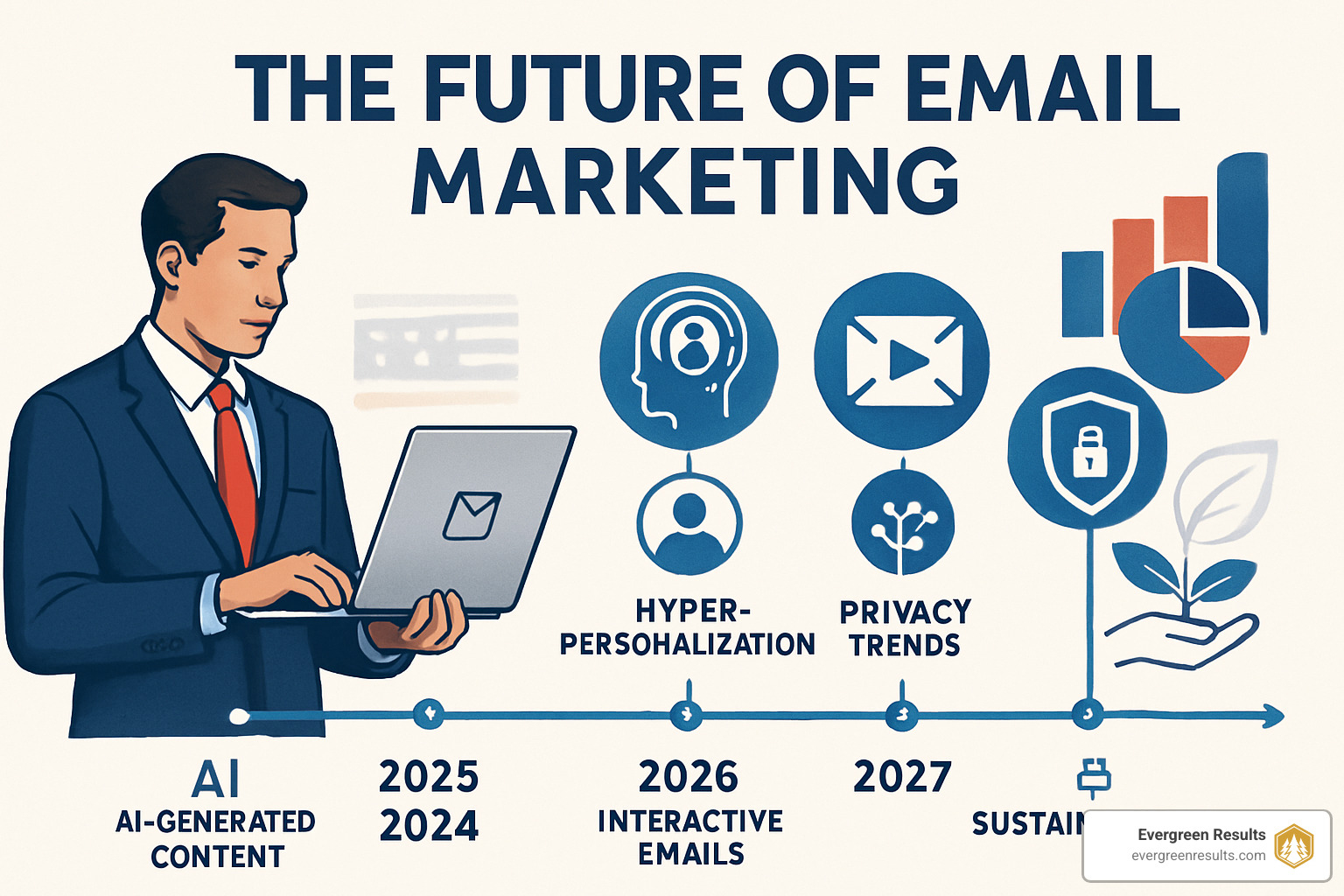
Here’s what’s on the horizon:
AI-powered personalization is becoming more sophisticated and accessible. Tools can now analyze customer behavior patterns and automatically generate highly relevant content for each subscriber. At Evergreen Results, we’re using these tools to help our clients scale personalization while keeping their authentic voice.
Interactive emails using AMP technology let subscribers take actions—like completing a survey or even making a purchase—without leaving their inbox. This reduces friction and can significantly improve conversion rates.
Privacy-first marketing is becoming essential as regulations tighten and consumers become more aware of data practices. The most successful brands will be transparent about data collection and find ways to deliver personalization without being intrusive.
Voice optimization is growing in importance as more people use smart speakers and voice assistants to check their email. This means thinking about how your subject lines and content sound when read aloud.
Sustainability messaging is particularly relevant for outdoor and active lifestyle brands. We’re seeing more companies use email to communicate their environmental initiatives and values—and subscribers are responding positively.
With global email users projected to reach 4.7 billion by 2026, the channel’s reach continues to grow. And despite predictions that newer channels would make email obsolete, it remains the most reliable digital marketing tool for building relationships and driving revenue.
“For the very best online marketers, email marketing is their go-to channel,” and I believe this will remain true as innovations improve email’s capabilities rather than replace its core strengths.
Frequently Asked Questions about Email Marketing
How often should I email my subscribers?
This is probably the most common question I hear from clients, and I wish I could give you a magic number! The truth is, there’s no universal answer that works for every brand.
Most research points to some general guidelines: B2C brands typically see good results with 2-4 emails monthly, while B2B brands often do well with 1-2 monthly touchpoints. But these are just starting points.
The right frequency for your business depends on several factors:
Your industry, what you’re selling, and most importantly—what your subscribers expect. If you promised “weekly tips” during signup, sending daily emails will feel like bait-and-switch. On the flip side, if you’re running a flash sale site, weekly might not be enough.
At Evergreen Results, we take a conservative approach with new clients, especially in the active lifestyle space. We start with 1-2 quality emails per month, then gradually increase frequency while carefully watching engagement metrics. If open rates and click-throughs stay strong (or improve!), that’s your green light to send more often.
I always recommend following the 80/20 rule: 80% value-focused content, 20% promotional. This balance helps maintain engagement even when you increase frequency. Your subscribers will forgive more frequent emails if they consistently deliver value.
What’s the best day and time to send campaigns?
Despite what many “ultimate guides” claim, there’s no universal perfect send time that works for everyone. That said, we do see some patterns:
Tuesday through Thursday generally see higher open rates than Monday (when people are catching up) or Friday (when they’re checking out mentally).
Mid-morning (9-11am) and early afternoon (1-3pm) tend to perform well for many industries.
But here’s where it gets interesting for active lifestyle brands: weekend mornings often outperform weekdays. Why? Because that’s when outdoor enthusiasts are planning their trips.
For one of our mountain bike accessory clients, we finded their highest engagement came at 5:30am on Thursdays—precisely when their dedicated customers were planning weekend rides.
Your best approach is to:
1. Test different timing with your specific audience
2. Look for patterns in your own data
3. Use your email platform’s send time optimization if available
4. Consider segmenting by engagement time preferences
Sometimes zigging when others zag works best. If every other outdoor brand sends on Tuesday morning, your Thursday afternoon email might stand out in a less crowded inbox.
How do I re-engage inactive subscribers?
Those subscribers who haven’t opened or clicked in months represent both a challenge and an opportunity. They’re already familiar with your brand, but something has disconnected them.
Here’s a re-engagement strategy that’s worked wonders for our clients:
First, identify your inactive segment—typically people who haven’t engaged in 90+ days. Then launch a dedicated re-engagement campaign with subject lines that demand attention. “We miss you” or “Are we breaking up?” work surprisingly well because they feel personal and create curiosity.
Inside the email, be direct but friendly. Acknowledge their inactivity without making them feel guilty. Offer something genuinely valuable to come back for, and include a clear way to update preferences if their interests have changed.
What happens next depends on their response:
– Those who re-engage go back into your regular sending rotation
– Non-responders get one more high-value offer
– Still inactive? It’s time to respectfully part ways
For a Colorado-based climbing gear company, we created a three-part re-engagement sequence featuring stunning local climbing photos and exclusive access to new routes. This recovered 12% of their inactive subscribers—people who became active customers again—while identifying truly uninterested contacts for removal.
Email marketing is one area where quality beats quantity every time. Removing true inactives actually improves your deliverability to the people who do want to hear from you. It’s like clearing dead wood so the healthy trees can thrive.
Conclusion
Throughout this guide, we’ve explored how email marketing remains the backbone of effective digital marketing strategies, especially for active lifestyle and food/beverage brands looking to build authentic connections with their communities.
From building a quality list to crafting compelling messages, from automation to analytics, email marketing offers unparalleled opportunities to engage your audience and drive sustainable growth. With an average ROI of $36 for every $1 spent, few marketing channels can match email’s efficiency and effectiveness.
The journey to email marketing success isn’t complicated, but it does require intention and care. Building quality over quantity in your email list should be your foundation – focus on attracting genuinely interested subscribers through valuable lead magnets rather than chasing vanity metrics. When you segment your audience thoughtfully, you create opportunities for conversations that feel personal, even at scale.
Your content matters tremendously. Crafting compelling messages with strong subject lines and clear calls-to-action turns passive readers into active participants in your brand story. And when you automate key workflows like welcome series and abandoned cart recovery, you’re essentially creating a 24/7 marketing team that never sleeps.
The beauty of email marketing lies in its measurability. By testing and optimizing continuously based on performance data, you create a system that gets smarter and more effective with time. Of course, all this must happen while maintaining compliance with regulations and respecting subscriber preferences – because trust is the currency of email marketing.
For maximum impact, remember to integrate email with your broader marketing ecosystem. Your emails shouldn’t exist in isolation but should complement your social media, content marketing, and in-person experiences.
At Evergreen Results, we’ve seen how these principles transform marketing outcomes for active lifestyle and food/beverage brands in Denver and beyond. Our approach blends data-driven tactics with authentic storytelling to create email programs that not only drive revenue but also build genuine community connections.
Email marketing truly sits at the intersection of art and science. The technical aspects matter, but so does the human connection. The most successful email programs balance optimization with authenticity, delivering messages that recipients actually look forward to opening.
Ready to take your email marketing to the next level? Contact Evergreen Results today to discuss how we can help you build an email strategy that delivers sustainable growth while staying true to your brand’s unique voice and values.
