
Why Food and Beverage Branding Makes or Breaks Your Success
Food and beverage branding encompasses all the visual, verbal, and experiential elements that define your product’s identity in the marketplace. Effective branding is crucial for standing out in this competitive industry.
“Food is not just a product but an experience that should excite the senses.” — Food branding expert
Key Elements of Successful Food & Beverage Branding:
- Visual Identity – Logo, colors, typography, and packaging design
- Brand Story – Authentic narrative about your origins and values
- Consistent Messaging – Unified voice across all touchpoints
- Sensory Appeal – Photography and design that stimulates appetite
- Target Audience Understanding – Deep knowledge of consumer preferences
- Unique Positioning – Clear differentiation from competitors
In today’s $800 billion packaged food industry in the US alone, having a compelling brand isn’t just nice-to-have—it’s essential for survival. When consumers face dozens of choices in each category, your branding often determines whether your product makes it into the shopping cart.
Few industries are as sensory and emotional as food and beverage. Your branding needs to be as mouth-watering as your product, creating an immediate connection that goes beyond ingredients and nutrition facts.
I’m Adam Bocik, founder of Evergreen Results, where I’ve helped numerous food and beverage brands develop distinctive food and beverage branding strategies that cut through the noise and connect authentically with active lifestyle consumers.
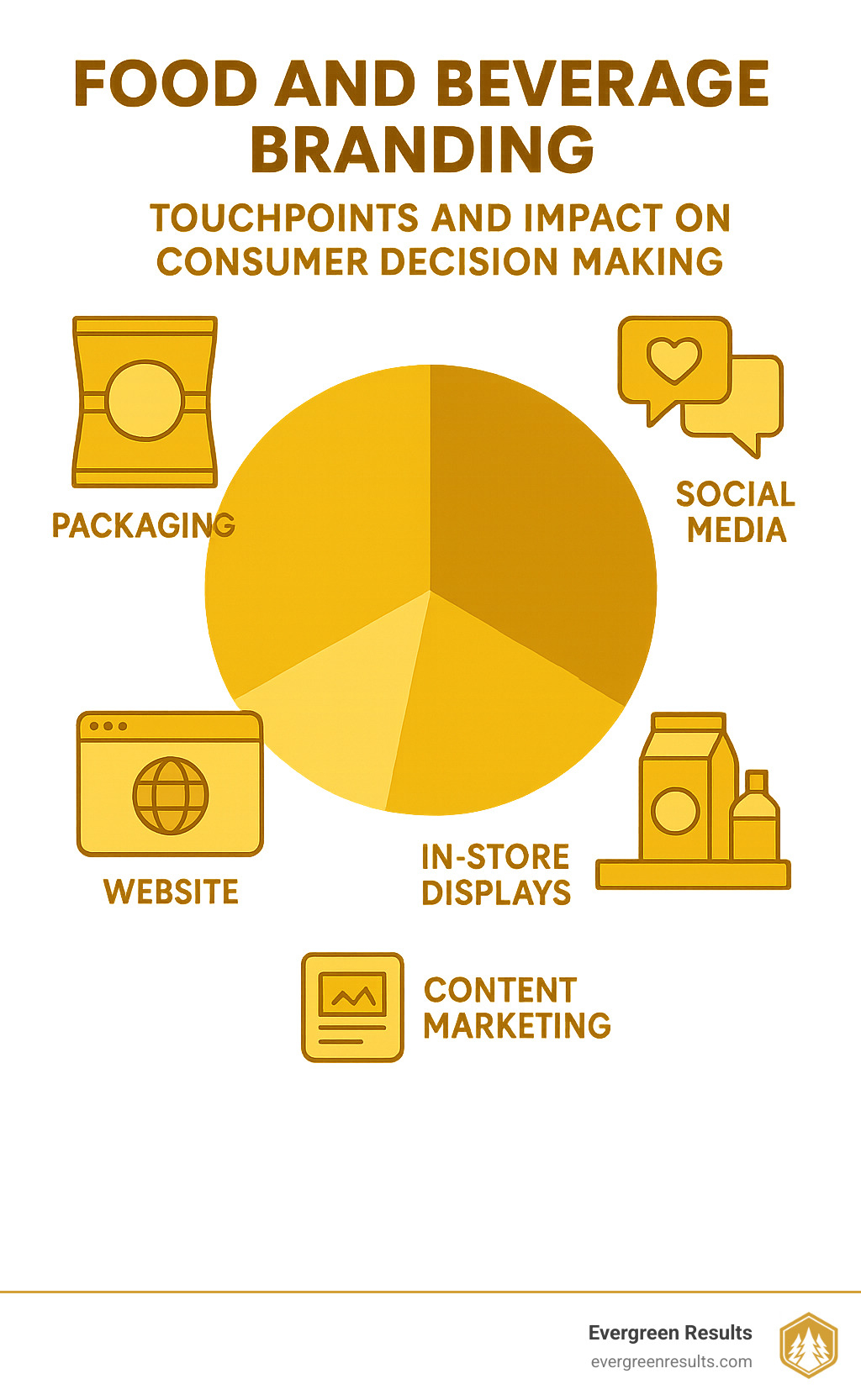
Must-know food and beverage branding terms:
– health and wellness SEO
– wellness marketing strategies
What is Food and Beverage Branding and Why It Matters
Food and beverage branding is so much more than just slapping a logo on your packaging. It’s the art and science of creating a unique identity that makes your product instantly recognizable and emotionally compelling. When done right, it tells your story through colors, images, words, and experiences that resonate deeply with your target audience.
Think about it: we’re living in an $800 billion industry where consumers face an avalanche of choices every time they shop. Your branding is like your product’s voice in a crowded, noisy marketplace. It’s what makes someone reach for your kombucha when there are five other bottles right beside it, or choose your trail mix when dozens of alternatives are competing for attention.
“Great taste alone won’t make your product stand out in today’s market. Consumers crave authenticity and uniqueness that only strategic branding can deliver.” — Food industry expert
The power of effective food and beverage branding goes far beyond making things look pretty. The numbers don’t lie: branded food products typically command price premiums of 20-50% over generic alternatives. Even better, strong branding builds the kind of customer loyalty that helps you weather market storms and fend off competitors trying to steal your shelf space.
The Psychology Behind Food and Beverage Branding
There’s fascinating science behind why certain food brands make our mouths water before we’ve even tasted the product. Food and beverage branding taps directly into our primal instincts and emotions—and it’s all by careful design.
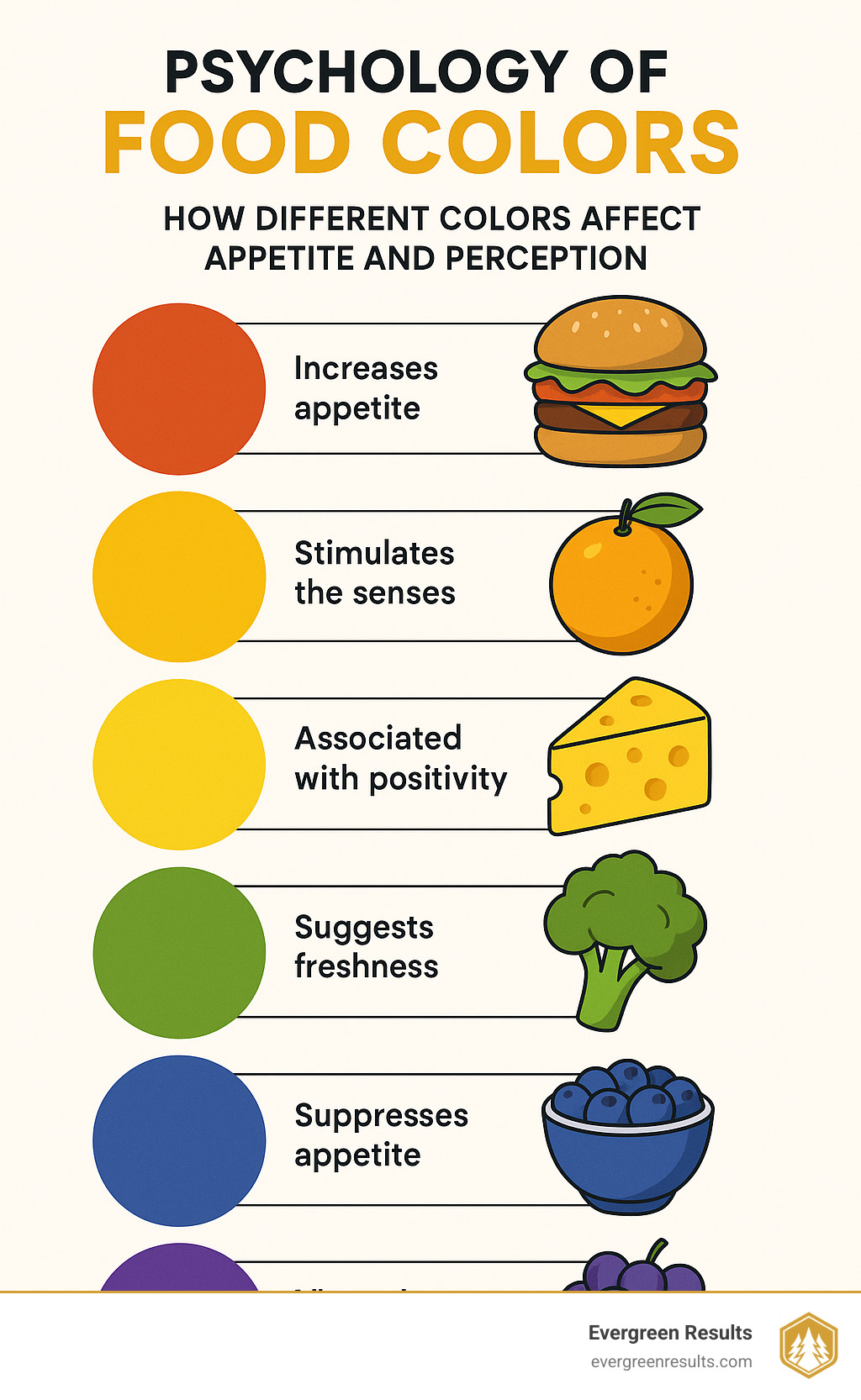
Ever notice how red, orange, and yellow dominate fast-food branding? It’s no coincidence. These warm hues have been scientifically proven to stimulate appetite. Take a quick stroll through any food court and you’ll see this color theory in action—nearly every major chain uses red-yellow or red-orange combinations to make you hungrier.
Here’s something interesting: blue rarely appears as a primary color in food branding. Why? Because edible blue foods are uncommon in nature, making the color less appetite-stimulating. When blue does show up in food packaging, it’s usually as an accent or to signal specific qualities like freshness or purity.
Color is just the beginning. Great food and beverage branding creates emotional connections that go beyond the physical product. Coca-Cola isn’t just selling a fizzy drink—they’re selling happiness and togetherness. Starbucks isn’t just offering coffee—they’re providing a “third place” between home and work where you belong.
These emotional hooks drive impulse purchases, which account for up to 70% of buying decisions in some food categories. When your branding triggers positive feelings, you’re not just selling food—you’re selling memories, experiences, and aspirations.
How Food and Beverage Branding Shapes Purchase Decisions
Marketers call that critical moment when a consumer first sees your product the “first moment of truth.” This split-second encounter is where food and beverage branding works its most powerful magic.
Strong shelf impact through distinctive packaging can capture attention in under three seconds—that’s all the time most shoppers spend deciding between similar products. Our research has found that truly effective packaging can even be recognized by touch alone, a principle Coca-Cola brilliantly leveraged back in 1915 when designing their iconic contour bottle.
But great branding keeps working long after that initial purchase through what we call “loyalty loops.” When consumers have a positive experience with your branded product, they’re likely to repurchase without even considering alternatives. This autopilot buying behavior is what every food and beverage brand dreams of achieving.
Perhaps most fascinating is how branding shapes perceived quality. In blind taste tests, consumers consistently rate identical products differently based solely on branding cues. One eye-opening study found that when participants believed they were drinking a premium coffee brand, they reported a better taste experience than those who thought they were sipping a budget brand—despite being served the exact same coffee!
At Evergreen Results, we’ve seen how thoughtful food and beverage branding can transform products from commodity items into beloved lifestyle choices, especially for active, health-conscious consumers who care deeply about what they put in their bodies.
The Core Ingredients of a Tasty Brand Identity
Creating a compelling food and beverage brand identity is a lot like perfecting your grandmother’s secret recipe. You need just the right ingredients, combined with care, to create something truly memorable. When done right, these elements blend together to create a brand that customers can’t resist coming back to again and again.
Your brand identity starts with visual elements like your logo, color palette, and typography. But it goes much deeper—into your packaging design, the voice you use to speak to customers, and the sensory experiences you create. The magic happens when all these elements work together with authenticity and consistency to tell your unique story.
I’ve seen how brands that nail these fundamentals stand out in crowded grocery aisles. They’re the ones shoppers reach for without thinking twice, even when surrounded by dozens of alternatives.
Visual Elements that Stick
The most memorable food and beverage branding begins with visuals that instantly click with consumers. Think about how you can recognize a Coca-Cola bottle from across the room, or spot those golden arches from miles down the highway.
Iconic logos become powerful shortcuts to everything your brand represents. The best ones are deceptively simple yet impossible to forget—they work as well on a tiny bottle cap as they do on a highway billboard. When designing your logo, simplicity often wins the day. Logo Design Works and talented designers like green in blue via 99designs by Vista specialize in creating these visual anchors for food brands.
Many successful brands develop their own proprietary typography that becomes as recognizable as their logo. Notice how the curvy script of Coca-Cola or the rounded, friendly letters of Ben & Jerry’s instantly signal who’s talking to you? That’s the power of consistent, ownable typography.
Hero imagery—those mouth-watering food photos that make you suddenly hungry—plays a huge role in food and beverage branding. I always tell my clients that generic stock photos simply won’t cut it. Customers can spot inauthentic imagery a mile away. Investing in professional photography that showcases your product at its absolute best isn’t optional—it’s essential.
The secret sauce to making these visual elements work? Consistent repetition across every touchpoint. When your packaging, website, social media, and advertising all share the same visual DNA, you’re building recognition that sticks with consumers over time.
Crafting an Authentic Brand Story
Beyond pretty pictures, compelling food and beverage branding requires a genuine story that resonates with your audience. In today’s market, authenticity isn’t just nice to have—it’s expected.
Origin stories create powerful emotional connections. I love how brands like Clif Bar proudly share how their founder created the first bars during a 175-mile bike ride, or how Siete Foods grew from a family kitchen experiment to help one family member with health challenges. These narratives transform products from mere commodities into meaningful creations with purpose.
Your mission and values should infuse everything you do. When your packaging, messaging, and actions all align with your core beliefs, customers feel it. They’re not just buying your granola or kombucha—they’re buying into what you stand for.
Transparency has become non-negotiable in modern food and beverage branding. Today’s consumers want to peek behind the curtain. They’re curious about where your ingredients come from, how your products are made, and what values guide your decisions. Brands that accept this transparency—even when it means admitting imperfections—often build deeper, more lasting trust.
Community building transforms casual customers into passionate advocates. When you create spaces (online or offline) for fans to connect over shared experiences with your brand, magic happens. Look at how Liquid Death water built a cult following through irreverent humor and community engagement, or how small craft breweries create loyal followings through local events and shared values.
The most powerful food and beverage branding doesn’t just sell a product—it invites people into a story they want to be part of. When you get these core ingredients right, you’re not just creating a brand. You’re creating a relationship.
Differentiation in a Saturated Market: Strategy & Research
Standing out in the crowded food and beverage landscape isn’t just challenging—it’s downright daunting. With countless products vying for attention, strategic differentiation backed by solid research is your secret weapon. At Evergreen Results, we’ve seen how thoughtful, data-driven food and beverage branding decisions lead to stronger market positions and sustainable growth.

Effective market segmentation is like finding your perfect hiking trail—it leads you to spaces where your brand can truly flourish. Through our Market Research for Food and Beverage Co., we’ve uncovered surprising opportunities in niches like plant-based seafood alternatives, which are remarkably popular among retirees—a demographic many brands completely overlook in their plant-based marketing.
Taking a good, honest look at your competitors reveals not just what they’re doing well, but more importantly, what they’re missing entirely. We call this “white-space mapping,” and it’s golden for finding market gaps where your brand can plant its flag. Take Lucky Saint, for example—their research uncovered an untapped opportunity to position their alcohol-free beer as a premium option served on tap in pubs, a space their competitors had largely ignored.
Your Unique Selling Proposition (USP) needs to ring true with consumers. As one of our clients put it, “Customers can smell inauthenticity from a mile away.” Your USP must genuinely reflect what makes your product special in ways that matter to your audience—whether that’s sustainable sourcing, innovative ingredients, or a unique production method that improves flavor.
Data-Driven Positioning
Creating customer personas based on real data rather than assumptions is like using a GPS instead of guessing which way is north. These personas should dig deeper than basic demographics to uncover what truly drives purchasing decisions—values, aspirations, and pain points included.
Here in Denver, we help our clients develop value propositions using the “jobs-to-be-done” framework. This approach focuses on what consumers are actually trying to accomplish when they buy your product. A protein bar might serve completely different purposes for different people—quick nutrition for athletes, a convenient breakfast for busy professionals, or a healthier snack for someone watching their diet.
Focusing on a specific niche often yields stronger results than trying to please everyone. When one of our oat milk clients developed a “barista edition” specifically designed for coffee professionals, they carved out a distinctive position in the crowded plant-milk market. Their targeted campaign resonated not only with professional baristas but also with home coffee enthusiasts wanting cafe-quality results.
Sustainability & Transparency as Brand Levers
Sustainability has evolved from a nice-to-have feature to a core brand differentiator. As one food industry report we studied noted, “Sustainability isn’t just a trend—it’s becoming the expected baseline, especially for younger consumers.”
Eco-friendly packaging innovations can become a central character in your food and beverage branding story. When you switch to biodegradable materials or reduce packaging waste, you’re not just making an operational change—you’re creating a branding opportunity that resonates with environmentally conscious consumers.
Traceability and certifications provide tangible proof of your brand’s commitments. The Vegan Society saw product registrations jump by nearly 9,000 after their brand awareness study, showing how certification marks can boost both consumer trust and business growth.
Stories about ethical sourcing create emotional connections with values-driven consumers. When coffee brands highlight their direct relationships with farmers or fair price guarantees, they transform an everyday purchase into a meaningful choice that aligns with consumers’ values.
Gen-Z consumers in particular gravitate toward brands that demonstrate authentic commitment to social and environmental causes. As Scientific research on consumer trust confirms, this generation is willing to pay more for products that align with their values—but they’re also quick to call out “greenwashing” or surface-level commitments that lack substance.
The wellness trend continues to reshape the food and beverage landscape, with consumers increasingly seeking products that support their physical and mental wellbeing. Brands that authentically integrate wellness into their positioning—whether through functional ingredients, mindful production methods, or promoting balanced consumption—can create meaningful differentiation in a crowded marketplace.
Designing Packaging that Pops Off the Shelf
Packaging isn’t just a container—it’s the most powerful ambassador for your food and beverage branding on the retail battlefield. When your product sits among dozens of competitors, your packaging becomes your most critical silent salesperson.
Think about the psychology of shapes for a moment. Have you noticed how curved, circular packaging elements feel friendlier and more approachable? There’s science behind this! Our brains process rounded shapes as more inviting, while angular designs communicate precision and formality. This subtle shape language speaks volumes about your brand personality before customers read a single word.
Your choice of materials tells customers what you value. Premium brands often use heavier, textured materials that feel substantial in hand—creating that satisfying weight that subtly whispers “quality” to our subconscious. Meanwhile, sustainable brands might accept minimalist, recyclable packaging that physically reinforces their environmental commitment. The material itself becomes part of your brand story.

Don’t forget those pesky FDA guidelines and nutrition facts! The brands that shine integrate these regulatory requirements seamlessly into their design rather than treating them as annoying afterthoughts. Smart food and beverage branding transforms these necessities into design features that improve rather than detract from your packaging’s appeal.
Remember the classic Coca-Cola bottle story? It was specifically designed to be recognizable by touch alone, even in complete darkness. That’s the power of tactile branding! These physical, touchable elements create deeper connections with consumers that purely visual designs simply can’t match.
Best Practices for Food and Beverage Branding on Packaging
Want your products to stand out on crowded shelves? Strategic color blocking is your friend. By using distinctive, consistent color patterns across your product line, you create what designers call the “billboard effect”—that unmistakable visual signature that jumps out at customers scanning the aisle. Think about how easily you spot Tiffany blue or Cadbury purple from a distance!
Smart packaging guides the eye through information in a deliberate flow. Your food and beverage branding should create a clear visual hierarchy that leads customers from your brand name to product type, then key benefits, and finally supporting details. This isn’t random—it should match how people naturally scan packaging in those critical three seconds of shelf attention.
Let’s talk food photography—nothing kills appetite appeal faster than amateur product images. High-quality, professionally styled photographs that showcase your product at its most crave-worthy create an immediate emotional response. As one industry expert told us, “Your packaging design can actually work harder than your entire ad campaign.”
QR codes and interactive elements have evolved from marketing gimmicks to valuable bridges between physical and digital experiences. These tools can open up everything from origin stories to recipes, creating relationship touchpoints that extend far beyond the initial purchase.
Testing & Iterating Your Pack Design
Never skip testing! Focus groups provide those invaluable “aha” moments when real consumers interact with your packaging. They’ll spot issues your internal team might miss after months of staring at the same designs. At Evergreen Results, we’ve seen countless food and beverage branding projects transformed by these honest consumer insights.
For the truly data-driven, eye-tracking studies reveal the unfiltered truth about where customers actually look on your packaging. This scientific approach eliminates guesswork by showing exactly where eyes land first, second, and third—allowing you to place key messages precisely where they’ll have maximum impact.
Before committing to expensive print runs, A/B testing with digital mockups lets you gather hard data on different design options. We’ve seen conversion improvements of 20% or more just by testing multiple variants before finalizing packaging.
Don’t overlook the expertise of retail buyers! These industry insiders have watched countless products succeed or fail on their shelves. Their feedback on category expectations, competitive positioning, and shelf placement can refine your packaging strategy in ways no focus group can match.
Digital Era: Leveraging Social Media & Omnichannel Touchpoints
Let’s face it—your food and beverage branding now lives as much (if not more) in the digital world as it does on physical shelves. The digital landscape has completely transformed how people find, fall in love with, and become advocates for food brands.
Have you seen how quickly food trends spread on TikTok these days? Little Moons, that delightful Japanese mochi ice cream brand, saw their sales multiply tenfold after simply going viral on the platform. There’s something magical about TikTok’s quick, visually-rich format that makes it perfect for showcasing food in all its mouth-watering glory.
What consumers say about your products now carries more weight than any advertisement you could create. When someone takes the time to film themselves unboxing your product, creating a recipe with it, or sharing serving suggestions, they’re giving you something priceless—authentic endorsement that resonates deeply with potential customers.
When it comes to influencer partnerships, bigger isn’t always better. We’ve found that the most successful food and beverage branding often comes from collaborating with micro-influencers who have genuine connections with specialized communities. These partnerships feel more authentic and often deliver better engagement than celebrity endorsements with massive but less devoted followings.
Don’t overlook the power of good old email marketing. It remains one of the most effective channels for nurturing customer relationships over time. Our Email Marketing for Food & Beverage Brands: Strategy shows how targeted email campaigns with personalized content can transform occasional buyers into loyal brand advocates.
For many food brands, having a direct-to-consumer (DTC) website has become essential. This gives you complete control over how customers experience your brand, allowing you to tell your story exactly as you envision it, without retail intermediaries. Plus, you’ll gather invaluable first-party data about your customers’ preferences and behaviors.
Building a Community Around Your Brand
People connect with stories, not sales pitches. Using storytelling reels and videos to showcase the faces, places, and processes behind your products creates transparency and emotional connection. When customers feel like they know the people making their food, magic happens.
Have you noticed how the best food brands don’t just sell ingredients—they inspire new possibilities? By sharing creative recipes and usage ideas, you extend your product’s utility and become integrated into your customers’ lifestyles. When someone thinks, “What should I make for dinner?” and your brand comes to mind with the answer, you’ve created something special.
Brand hashtags create searchable, findable communities around your products. Look at Lucky Saint’s Dry January 2023 campaign—it reached over ten million people and made them the top alcohol-free beer poured on tap in more than 600 pubs. That’s the power of coordinated social campaigns with a clear rallying cry.
Adding playful elements like challenges, contests, and interactive content drives engagement and sharing. The “TikTok made me buy it” phenomenon perfectly illustrates how social validation and participation trigger purchase behavior. When people feel part of something fun, they naturally want to share it.
Here at Evergreen Results, we help our Denver-based clients build content calendars that strike the right balance between promotional material and genuine community-building content. Your food and beverage branding should never feel like a constant sales pitch—it should feel like joining a conversation with friends.
Metrics That Matter for Food and Beverage Branding Online
While reach metrics tell you how many potential customers see your brand, engagement rates reveal something far more valuable—how compelling your content actually is. High engagement through likes, comments, shares, and saves indicates you’re creating content that resonates deeply with your audience.
Click-through rates (CTR) help measure how effectively your digital content drives specific actions. Whether you’re directing users to your website, an online retailer, or a landing page, CTR helps quantify just how persuasive your food and beverage branding really is.
Don’t underestimate the importance of sentiment analysis. These tools track the emotional tone of conversations about your brand across social platforms, providing crucial context to your quantitative metrics and alerting you to potential issues or opportunities before they become trends.
At the end of the day, repeat purchase rate and customer lifetime value (LTV) are the ultimate measures of brand loyalty. Strong food and beverage branding should translate to higher LTV as consumers develop emotional connections to your products and make them a regular part of their lives.
Measuring Success & Avoiding Common Mistakes
Let’s be honest – creating mouth-watering food and beverage branding is exciting, but how do you know if all that creative energy is actually paying off? Without clear metrics, you’re essentially flying blind. And without awareness of common pitfalls, you might be sabotaging your own success.
Think of your branding metrics as a recipe’s taste test – they tell you if you’ve got the flavor just right or if something needs adjusting. The most effective food brands track specific KPIs aligned with their goals, whether that’s boosting awareness, deepening engagement, or driving sales.
Brand tracking studies work like regular health check-ups for your brand. By surveying your target audience consistently over time, you can spot shifts in how people perceive you. Are more people recognizing your brand? Are they considering you before competitors? These insights are gold.
“The brands that thrive are those that measure relentlessly but act thoughtfully,” I often tell our clients at Evergreen Results. “Data should inform creativity, not replace it.”
Net Promoter Score (NPS) might seem simple – just asking customers how likely they are to recommend you – but it’s surprisingly powerful. High NPS scores correlate strongly with repeat purchases and word-of-mouth growth, especially in the emotionally-driven food and beverage space.
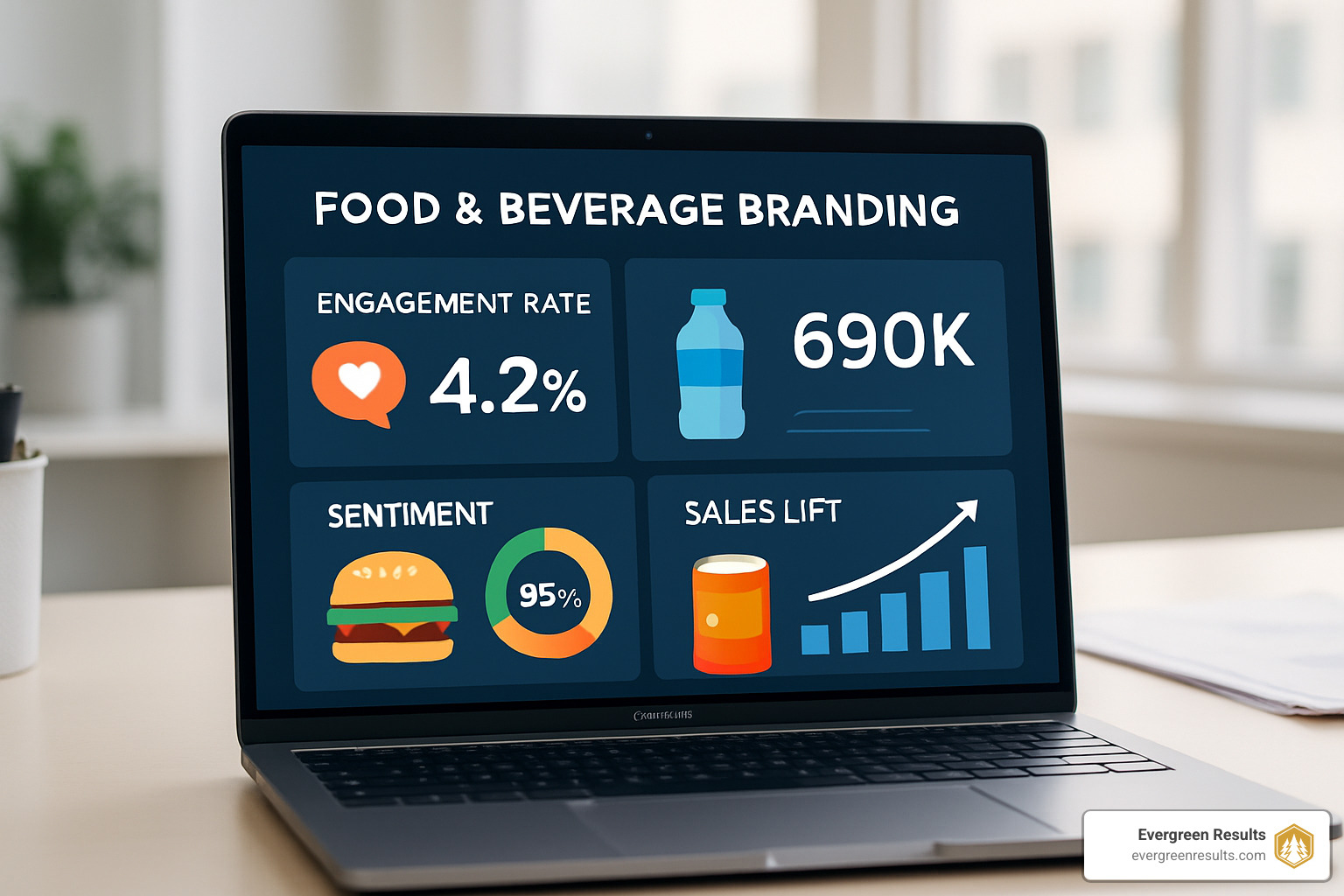
Sales lift analysis helps you connect the dots between your branding efforts and actual revenue. By comparing sales before and after a rebrand or between test markets and control markets, you can quantify your return on investment. One client saw a 32% sales increase after refreshing their packaging based on consumer insights – proving that good food and beverage branding directly impacts the bottom line.
Visual consistency audits are worth their weight in gold. Take a step back and look at all your touchpoints together – your packaging, website, social media, and retail displays. Do they feel like a cohesive family, or more like distant relatives? Inconsistency dilutes recognition and wastes the cumulative power of your branding efforts.
Common Pitfalls to Dodge
I’ve seen too many food brands learn these lessons the hard way. Don’t be one of them!
Over-promising nutritional benefits is tempting but dangerous territory. Remember the cereal brand that prominently featured “high protein” on their packaging when the product contained just 2 grams per serving? Consumers felt misled, and the brand’s credibility took a major hit. Today’s savvy shoppers will call you out faster than you can say “superfood.”
Regulatory requirements might not be the sexiest part of food and beverage branding, but neglecting them can lead to costly recalls and reputation damage. FDA guidelines, allergen warnings, and nutrition fact standards should be integrated into your design process from day one – not tacked on as afterthoughts.
“Authenticity isn’t optional anymore,” as I remind our Denver clients. Trend-chasing without genuine alignment is a recipe for disaster. When brands suddenly position themselves as champions of sustainability or wellness without meaningful commitments behind the scenes, consumers can smell the inauthenticity a mile away. As one industry veteran put it, “Customers can sense when your messaging is fake or forced.”
Skipping proper testing before launch is like serving a new recipe without tasting it first. Even small brands with limited budgets should conduct some level of testing – whether through informal focus groups, social media polls, or small batch releases – before going all-in on new food and beverage branding.
Continuous Improvement Loop
The best food and beverage brands are never “done” with their branding – they’re constantly refining and evolving. Building regular feedback cycles into your strategy ensures you stay relevant without losing your core identity.
Seasonal refreshes add excitement while maintaining recognition. Limited-edition packaging for summer flavors or holiday specials creates urgency and collectibility. One craft beverage client saw a 47% sales increase during their seasonal campaign periods without compromising their year-round brand equity.
Innovation pipelines keep your brand forward-looking. Consumer preferences evolve rapidly in the food space – just think about how quickly oat milk went from niche to mainstream. Your food and beverage branding should anticipate emerging trends while staying anchored to your unique story.
Masterbrand guidelines provide the framework for consistent yet flexible expression. Think of them as guardrails, not handcuffs. These living documents should evolve as your brand grows while preserving the essential elements that make your brand instantly recognizable.
At Evergreen Results, we help our food and beverage clients implement measurement systems that balance short-term metrics with long-term brand building. After all, sustainable growth comes from the perfect blend of data-driven decisions and creative intuition – just like the perfect recipe balances science and art.
Frequently Asked Questions about Food & Beverage Branding
Why invest in professional branding if my product tastes great?
You’ve poured your heart into creating an amazing product—and that’s a fantastic start! But in today’s marketplace, where consumers face an avalanche of choices, even the most delicious products can get lost in the shuffle without effective branding.
Think of food and beverage branding as your product’s handshake with potential customers. Before they ever taste your amazing kombucha or artisanal chips, they’re making split-second decisions based on visual cues and emotional connections.
Vikre Distillery is a perfect example of how branding amplifies quality. They didn’t just create exceptional spirits—they wrapped their products in branding that told the story of their North Shore heritage. This authentic connection to place gave consumers a compelling reason to choose their bottle over dozens of others on the shelf.
Professional branding also creates the consistency that builds trust over time. When your packaging, social media, website, and retail displays all speak with one cohesive voice, you’re not just selling a product—you’re building a relationship that customers can depend on.
How long does it take to see ROI from branding?
I won’t sugarcoat it—building a beloved brand takes time. But the good news is that food and beverage branding typically delivers returns in predictable phases:
In the first 3-6 months, you’ll likely notice increased engagement online, more interest from retailers, and positive feedback from early adopters. These early indicators might not immediately translate to massive sales, but they’re signs your branding is gaining traction.
Between 6-18 months is when the magic typically starts happening. This is when you’ll begin seeing measurable sales growth, improved margins, and expanded distribution opportunities. Your brand is building momentum!
The most valuable returns—true brand equity, loyal customer communities, and premium positioning—generally develop after 18+ months of consistent brand presence. As our research shows, “Building consumer trust through consistent branding can take months or even years.”
That said, certain branding elements can show quicker impact. A packaging refresh, for instance, can demonstrate measurable shelf performance within a single sales cycle. At Evergreen Results, we help our clients identify these early wins to maintain enthusiasm through the longer brand-building journey.
What budget should small brands allocate to packaging design?
For small food and beverage brands, packaging isn’t just packaging—it’s your most important advertisement. While there’s no magic number that works for everyone, we typically recommend that emerging brands invest about 3-8% of projected annual revenue in packaging design and production.
Rather than viewing this as a marketing expense, think of it as essential infrastructure. Your packaging is quite literally the vehicle that delivers your product to consumers. As our research has shown, “Effective packaging design is as powerful a marketing tool as any ad campaign.”
Your specific budget should flex based on several key factors:
Some product categories face fiercer visual competition than others. If you’re launching a new energy drink or snack food, you’ll likely need to invest more in standout packaging than if you’re in a less visually competitive category.
Your distribution strategy matters too. Direct-to-consumer brands often benefit from investing in delightful “unboxing experiences,” while brands focused on traditional retail need packaging that pops on crowded shelves.
Where you are in your product lifecycle also impacts your packaging investment. New product launches typically require higher design investment than refreshes of established products. And of course, your production volume affects economies of scale—higher runs reduce per-unit costs, potentially freeing up more budget for design.
At Evergreen Results, we help our Denver clients develop smart, phased approaches that align packaging investments with growth stages. This ensures you’re making the right investment at the right time, maximizing impact without overextending your resources.
Conclusion
When it comes down to it, food and beverage branding truly is the secret sauce that separates market leaders from the countless products that launch with a whisper and quickly fade away. In this industry where taste buds and heartstrings are equally important, thoughtful branding isn’t just a nice-to-have—it’s your ticket to survival in an $800 billion marketplace.
The brands that thrive understand that branding is more than a logo or a pretty package. It’s a long-term investment in building something that resonates deeply with your audience. From the psychology behind why red makes us hungrier to the power of telling your founder’s story, every element of your brand works together to create an experience that stands out on crowded shelves.
I’ve seen at Evergreen Results how the right branding strategy can transform a food or beverage product from “just another option” into something consumers actively seek out. Our work with Denver-based brands has shown that authentic connections with active lifestyle consumers don’t happen by accident—they’re crafted through intentional, data-informed brand building.
The food landscape keeps evolving, with new trends emerging almost daily. Plant-based everything. Functional ingredients. Sustainable packaging. The brands that build strong yet flexible identities while staying true to their core values will steer these changes successfully, adapting without losing their essence.
Your brand should serve as a growth roadmap, guiding your decisions and helping you build long-term equity with your audience. When consumers feel an authentic connection to what you stand for, they don’t just buy once—they become advocates who share your story with others.
Ready to cook up a branding strategy that makes your food or beverage product irresistible? Learn more about our approach to wellness marketing strategies and how we can help your brand become the one consumers crave, not just another option on the shelf.
Because in the feast of consumer choices, the brands with the most compelling stories are the ones that get invited back to the table, again and again.