
Liquid Gold Marketing Strategies for Growing Your Drink Startup
The Competitive Reality of Beverage Brand Marketing in 2025
Beverage brand marketing is the practice of building awareness, driving sales, and creating lasting loyalty for drink products — through channels like social media, influencer partnerships, packaging design, experiential events, and digital advertising.
Here’s a quick snapshot of what works in 2025:
- Emotional storytelling — sell a lifestyle, not just a drink
- Influencer partnerships — micro and macro creators drive authentic reach
- Bold, optimized packaging — your label is your first ad
- Digital-first content — TikTok, Instagram Reels, and Amazon Ads are table stakes
- Functional ingredients and health positioning — consumers want beverages that do something
- Limited-edition drops — scarcity creates urgency and buzz
- Data-driven advertising — creative testing and KPI tracking separate winners from wasters
The global food and beverage market is on track to hit $8.9 trillion by 2026. That’s a massive opportunity — but also a crowded arena. Consumers have more choices than ever, and their expectations are higher. They want brands that align with their values, taste great, and feel authentic.
The brands breaking through aren’t just making good drinks. They’re building movements.
Take Coca-Cola — a brand with 94% global recognition and over $80 billion in value. It doesn’t advertise soda. It sells happiness, togetherness, and shared moments. Or look at Poppi, a newer functional soda brand that leaned hard into bold design and influencer culture to become a Gen Z lifestyle staple almost overnight.
The playbook has changed. And whether you’re launching your first SKU or scaling a regional favorite, the strategies you use today will define where your brand stands in 2026.
I’m Adam Bocik, founder of Evergreen Results — a digital marketing consultancy that helps active lifestyle and consumer brands grow through performance media, SEO, email, and creative strategy, including beverage brand marketing for purpose-driven companies. In this guide, I’ll walk you through exactly what’s working right now, so you can build a marketing engine that compounds over time.
Beverage brand marketing vocabulary:
Core Principles of Beverage Brand Marketing in 2025-2026

As we move toward 2026, the foundation of successful beverage brand marketing rests on three massive pillars: health, sustainability, and premiumization. We’ve seen a seismic shift in how people choose what to sip. It’s no longer just about quenching thirst; it’s about what that drink says about the person holding it.
Health, Wellness, and Functionality
The “better-for-you” movement is no longer a niche; it is the market. Consumers are actively hunting for functional ingredients. We’re talking about adaptogens for stress, probiotics for gut health, and electrolytes for recovery. If your drink offers a tangible benefit—like a mood boost or sustained energy without the crash—you have a winning hand.
Gen Z, in particular, is leading the charge toward low-ABV (alcohol by volume) or entirely non-alcoholic alternatives. They want “lifestyle framing”—drinks that fit into a 6:00 AM yoga session or a late-night social gathering without the hangover. Transparency is key here. People want to know exactly what’s in the bottle, which is why market research for beverage companies is so vital. You need to know which specific benefits your audience craves before you finalize your formulation.
Sustainability as a Standard
In 2025, saying you’re “eco-friendly” isn’t enough. It’s a fundamental expectation. We’re seeing brands move away from plastic toward highly recyclable aluminum cans or biodegradable packaging. Sustainability has evolved from a corporate guilt trip into a point of consumer participation. When someone buys your drink, they want to feel like they are helping the planet, not hurting it.
Premiumization and the “Craft” Feel
Even in a fluctuating economy, premium, craft, and luxury labels are surging. Why? Because people are trading quantity for quality. They want an “elevated experience.” This is where strategic branding and design becomes your most powerful tool. A premium price point must be justified by premium storytelling and a visual identity that feels sophisticated and intentional.
Mastering Digital Channels and Amazon Ads for Beverages
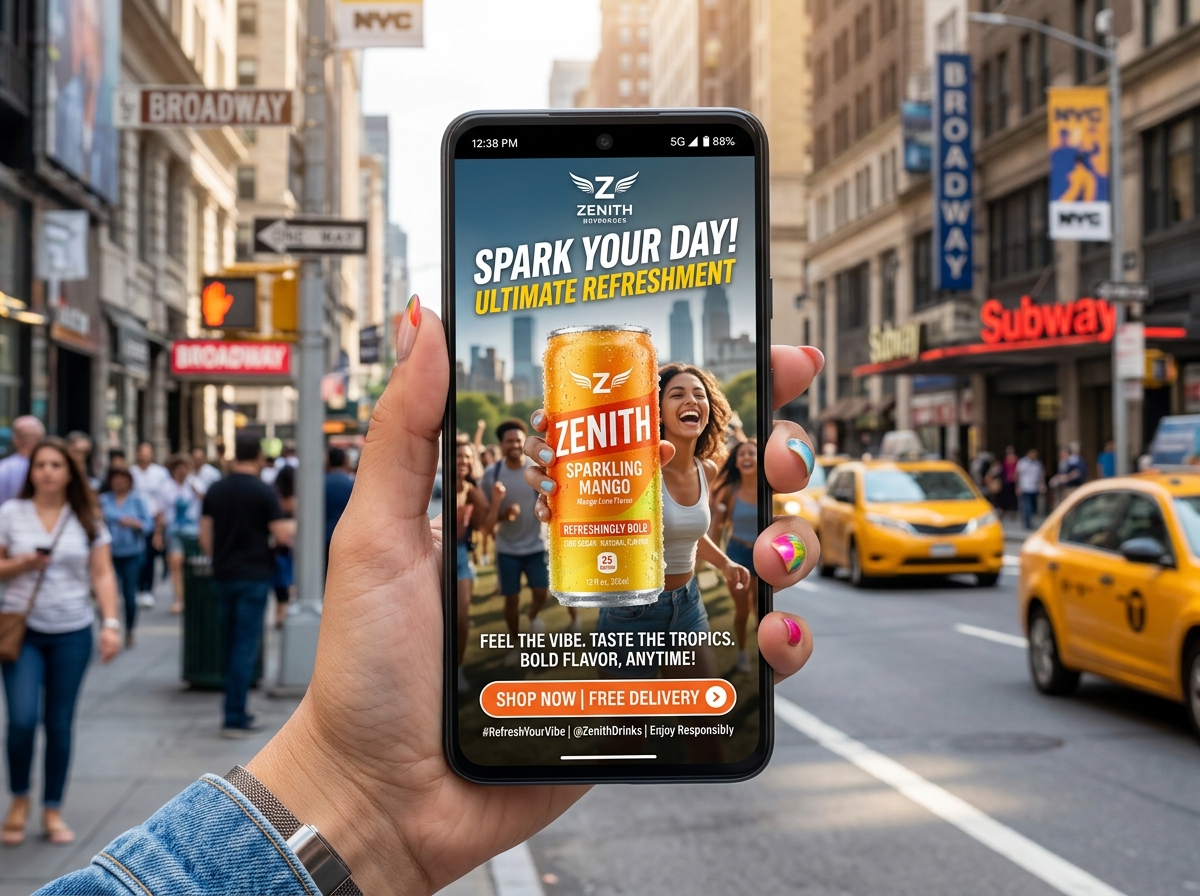
If your brand isn’t living on TikTok, Instagram Reels, and Amazon, it’s essentially invisible. Digital channels are where discovery happens today. However, simply “being there” isn’t enough. You need to optimize your creative assets based on hard data.
The Science of Ad Creatives
Recent data from over 26,000 ad creatives shows some surprising trends that can significantly boost your paid digital advertising for food and beverage. For instance, did you know that creatives without a human actually increased the average click-through rate (CTR) by 15%? In the beverage world, the product is the star. People want to see the condensation on the can and the vibrant color of the liquid.
| Metric | Impact of Optimization |
|---|---|
| CTR (Click-Through Rate) | +25% when using the word “New” |
| DPVR (Detail Page View Rate) | +61% with bright backgrounds/lighting |
| ROAS (Return on Ad Spend) | +21% for creatives focusing on the product over humans |
| PR (Purchase Rate) | +32% when using multiple identifiable objects (9+) |
Amazon Ads Best Practices
Amazon has become a powerhouse for beverage sales, but the competition is fierce. To stand out, we recommend these data-backed tips:
- The “New” Factor: Using the word “new” in your ad text can increase CTR by 25%.
- Lighting Matters: Bright backgrounds and foregrounds increase DPVR by 61% compared to darker, moodier ads.
- Word Count: Surprisingly, ads with a higher word count (18 words or more) saw a 15% higher ROAS than those with less than 10 words. It turns out beverage buyers like a bit of context.
- Avoid “Taste”: Data suggests that avoiding the word “taste” in ad copy actually improves DPVR by a staggering 73%. Show them it tastes good through visuals; don’t just tell them.
The Power of Emotional Branding and Storytelling
In a world of “me-too” products, your story is your moat. Beverage brand marketing is unique because, at a certain point, many drinks in a category taste similar. What separates a generic cola from Coca-Cola is the emotional resonance built over a century.
Lessons from the Giants
A study of Coca-Cola’s marketing strategy reveals that they don’t sell sugar water; they sell “happiness.” Their “Share a Coke” campaign is a masterclass in food and beverage branding. By replacing their iconic logo with people’s names, they transformed a mass-produced item into a personal gift. This led to a massive spike in social media sharing and reversed a decade-long decline in sales among young adults.
Building Your Narrative
Your brand needs to stand for something. Whether it’s nostalgia, community building, or a rebellious spirit (like Liquid Death’s “Murder Your Thirst” mantra), that narrative must be consistent. This consistency should extend to your personalization in email campaigns. If a customer buys a functional energy drink for their morning workout, your follow-up email shouldn’t just be a receipt—it should be a high-five and a tip for their next training session.
Innovative Beverage Brand Marketing through Influencers and AI
The days of the “celebrity spokesperson” are fading in favor of authentic micro-influencers. These are creators who actually use your product in their daily lives.
- Casual Saturation: Instead of a scripted “ad,” have an influencer simply have your drink on their desk during a “Get Ready With Me” video. It builds credibility that traditional ads can’t touch.
- AI and Tech: Forward-thinking brands are using AI to generate on-brand visuals 10x faster. We’re also seeing brand advocacy initiatives leverage AR (Augmented Reality) on labels. Imagine a customer scanning your can and seeing a 3D animation of the ingredients’ origins. This creates “first-party data” opportunities that help us predict what your customers will want next.
Experiential Tactics and Product Launch Strategies
You can’t taste a digital ad. That’s why experiential marketing remains a cornerstone of beverage brand marketing. Getting the liquid into people’s mouths is the fastest way to convert a skeptic into a fan.
The “Drop” Culture
Borrowing a page from the sneaker industry, beverage brands are now using “flavor drops” and limited-edition releases. This creates a sense of urgency. If you only have 5,000 cases of a “Winter Arcade” flavored sparkling water, your most loyal fans will scramble to get it. Use email marketing for beverage brands to give your subscribers early access, making them feel like “insiders.”
Memorable Experiential Ideas:
- Pop-up Tasting Rooms: Create a sensory environment that reflects your brand’s vibe—think a “zen garden” for a relaxation tea or a “high-energy garage” for a pre-workout drink.
- Hospitality-Driven Experiences: Partner with local bars or gyms in Denver or Boulder to host “tasting takeovers.”
- Gamified Vending Machines: Poppi used a pink vending machine stunt that, despite some initial backlash over exclusivity, turned into a massive fan-driven event where followers nominated their cities for the next “drop.”
- Event Sponsorships: Don’t just slap your logo on a banner. Create a “hydration station” at a 5K run or a “mocktail lounge” at a music festival.
For more detailed steps, check out our food and beverage marketing how-to guide.
Scaling Your Beverage Brand Marketing with SEO and Packaging
While social media provides the “spark,” SEO for beverage companies provides the “fuel” for long-term growth. When someone searches for “best low-sugar soda” or “organic kombucha in Colorado Springs,” you want your brand to be the first thing they see.
Packaging as a Billboard
Your packaging has to work twice: once on a crowded retail shelf and once in a small thumbnail on a smartphone screen.
- Visual Identity: Bold typography and high-contrast colors help. Custom beverage labels that use tactile finishes (like matte or metallic) can make a drink feel more premium before the first sip.
- Digital Integration: Include a QR code that leads to a mobile-optimized landing page. Ensure your website navigation for food and beverage is seamless so that a curious scanner can become a subscriber in two clicks.
- Sustainability Messaging: If you use aluminum cans because they are more recyclable than plastic, scream it from the rooftops (or at least put it in bold on the can).
By maximizing SEO for food and beverage business, you ensure that your brand isn’t just a flash in the pan but a consistent presence in your customers’ lives.
Measuring Success and Future Trends for 2026
You can’t manage what you don’t measure. In beverage brand marketing, we look beyond just “likes.” We track ROI, engagement rates, and—most importantly—sales uplift.
Key Metrics to Watch
- NPS (Net Promoter Score): How likely are your customers to recommend your drink to a friend? One major brand improved their NPS by 16 points just by using AI to analyze event feedback.
- DPVR and PR: On Amazon, these tell you if your ads are actually driving people to your product page and if they are hitting “Buy Now.”
- Dwell Time: At experiential events, how long are people engaging with your brand?
Looking Ahead to 2026
The future is personalized. We predict a rise in “personalized nutrition,” where beverages are tailored to an individual’s specific health data. We also expect “carbon neutrality” to move from a goal to a requirement for shelf space in major retailers. Omnichannel consistency—ensuring your brand feels the same at a mom-and-pop shop in Fort Collins as it does on your TikTok feed—will be the hallmark of the winners.
Frequently Asked Questions about Beverage Brand Marketing
How does beverage marketing differ from food marketing?
While both fall under the CPG (Consumer Packaged Goods) umbrella, beverage marketing relies much more heavily on brand image, lifestyle association, and packaging. You can describe the flavor of a snack, but a drink is often an emotional accessory. People hold a specific brand of water or energy drink to signal their values or personality.
What are the most effective KPIs for a new drink brand?
For a startup, Customer Acquisition Cost (CAC) and Repeat Purchase Rate are king. You need to know how much it costs to get that first bottle in their hand and if they liked it enough to come back for a 12-pack.
Why is packaging design critical for online beverage sales?
Online, the consumer can’t touch the bottle or see the scale. Your design must communicate the “vibe” and the “benefit” instantly through a tiny screen. Bold colors and clear, readable text are essential for converting “scrollers” into “buyers.”
Conclusion
At Evergreen Results, we live and breathe the active lifestyle. From our home base in Denver to our partners in Castle Rock and Fort Collins, we understand that beverage brand marketing is about more than just selling a product—it’s about building a community.
Whether you’re looking for sustainable growth or want to dominate your niche through data-driven campaigns, we’re here to help you turn your drink into “liquid gold.” The market is thirsty for something new. Is your brand ready to deliver?
Explore our results and let’s start building your movement today.