
Beyond the Click: How to Skyrocket Your Website Visitors
Why Website Traffic is the Lifeblood of Your Online Business
Driving website traffic opens the door to more leads, sales, and revenue. But with online sales predicted to reach $8.1 trillion by 2026, the competition for those visitors has never been fiercer.
Here’s what you need to know about driving website traffic:
- Traffic comes from three main sources: Paid (ads you buy), Owned (channels you control like email), and Earned (mentions and links from others)
- Eight types of traffic drive visitors: Direct, Referral, Organic Search, Paid Search, Organic Social, Paid Social, Email, and Display Ads
- Organic search drives 51% of all web traffic – making it the single most important channel to master
- Success requires both quantity and quality – you need the right visitors, not just more visitors
Your website is your digital storefront where visitors become customers. But getting them there is the hard part.
Strategies from five years ago are obsolete. Search engines, social media algorithms, and AI-powered search have reshaped how people find brands, and your audience expects more from every interaction.
This guide cuts through the noise. You’ll learn proven strategies to increase your website visitors – from building a conversion-ready foundation to dominating organic search, from leveraging social media and PR to accelerating growth with paid ads and email.
I’m Adam Bocik, founder of Evergreen Results, where I’ve spent years helping active lifestyle brands drive website traffic and open up sustainable growth. Whether you’re just starting out or looking to scale, these strategies will help you attract more of the right visitors to your site.
Drive website traffic terms at a glance:
The Foundation: Creating a High-Traffic, High-Conversion Website
Before driving traffic, you must ensure your website is a place visitors want to stay, as a poorly designed site repels users. A high-traffic, high-conversion website is built on a solid foundation of user experience, brand identity, thoughtful design, compelling content, and clear conversion paths. We want to create a Guide to Crafting User-Friendly Website that converts visitors into customers.
The Role of Brand Identity in Driving Direct Traffic
Your brand identity is your business’s personality—how you communicate your values, mission, and uniqueness. A strong brand is crucial for driving direct traffic from visitors who know and trust you enough to seek you out directly.

Today’s customers crave authenticity and trust, seeking genuine connections over mere products. Your brand philosophy, visual identity (logos, colors, typography), and consistent messaging are vital. A website’s design can even be more important to visitors than credibility indicators like privacy policies. By consistently presenting who you are, you build recognition and loyalty, making your site a natural destination—especially for active lifestyle and food/beverage brands where values resonate deeply. For help building a cohesive brand, consider working with a Lifestyle Branding Agency.
How User Experience (UX) and Accessibility Impact Traffic
A positive user experience (UX) is non-negotiable for retaining visitors. A bad one is catastrophic: 88% of consumers are unlikely to return to a site after a bad interaction. What makes for a great UX?
- Mobile-first design: With nearly 70% of U.S. web traffic coming from mobile devices in 2022, your site must look and function perfectly on phones and tablets. Google even uses mobile-first indexing, meaning it primarily evaluates your mobile site for ranking.
- Fast loading speeds: Modern internet users are impatient. A staggering 53% of visits are abandoned if a mobile site takes longer than 3 seconds to load. We need to ensure your site loads at lightning speed.
- Clear navigation: Visitors want to find information easily. In fact, over three-quarters of survey respondents ranked “ease of finding information” as the most important website feature. Intuitive menus, clear categories, and internal links guide users effortlessly.
- Readability and visual hierarchy: Your content should be easy to scan and understand. This means using consistent styles, appropriate font sizes, sufficient white space, and organizing information with clear headings and bullet points.
- Website accessibility: This is about making your site usable for everyone, including those with disabilities. Following WCAG guidelines (Web Content Accessibility Guidelines) ensures compatibility with screen readers and other assistive technologies. An accessible website not only expands your audience but also signals quality to search engines.
Investing in these UX elements is an investment in your traffic and your bottom line. Our team specializes in Website and Design Development that prioritizes these critical factors.
Crafting Compelling Content and Messaging
Compelling content that resonates with your audience is essential for attracting and engaging visitors. Your website messaging should quickly answer four key questions for any visitor:
- What is this page about?
- Who is it for?
- What can I do here?
- Why should I choose this over another option?
We need to educate your audience and offer genuine value. Today’s consumers prefer to self-educate, often doing extensive research before engaging with a salesperson. Providing insightful articles, helpful guides, and informative videos positions you as an authority and builds trust.
When crafting your content, remember to:
- Avoid jargon: Steer clear of corporate buzzwords like “next-generation,” “robust,” or “scalable.” They often dilute your message and make you sound generic. Be clear, not clever.
- Be clear, not clever: Say what you mean directly. Your audience shouldn’t have to decipher your message. Clarity builds trust and drives action.
- Define quality content: Quality means it’s unique, written for humans (not just algorithms), provides real value, is accurate, well-sourced, and constantly refreshed. It should demonstrate your experience, expertise, authoritativeness, and trustworthiness (E-E-A-T), which Google increasingly prioritizes.
For active lifestyle and food/beverage brands, compelling content often involves storytelling, showcasing the passion behind your products, and demonstrating how they improve your customers’ lives. Developing a strong Content Strategy for Wellness can help you stand out.
Optimizing Landing Pages, CTAs, and Forms for Conversion
Once visitors arrive and are engaged by your content, we want to guide them towards a desired action. This is where effective calls to action (CTAs), well-designed landing pages, and optimized forms come into play.
- Effective Calls to Action (CTAs): A CTA invites the visitor to take the next step. It must be visible, relevant, and frictionless. Use action-oriented language (e.g., “Shop Now,” “Download Guide”) and make it stand out visually. Test different wordings and colors to see what resonates.
- CTA positioning: Place CTAs strategically throughout your content and on landing pages. For example, a blog post could end with a CTA to download a guide, while a product page needs a prominent “Add to Cart” button. Avoid overwhelming visitors with too many CTAs.
- Landing page design: Landing pages are designed with a single goal: conversion. This means a clean, distraction-free layout, often without main website navigation. The content should be concise, use bullet points, and focus on the value proposition of your offer. For e-commerce, effective PPC Landing Page E-commerce and Marketing are critical.
- Form optimization: Forms are often the final conversion hurdle, so reduce friction. Only ask for essential information. Use clear, action-based buttons (e.g., “Submit Inquiry”). Consider multi-step forms for longer processes and leverage autofill where possible. A short privacy statement also builds trust.
- Customer proof: Integrating testimonials, case studies, and reviews directly into your landing pages and forms can significantly boost conversions. Showing real people benefiting from your products or services builds confidence. In fact, one study found that real photos of customers outperformed stock photos by 35% in conversion tests because authentic visuals increase trust and emotional connection.
Dominating Organic Search to Drive Website Traffic
Now that your website is a welcoming and efficient digital storefront, let’s talk about how to get people there. Dominating organic search is arguably the most powerful way to drive website traffic sustainably.

Why is organic search so vital? Because it brings in highly qualified visitors who are actively looking for information, products, or services that you offer. Studies confirm that organic search from sites like Google drives a massive 51% of all web traffic nowadays. For businesses in Denver, CO, appearing at the top of search results can mean the difference between thriving and struggling. Our team of experts in SEO Colorado helps businesses achieve this visibility.
The Core Components of a Powerful SEO Strategy
A robust SEO strategy is multi-faceted, encompassing on-page, off-page, and technical elements, all underpinned by thorough keyword research and a keen eye on emerging trends like Generative Engine Optimization (GEO).
- On-page SEO: This involves optimizing elements directly on your website. Think page titles, meta descriptions, headings (H1s, H2s), image alt text, and the content itself. We make sure your target keywords are naturally integrated throughout your pages, signaling relevance to search engines. However, avoid “keyword stuffing” – quality and readability always come first.
- Off-page SEO: This refers to activities outside your website that influence your rankings. The most significant factor here is backlinks (links from other reputable websites to yours). We’ll dive deeper into this shortly.
- Technical SEO: This ensures search engines can easily crawl, index, and understand your website. It includes factors like site speed, mobile-friendliness, XML sitemaps, and preventing broken links through 301 redirects. For a deep dive, Google offers a comprehensive SEO starter guide.
- Keyword research: This is the foundation of any successful SEO strategy. We identify the words and phrases your target audience uses to find information related to your business. Tools like Google Trends can help uncover popular keywords. We also look for “content gaps” – topics your competitors cover that you don’t, which represent opportunities to create valuable content and capture traffic.
- Generative Engine Optimization (GEO): With the rise of AI tools like ChatGPT, Perplexity, and Google’s AI Overviews, search is evolving. GEO complements traditional SEO by optimizing your content to be recognized, summarized, and cited in AI-generated answers. This means writing clearly and conversationally, using question-based headings, summarizing key points, and ensuring your content is authoritative and accurate. For comprehensive solutions, explore our Service: Search Engine Optimization.
Blogging and Content Creation for Authority and Traffic
Maintaining a blog is one of the most effective ways to consistently drive website traffic and establish your brand as an authority in your niche.
- Blogging benefits: A blog allows you to create fresh content regularly, signaling to search engines that your site is active and relevant. It provides a platform to share your expertise, answer common customer questions, and build a community around your brand. For food and beverage businesses, a blog can be invaluable for Maximizing SEO for Food and Beverage Business by sharing recipes, ingredient insights, or behind-the-scenes stories.
- Establishing authority: By consistently publishing high-quality, informative content, you demonstrate your experience, expertise, authoritativeness, and trustworthiness (E-E-A-T). Google rewards sites that are considered experts in their field.
- Refreshing outdated content: SEO isn’t a “set it and forget it” game. Regularly refreshing outdated blog posts with new data, insights, and images can significantly boost their search rankings and traffic. This “historical optimization” can be a quick win, as the page already has some authority.
- Shareable and multi-format content: To extend your reach, create content that begs to be shared. This means using compelling visuals, infographics, and easily digestible formats. Consider repurposing your blog posts into videos, social media snippets, or even podcasts.
- Podcasts: Speaking of repurposing, podcasts are an excellent platform to gain brand exposure and drive website traffic. With 47% of Americans listening to podcasts monthly, it’s a growing audience. You can turn your blog posts into podcast episodes, feature industry experts, or become a guest on other podcasts to reach new listeners and direct them back to your site.
The Power of Backlinks and How to Earn Them
Backlinks are like votes of confidence from other websites. When a reputable site links to your content, it tells search engines your page is valuable and authoritative. The more high-quality backlinks you acquire, the higher your site is likely to rank, leading to more organic traffic. If people like your content, they will naturally want to link to it.
Here’s how we can strategically acquire backlinks:
- Create linkable assets: Develop exceptional content that other websites want to link to. This could be original research, comprehensive guides, insightful infographics, or unique tools.
- Guest posting: Write articles for other reputable blogs in your industry. This not only earns you a backlink but also exposes your brand to a new audience.
- Digital PR: Cultivate relationships with journalists, bloggers, and influencers. When they feature your brand or quote your experts, they often include a link back to your site.
- Broken link building: Find broken links on other websites and suggest your relevant content as a replacement.
- Competitor analysis: Use SEO tools to see where your competitors are getting their backlinks from, then target those sources.
- Collaborations: Partner with non-competing businesses for co-created content or joint promotions, leading to mutual backlinks.
Using Customer Proof to Drive Website Traffic and Build Trust
In a world saturated with marketing messages, customer proof is gold. Testimonials, case studies, and reviews are powerful tools that build confidence and encourage conversions. They show potential visitors that real people have benefited from your products or services.
- Authentic visuals: When showcasing customer proof, use real names, titles, and photos. One study found that real photos of customers outperformed stock photos by 35% in conversion tests. Authentic visuals increase trust, improve recall, and create stronger emotional connections, especially for active lifestyle and food/beverage brands where personal experiences matter.
- Strategic placement: Feature testimonials prominently on your homepage, product pages, and landing pages. Case studies can be dedicated sections of your website, providing in-depth stories of success.
- Encourage reviews: Actively ask satisfied customers for reviews on platforms like Google Business Profile, Yelp, or industry-specific sites. These reviews not only build trust but also contribute to your local SEO, helping you appear in “near me” searches in Denver, CO.
Expanding Your Reach with Social, PR, and Partnerships
Organic search is powerful, but a comprehensive strategy to drive website traffic also means expanding your reach across diverse channels. This includes leveraging social media, public relations, and strategic partnerships to engage audiences and build visibility.
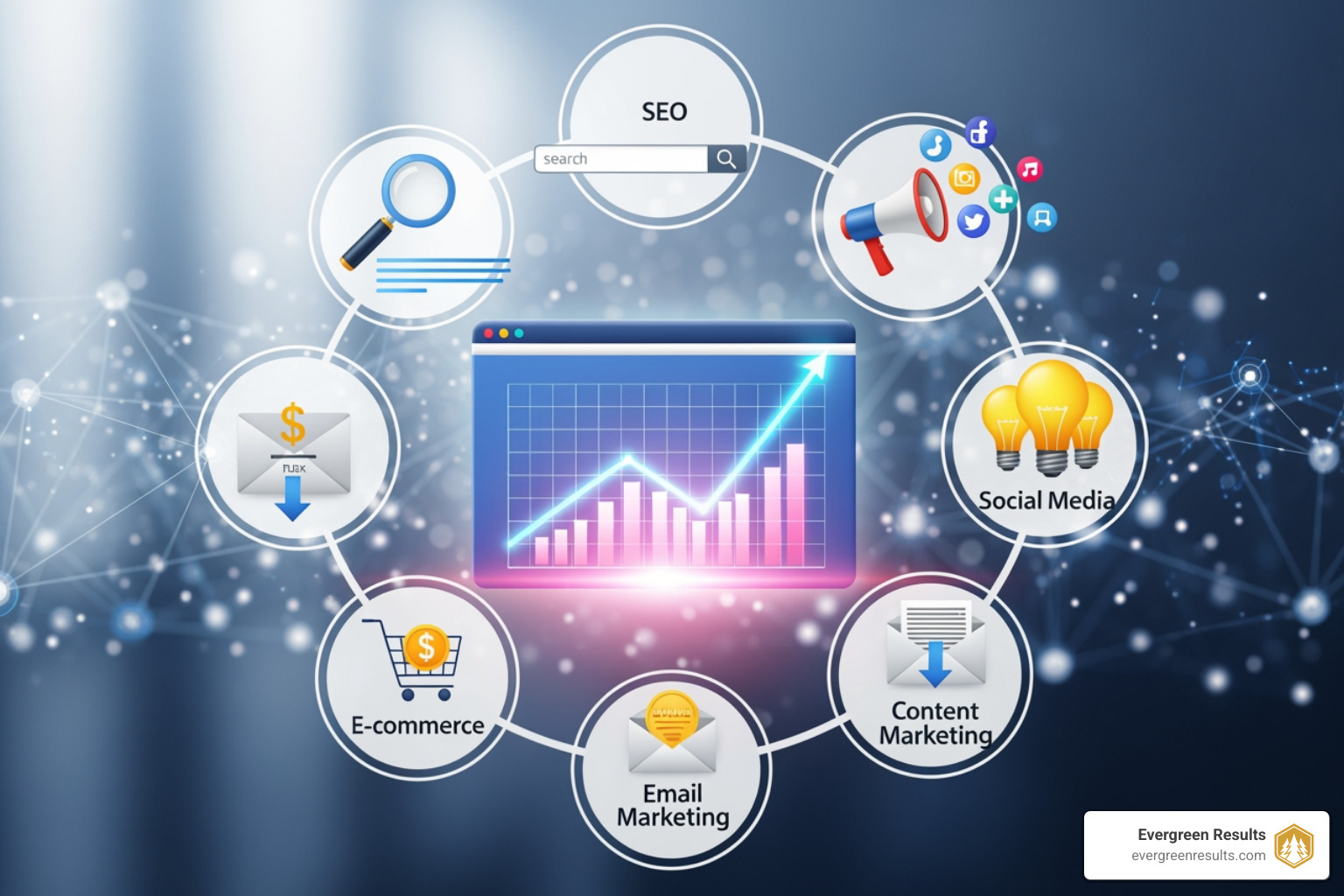
How to Drive Website Traffic with Social Media and Influencers
Social media is a dynamic platform for content distribution, audience engagement, and driving traffic back to your website. With the average person spending over 17 hours a week on social feeds, your audience is there.
- Content distribution: Tailor your content to each platform. Twitter (now X) limits posts to 280 characters, while YouTube Shorts limits videos to 60 seconds. LinkedIn is popular with millennials and great for professional content. Instagram thrives on visuals. Distribute links to your website content with compelling captions and visuals.
- Social media engagement: Don’t just broadcast; engage! Respond to comments, ask questions, run polls, and participate in relevant discussions. This builds community and keeps your brand top-of-mind, encouraging clicks back to your site.
- Influencer marketing: Partnering with industry influencers can significantly increase brand visibility and drive website traffic. People trust recommendations from those they admire: 31% of social media users find new products through influencers, a figure that jumps to 43% among Gen Z. Choose influencers whose audience aligns with yours and whose values resonate with your brand.
For more insights into maximizing your social media efforts, check out our Social Media ROI Strategies.
Generating Publicity and Referral Traffic Through PR and Collaborations
Public relations (PR) and strategic collaborations can generate powerful referral traffic – visitors who come to your site from links on other websites, articles, or mentions.
- Public relations strategies: A well-executed PR campaign can put your brand in front of new prospects. This might involve publishing press releases about new products or initiatives, getting featured in local Denver news outlets, or having your experts interviewed on podcasts or radio shows. While media outlets may not always include direct backlinks, a good story published in a trusted source will still drive curious readers back to your site, boosting your credibility and brand awareness.
- Brand collaborations: Partnering with other non-competing brands that share your target audience can be incredibly effective. For example, Nike collaborated with Apple on the Apple Watch, targeting athletes interested in fitness metrics. These partnerships can involve co-hosting webinars, cross-promoting content, or exchanging newsletter mentions, all leading to valuable referral traffic. For active lifestyle and outdoor brands, these collaborations can be particularly impactful. Learn more in our 9 Essentials to Marketing Outdoor Brands.
Tapping into Niche Communities and Offline Efforts
Beyond the mainstream, there are powerful niche communities and offline opportunities waiting to drive website traffic.
- Leveraging Reddit: Reddit, with over 330 million monthly active users, has evolved from a niche forum to the U.S.’s 3rd most visited website. It’s a goldmine for targeted traffic if leveraged correctly. The key is authenticity: participate genuinely in relevant subreddits, provide value, and subtly link back to your content when appropriate. Reddit recently struck a $60 million deal with Google to use its content for AI training, and now Reddit links are often favored in Google’s search results, making it an even more powerful platform.
- QR codes: Don’t underestimate the power of bridging the offline and online worlds. QR codes can be leveraged to drive website traffic directly from physical marketing materials like flyers, product packaging, or event signage. Simply scan the code, and a user is taken directly to a specific page on your website. There are many free QR code generators available online, like Bitly or Canva, making them simple to implement.
- Community participation: Whether it’s online forums (like Reddit, but also industry-specific ones) or local events in Denver, CO, actively participating and providing value can organically lead people to find your brand and website. You can even create your own community, like Apple’s support community or Lego’s online community, to foster engagement and provide valuable resources. Tune into our Podcast for more insights.
Accelerating Growth with Paid Advertising and Email Marketing
While organic strategies build long-term, sustainable traffic, sometimes you need a faster boost, or a way to re-engage past visitors. This is where paid advertising and email marketing come in, providing powerful tools to accelerate your growth and drive website traffic.
Driving Repeat Visits with Strategic Email Marketing
Email marketing remains one of the most effective ways to nurture leads, build customer loyalty, and drive website traffic, especially repeat visits.
- Building an email list: The first step is to build a robust email list. Offer valuable incentives like exclusive content, discounts, or early access to products in exchange for email sign-ups. Make sure your sign-up forms are easy to find and use.
- Nurturing leads: Once you have subscribers, send them relevant, personalized content. This could be new blog posts, product updates, special offers, or educational resources.
- Effective CTAs: Every email should have a clear call to action that directs users back to your website. Whether it’s “Read the Latest Article,” “Shop Our New Collection,” or “Learn More,” make it obvious what you want them to do.
- Personalization: Segment your audience and personalize your emails. A personalized email is far more likely to be opened and clicked than a generic one.
- Avoiding spam: Never spam your audience. It destroys trust and leads to unsubscribes. Always be consistent with your content’s style and frequency.
For businesses in Colorado, a targeted Email Marketing Strategy can be a game-changer.
Smart Paid Advertising Strategies to Increase Traffic
Paid advertising offers immediate and scalable ways to drive website traffic to your site, allowing precise targeting of your ideal audience.
- Paid advertising types: This includes various channels like paid search (PPC on Google Ads), paid social (ads on Facebook, Instagram, LinkedIn), and display ads (banner ads across websites).
- Retargeting: This is a highly effective strategy that targets users who have already visited your website but didn’t convert. Imagine someone browsing your products in Denver, CO, but leaving before purchase. Retargeting allows you to show them ads for those specific products on other websites or social media platforms, gently reminding them to return. Platforms like Google Ads, YouTube, and major social media networks offer robust retargeting options. E-commerce platforms like Shopify and Woo also have built-in tools, and native advertising platforms like Taboola or Outbrain can be leveraged.
- Ad diversification: Don’t put all your eggs in one basket. Diversifying your ad strategy across multiple platforms and formats (search, social, display, video) can expand your reach, reduce risk, and often lead to better overall performance. This ensures you’re reaching your audience wherever they are online.
- Budget allocation and campaign optimization: Paid ads require careful monitoring and optimization. We continuously track performance metrics, adjust bids, refine ad copy, and test different creatives to ensure your budget is spent efficiently to maximize traffic and ROI. Our Digital Ads Colorado services are designed to manage these complexities.
Using A/B Testing to Optimize for Maximum Impact
A/B testing (or split testing) is a method for optimizing your content and ad campaigns for better traffic and conversions. It’s about making data-driven decisions, not just guesses.
- A/B testing definition: You create two versions (A and B) of a webpage element, an ad, or an email. Half your audience sees version A, and the other half sees version B. You then measure which version performs better based on your chosen metric (e.g., click-through rate, conversion rate).
- Optimizing content: You can A/B test headlines, calls to action, image choices, button colors, and even entire page layouts. For instance, testing two different headlines for a blog post can reveal which one attracts more clicks from search results or social media.
- Optimizing ad campaigns: A/B testing is crucial for paid ads. You can test different ad copies, visuals, targeting parameters, and landing page designs to see which combination yields the lowest cost-per-click or highest conversion rate. Software like Optimizely or VWO offer simple-to-use split-testing features.
- Data-driven decisions: The beauty of A/B testing is that it removes guesswork. You get clear data on what works and what doesn’t, allowing you to continuously refine your strategies and maximize the impact of your efforts to drive website traffic and conversions.
Conclusion
Successfully driving website traffic in today’s dynamic digital landscape requires a holistic and continuously evolving strategy. It’s not about relying on a single tactic, but rather weaving together a comprehensive approach that prioritizes your audience, leverages cutting-edge technology, and adapts to changing search and social algorithms.
From building a conversion-ready website with a strong brand identity and exceptional user experience, to dominating organic search through powerful SEO and content marketing, and expanding your reach with strategic social media, PR, partnerships, paid advertising, and email – every piece of the puzzle contributes to sustainable growth.
At Evergreen Results, we understand the unique challenges and opportunities for active lifestyle and food/beverage brands in Denver, CO, and beyond. We believe in continuous optimization, trial, and error, and regular adjustments to ensure your website isn’t just a digital storefront, but a thriving hub that consistently attracts, engages, and converts your ideal customers.
Ready to stop guessing and start seeing real results? Explore our Food and Beverage Marketing: A How-To Guide to Success or Contact our SEO experts today to discuss how we can help you drive website traffic and achieve your business goals.