
Why Email Marketing Best Practices Matter More Than Ever in 2025
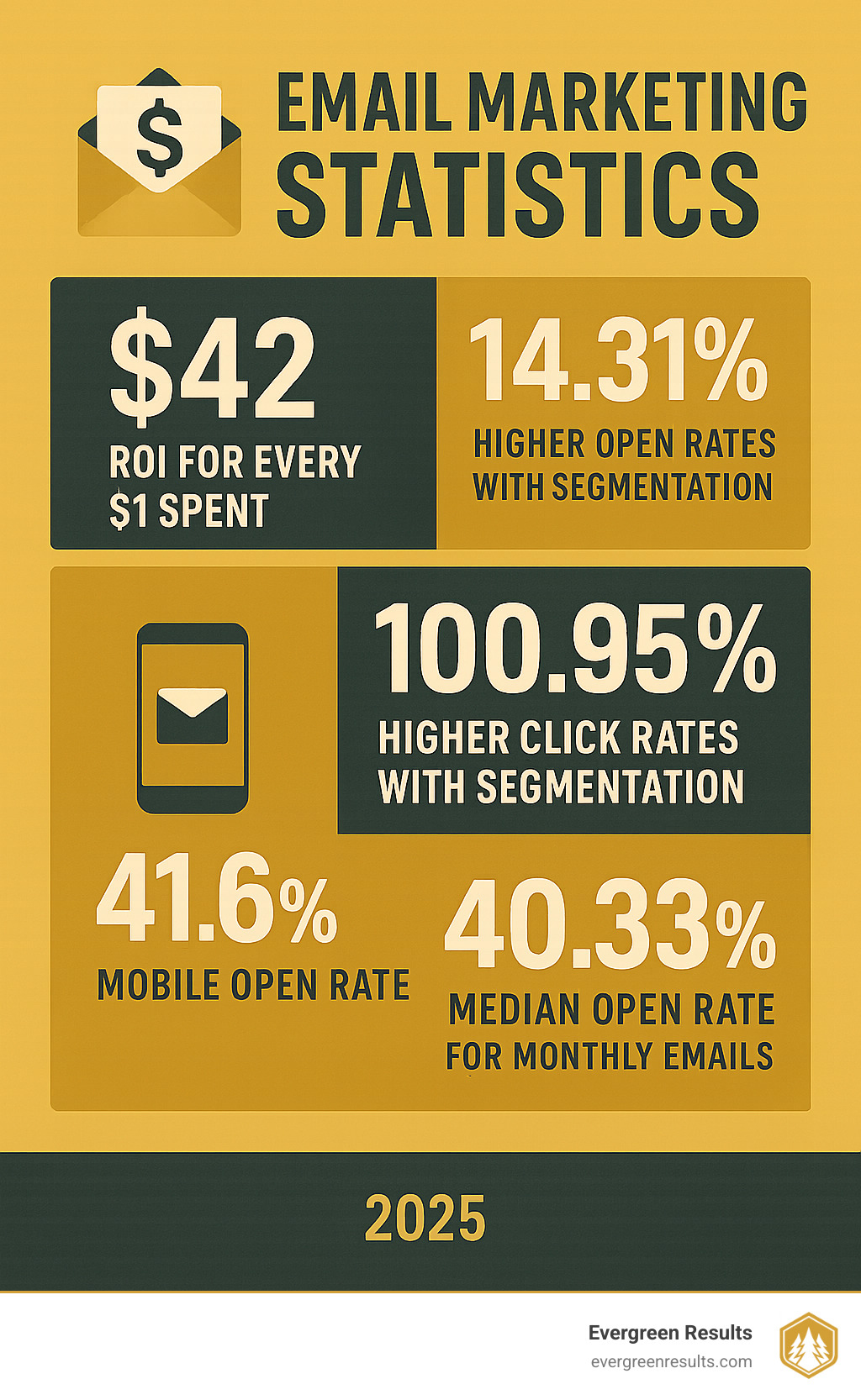
Email marketing best practices are the foundation of successful digital marketing campaigns, delivering an average return of $42 for every $1 spent. Whether you’re launching a new active lifestyle brand or scaling an established outdoor company, mastering these proven strategies can transform your customer relationships and drive sustainable growth.
Essential Email Marketing Best Practices for 2025:
- Build permission-based lists – Use double opt-in and never purchase email addresses
- Segment your audience – Segmented campaigns see 14.31% higher open rates and 100.95% higher click rates
- Personalize your content – Personalized emails deliver 6x higher transaction rates
- Optimize for mobile – 41.6% of emails are opened on mobile devices
- Test and analyze – A/B test subject lines, send times, and content for continuous improvement
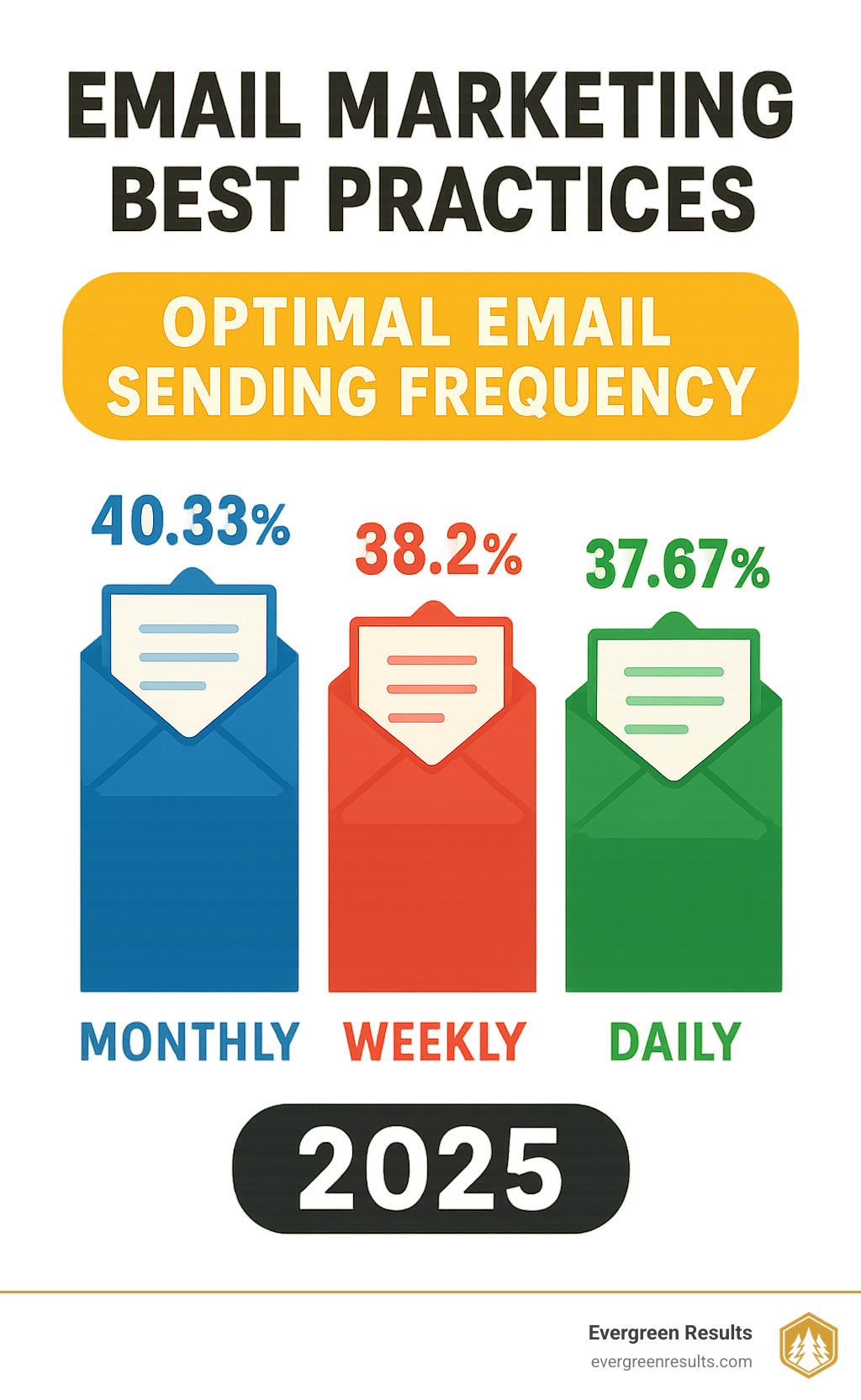
- Maintain consistent cadence – Monthly emails show highest median open rates at 40.33%
- Focus on deliverability – Avoid spam filters with proper authentication and sender reputation management
Email marketing remains one of the most powerful tools for active lifestyle brands to connect with their community. Unlike social media platforms where algorithms control your reach, email gives you direct access to customers who’ve chosen to hear from you. The key is following proven strategies that respect your subscribers while driving meaningful engagement.
With over 361 billion emails sent daily, standing out in the inbox requires more than just hitting send. It demands strategic thinking, compelling content, and understanding what makes subscribers click, convert, and stay loyal.
I’m Adam Bocik, founder of Evergreen Results. I’ve helped active lifestyle brands implement effective email marketing best practices that drive real growth. Through years of optimizing campaigns for outdoor and wellness brands, I’ve seen how the right email strategy can transform a business.
Email marketing best practices glossary:
Building a Foundation of Trust: List Management & Compliance
Crafting Emails That Captivate and Convert
The best emails feel like a personal, valuable conversation with a friend, even when crafted using proven email marketing best practices. Your subscribers are busy, checking emails between meetings or planning their next trip. You have seconds to grab their attention. The difference between a deleted email and one that drives action comes down to mastering key elements.
Master the Inbox: Essential Email Marketing Best Practices for Subject Lines
Your subject line is the first impression. With the average person receiving 121 business emails daily, it must draw people in.
Keep your subject lines under 50 characters for optimal mobile display. Personalization works, but don’t overdo it – using a first name occasionally feels friendly, but using it every time feels robotic.
Create urgency without being pushy. Instead of “URGENT: Buy now,” try “Last chance for early bird pricing on our Colorado retreat.” It feels natural and helpful, not desperate.
Questions work incredibly well for outdoor brands because they tap into curiosity. “Ready for your next trip?” or “What’s on your bucket list this season?” invite engagement. Our data shows that subject lines with questions can increase open rates by up to 10%.
Using numbers and specifics cuts through the noise. “5 trails you haven’t finded yet” or “3 pieces of gear that changed everything” promise concrete value.
Don’t forget about preview text – it’s your subject line’s best friend. Keep it under 140 characters and use it to expand on your subject line, not repeat it.
A/B testing subject lines is where you’ll find your biggest wins. Test questions versus statements, emojis versus text-only, and personalization versus generic approaches.
Write Captivating, Concise, and Conversational Copy
Readers often scan emails in an F-shaped pattern. This means your most important information needs to be front and center.
Keep your email copy between 50-125 words for optimal engagement. Write in short paragraphs – two to three sentences maximum. Big blocks of text feel overwhelming on mobile devices.
Your brand voice should shine through every email. For active lifestyle brands, this usually means conversational, enthusiastic, and authentic.
Storytelling is your secret weapon. Instead of just announcing a new product, share the story behind it. “Last month, our team tested the new Alpine Pro jacket on a 14er in Colorado. At 13,000 feet, when the weather turned nasty, this jacket kept Sarah warm and dry during an unexpected storm. Now it’s ready for your next trip.”
Use headings and bullet points strategically to break up content and make it scannable. For more detailed copywriting strategies, check out our guide on creating an engaging email campaign.
Design for Visual Appeal and Accessibility
With 41.6% of emails opened on mobile, responsive design is essential. Your emails must look great and function perfectly on any device.
Mobile-first design means starting with the smallest screen and working up. Use a single-column layout that flows naturally on mobile. Make sure your buttons are large enough to tap easily – minimum 44 px is the standard. Keep your font sizes readable with 14 px minimum for body text.
Accessibility matters. Alt text for all images helps screen readers describe what’s shown. Describe what’s in the photo, like “Hiker crossing a suspension bridge over a mountain valley.”
High contrast ratios ensure your text is readable for everyone. Use a contrast checker to verify your color combinations meet accessibility standards. Web-safe fonts like Arial, Helvetica, or Times New Roman display consistently across all email clients.
Dark mode optimization is becoming increasingly important. Over one-third of subscribers view emails in dark mode, so test your designs in both light and dark environments.
Brand consistency builds recognition and trust. Use your brand colors, fonts, and imagery style consistently across all emails.
Drive Action with a Clear and Compelling Call-to-Action (CTA)
Every email needs a clear purpose and a single primary CTA. Multiple CTAs confuse subscribers and dilute your message.
Action-oriented language works best for outdoor brands. Instead of generic “Shop Now” buttons, try “Gear up for your trip” or “Find your trail companion.”
Make your buttons stand out with contrasting colors that still feel on-brand. Place your primary CTA above the fold so mobile users see it without scrolling. Button text should describe the outcome – “Download trail guide” tells people exactly what they’ll get versus the vague “Click here.”
CTA placement strategy matters. Your primary CTA should be prominent above the fold. Secondary CTAs can appear mid-email or at the bottom. Text links provide additional opportunities for engagement without overwhelming the design.
The best CTAs feel natural and helpful, not pushy. They should be the logical next step in the conversation.
Advanced Strategies: The Email Marketing Best Practices That Drive Growth

These advanced strategies will help you maximize the potential of your email marketing campaigns and drive sustainable growth for your active lifestyle brand.
Leverage Audience Segmentation and Personalization
Our research shows that segmented campaigns achieve 14.31% higher open rates and 100.95% higher click rates compared to non-segmented campaigns.
Effective segmentation strategies for active lifestyle brands:
Demographic segmentation:
- Age groups (Gen Z vs. Millennials have different outdoor preferences)
- Geographic location (mountain vs. coastal activities)
- Gender (different gear and activity preferences)
- Income level (budget vs. premium product focus)
Behavioral segmentation:
- Purchase history (frequent buyers vs. occasional purchasers)
- Email engagement level (highly engaged vs. re-engagement needed)
- Website behavior (product page visits, blog readers)
- Activity preferences (hiking, climbing, running, cycling)
Psychographic segmentation:
- Experience level (beginner vs. expert outdoor enthusiasts)
- Values (sustainability-focused vs. performance-driven)
- Lifestyle (weekend warriors vs. daily athletes)
- Brand loyalty (new customers vs. repeat buyers)
Personalization beyond first names:
- Product recommendations based on past purchases
- Content custom to activity preferences
- Location-specific trail or event recommendations
- Seasonal gear suggestions based on local climate
For cross-industry insights, see our guide on Personalization in Email Campaigns for Food & Beverage, which also applies to active lifestyle brands.
Use Automation and AI to Improve the Subscriber Journey
Welcome emails alone generate 320% more revenue per email and have open rates exceeding 86%.
Essential automated email sequences:
Welcome series (3-5 emails over 2 weeks):
- Immediate welcome with brand story and expectations
- Product education and best sellers
- Community features and user-generated content
- Exclusive subscriber benefits
- Encourage social media connection
Abandoned cart recovery (3 emails over 1 week):
- Gentle reminder with cart contents (sent 1 hour after abandonment)
- Social proof and reviews (sent 24 hours later)
- Final chance with incentive (sent 72 hours later)
Post-purchase follow-up:
- Order confirmation and shipping details
- Product care instructions and tips
- Review request (2 weeks after delivery)
- Complementary product recommendations
- Loyalty program invitation
AI applications in email marketing:
- Subject line optimization: AI can test thousands of variations
- Send time optimization: AI determines optimal sending times for each subscriber
- Content personalization: Dynamic content based on user behavior
- Predictive analytics: Identify subscribers likely to churn or convert
According to our research, 42% of email marketers save 30 minutes to 2 hours weekly using AI tools. For more comprehensive automation strategies, see our Email Marketing Strategy for Food & Beverage Brands, which includes principles applicable to all lifestyle brands.
Optimize and Refine with A/B Testing and Analytics
A/B testing transforms guesswork into data-driven decisions. Test one element at a time for clear results on what drives engagement.
Elements to test:
- Subject lines: Length, personalization, emojis, questions vs. statements
- Send times: Days of the week, times of day
- Content length: Short vs. long-form content
- CTA buttons: Color, size, text, placement
- Images: Product shots vs. lifestyle imagery
- Email format: Newsletter vs. promotional style
Key metrics to track:
- Open rate: Industry average is 18-22%
- Click-through rate: Industry average is 2-3%
- Conversion rate: Percentage who complete desired action
- Unsubscribe rate: Should stay below 0.5%
- Revenue per email: Ultimate measure of success
Advanced analytics insights:
- Heat mapping: See where subscribers click most
- Engagement over time: Track how interest changes
- Device performance: Mobile vs. desktop engagement
- Geographic performance: Regional preferences and behaviors
Our research shows that Fridays have the best open rates at 18.9% and click-through rates at 2.7%. However, your audience might be different, which is why testing is crucial.
Determine a Consistent Sending Cadence
Our data shows that monthly emails have the highest median open rates at 40.33%, while emails sent more than seven times per week see lower open rates at 37.67%.
Frequency guidelines by email type:
- Newsletters: Weekly to monthly
- Promotional emails: 2-4 times per month
- Product updates: As needed, but not more than weekly
- Educational content: Weekly to bi-weekly
- Seasonal campaigns: Aligned with outdoor seasons and activities
Setting subscriber expectations:
- Clearly state email frequency during signup
- Offer frequency preferences in your preference center
- Monitor engagement metrics to adjust frequency
- Provide valuable content that justifies your sending schedule
Fighting email fatigue:
- Vary your content types and formats
- Ensure every email provides value
- Use re-engagement campaigns for inactive subscribers
- Allow subscribers to reduce frequency before unsubscribing
For active lifestyle brands, seasonal considerations are crucial. Align your sending cadence with your audience’s seasonal interests, like ski gear in winter and hiking content in summer.
Explore our complete library of strategies in our Email Marketing Articles section for more detailed guidance on cadence optimization.
Frequently Asked Questions about Email Marketing
Let’s address common questions about implementing email marketing best practices, based on years of experience helping active lifestyle brands.
How often should I clean my email list?
Clean your email list every six months at minimum, with quarterly cleaning being ideal if you’re sending emails frequently. The key is removing subscribers who haven’t engaged in 12 months, but always run a re-engagement campaign first. Give these inactive subscribers one last chance with a compelling “We miss you” email that offers genuine value, like exclusive access to a new trail guide or early bird pricing on your latest gear.
Watch for warning signs that indicate it’s cleanup time: bounce rates creeping above 2%, declining open rates, increasing spam complaints, or low click-through rates. These metrics tell you that your list health needs attention before it impacts your sender reputation.
What is a good open rate for email marketing?
For active lifestyle brands, here’s what we typically see for open rates: excellent performance is 25% or higher, good performance ranges from 18-25%, average sits between 15-18%, and anything below 15% needs improvement.
Focus on your own performance trends over industry averages. A declining 20% open rate is more concerning than a consistent 18%. Your audience’s engagement patterns are what matter.
With iOS privacy updates affecting how open rates are tracked, smart marketers are also monitoring click-through rates and actual conversions as more reliable metrics. These give you a clearer picture of whether your email marketing best practices are actually driving results.
Can I use emojis in my subject lines?
Yes, and they can be quite effective. Emojis can increase open rates by making your emails stand out, but use them thoughtfully.
For active lifestyle brands, relevant emojis work particularly well: ⛰️ for mountain and hiking content, 🚴♂️ for cycling emails, 🏃♀️ for running content, and ⛷️ for winter sports. These visual cues immediately communicate what your email is about.
Use 1-2 emojis maximum per subject line and always test with your specific audience first. Make sure they display correctly across different email clients, and consider your brand personality. Overuse can trigger spam filters.
The best approach is testing emoji subject lines against text-only versions to see what resonates with your community.
Conclusion
Mastering email marketing best practices is about building authentic relationships with people who share your passion for the outdoors. It’s like building a campfire: it needs a solid foundation and consistent attention.
The strategies we’ve covered form the foundation of sustainable email marketing success. Building trust through permission-based marketing ensures you’re connecting with people who want to hear from you. When you segment your audience and deliver personalized experiences, you’re showing subscribers that you understand their unique needs.
Designing mobile-first emails that work across all devices shows respect for how your audience reads their emails. Using automation and AI to scale personalization while maintaining authenticity helps you stay connected without losing that personal touch.
Testing continuously and letting data guide your optimization efforts is like checking your compass on a long hike – it keeps you heading in the right direction. Maintaining a consistent sending cadence that respects your subscribers’ time builds reliability.
The active lifestyle industry is built on community and authentic connections. Your email marketing should reflect these values by providing genuine value and respecting subscribers.
At Evergreen Results, we’ve seen how the right email strategy can transform active lifestyle brands. Whether you’re a startup outdoor gear company or an established wellness brand, these email marketing best practices will help you build sustainable growth while staying true to your brand’s adventurous spirit.
Email marketing is a marathon, not a sprint. Focus on long-term relationships, test what works for your audience, and continuously refine your approach based on data.
Ready to take your email marketing to the next level? Learn more about our Email Marketing Services and find how we can help your active lifestyle brand build stronger customer relationships and drive sustainable growth through strategic email marketing.