
Stop Guessing and Start Growing with Digital Marketing
Why Digital Marketing Online Advertising Is the Growth Engine Your Brand Needs
Digital marketing online advertising is the practice of promoting your brand through paid placements on internet-connected platforms — search engines, social media, streaming services, websites, and more.
Here’s a quick snapshot of what it covers:
| Type | What It Is | Best For |
|---|---|---|
| Search Ads | Paid results on Google/Bing | High-intent buyers |
| Social Media Ads | Paid posts on Meta, TikTok, LinkedIn | Awareness + engagement |
| Display Ads | Banner ads across websites | Brand visibility |
| Video Ads | Pre-roll or in-stream video | Storytelling + reach |
| Shopping Ads | Product listings with images + prices | E-commerce sales |
| Audio Ads | Ads on podcasts and streaming | Passive audience reach |
Unlike traditional advertising — think print, radio, or TV — digital advertising lets you target exactly who you want, track every dollar spent, and adjust your campaigns in real time. That’s a massive advantage for brands that need to grow efficiently.
The numbers back this up. 68% of online experiences begin with a search, and nearly 7 in 10 shoppers use social media for shopping inspiration or direct purchases. Your customers are already online — the question is whether you’re showing up for them.
I’m Adam Bocik, founder of Evergreen Results, and I’ve spent years helping active lifestyle and e-commerce brands build smarter, more sustainable approaches to digital marketing online advertising. In this guide, I’ll walk you through everything you need — from the basics to the tactics that actually move the needle.
Digital marketing online advertising vocab explained:
Understanding Digital Marketing Online Advertising and Its Core Benefits
At its heart, digital marketing online advertising is about meeting your customers where they already spend their time. Whether they are scrolling through Instagram in Denver or searching for hiking gear in Boulder, digital channels allow us to place your message directly in their line of sight.
The primary difference between digital and traditional marketing (like a Billboard Advertising or a flyer) is the level of control. Traditional marketing is often a “spray and pray” approach—you put a message out and hope the right person sees it. Digital advertising, however, offers precision targeting. We can show your ads specifically to people based on their interests, location, and even past purchase behavior.
Other core benefits include:
- Cost-Efficiency: You aren’t committed to a massive upfront print cost. You can start with a small budget and scale only when you see results.
- Measurability: Every click, view, and purchase is tracked. You’ll know exactly which ad led to a sale.
- Real-Time Results: Unlike a magazine ad that takes months to print, digital ads can go live in minutes. If something isn’t working, we change it instantly.
For a deeper dive into these definitions, you can explore this resource on What is Digital Advertising? | LinkedIn Ads or check out our own Digital Advertising services page.
The Evolution of Modern Marketing
Marketing has shifted from shouting at an audience to inviting them in. This is known as inbound marketing. Instead of interrupting someone’s day, we use data to provide value. By understanding consumer psychology, we know that a person in Colorado Springs looking for “organic meal prep” isn’t just looking for food; they are looking for time and health.
A strong digital presence is no longer a luxury; it’s the foundation of your business. As Google notes in their guide on What’s online marketing?, the internet connects marketers to customers across the country and around the world.
Why Businesses Need a Digital Strategy
Without a strategy, you’re just throwing money at buttons. A cohesive strategy ensures your Search Engine Optimization works in harmony with your paid ads. This synergy increases your market reach and gives you a competitive advantage. When your brand appears in both organic search results and paid “Sponsored” slots, your credibility skyrockets, leading to much higher conversion rates.
The Main Types of Digital Advertising for Modern Brands

The landscape of digital marketing online advertising is vast. To help you navigate, we categorize ads based on where they appear and how users interact with them. A great starting point for beginners is the What Is Online Advertising? The Complete Beginner’s Guide by Semrush.
Search and Display in Digital Marketing Online Advertising
Search and Display are the two “OGs” of the digital world, but they serve very different purposes.
| Feature | Search Ads (SEM) | Display Ads |
|---|---|---|
| Placement | Search engine result pages | Websites, apps, and blogs |
| User Intent | High (User is actively looking) | Passive (User is browsing) |
| Format | Primarily text-based | Visual (Images, banners, video) |
| Goal | Immediate sales or leads | Brand awareness and retargeting |
Search ads rely on keyword intent. If someone in Fort Collins searches for “waterproof camping tent,” they are likely ready to buy. Display ads, on the other hand, are about visual storytelling. They keep your brand top-of-mind by showing up on the blogs and news sites your customers visit.
Social Media and Emerging Video Formats
Social media has turned into a powerhouse for Paid Digital Advertising Food & Beverage brands. Platforms like TikTok and Instagram allow for high engagement rates—TikTok influencer marketing, for example, sees an average engagement rate of nearly 16%.
We also see a massive rise in:
- OTT (Over-the-Top): Advertising on streaming services like Hulu or Roku.
- User-Generated Content (UGC): Ads that look like real reviews from real people.
- Audio Ads: Reaching people while they listen to podcasts or Spotify during their commute from Aurora to Denver.
How Digital Advertising Works: Targeting, Bidding, and Platforms
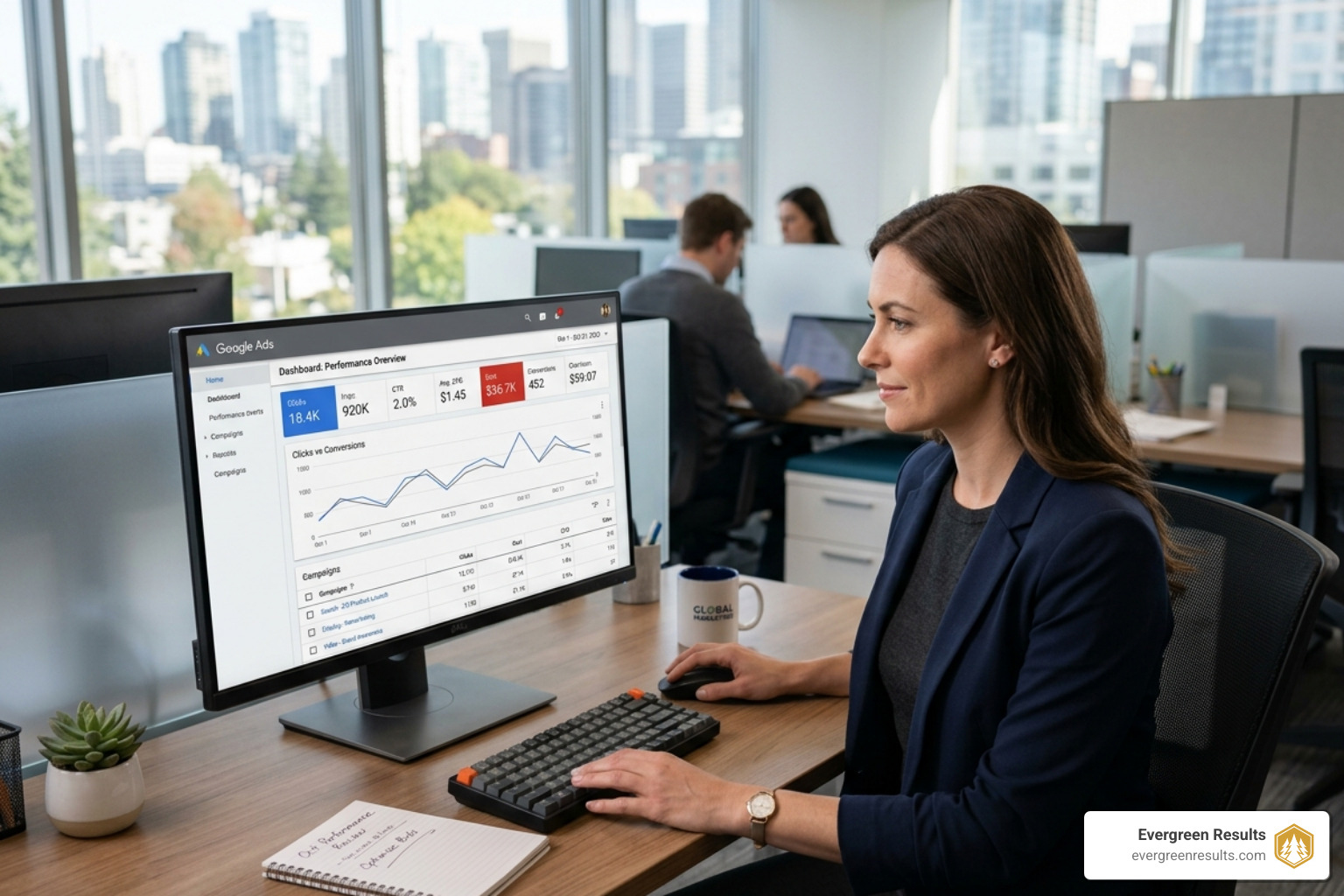
Most digital marketing online advertising operates on an auction system. When a user performs a search or loads a page, an instantaneous “bidding” process happens behind the scenes.
- Targeting: You define who should see the ad (e.g., “Men, 25-45, interested in trail running, living in Lakewood, CO”).
- Bidding: You tell the platform the maximum you’re willing to pay for a click (CPC) or 1,000 impressions (CPM).
- Ad Rank: The platform looks at your bid and your ad’s quality. A high-quality, relevant ad can actually win a top spot for a lower price than a low-quality ad with a higher bid.
For more on how to win these auctions, check out our 5 Tips for Effective PPC and Digital Ads.
Getting Started with Digital Marketing Online Advertising Platforms
There isn’t a one-size-fits-all platform. Your choice depends on where your audience hangs out.
- Google Ads: The gold standard for search. Using Google Ads – Get Customers and Sell More with Online Advertising allows you to reach customers across Search, YouTube, and Gmail.
- Performance Max: A newer Google feature that uses AI to automatically find the best ad formats across all Google properties.
- LinkedIn Ads: Essential for B2B brands looking to target by job title or industry.
- Meta Ads (Facebook/Instagram): Unbeatable for visual brands and detailed interest-based targeting.
If you are new to this, Google offers a helpful guide on Using Google Ads for online marketing – Google Ads Help to get your first campaign off the ground.
Advanced Targeting and AI Integration
The future of digital marketing online advertising is powered by machine learning. AI now helps us with “predictive analytics”—identifying which users are most likely to buy before they even click. We also utilize retargeting, which serves ads to people who have already visited your Websites. This keeps your brand “evergreen” in their minds. Our Digital Advertising Services specifically focus on these advanced tactics to maximize your ROAS.
Measuring Success: Key Metrics and Compliance Standards
You can’t grow what you can’t measure. In the digital world, we look at several Key Performance Indicators (KPIs):
- CTR (Click-Through Rate): The percentage of people who saw your ad and clicked it.
- CPC (Cost Per Click): Exactly what it sounds like—the price you pay for each visitor.
- ROAS (Return on Ad Spend): For every $1 spent on ads, how many dollars did you make in revenue?
- Conversion Rate: The percentage of visitors who took a desired action (like buying a product or signing up for an Email Marketing list).
For brands looking at high-visibility options like a Digital Billboard, the metrics shift more toward impressions and brand lift.
Legal and Compliance Considerations
As a business, you must play by the rules. The FTC (Federal Trade Commission) ensures that “truth-in-advertising” standards apply online just as they do offline.
- CAN-SPAM Act: Requires you to give email recipients a clear way to opt-out.
- INFORM Consumers Act: Requires online marketplaces to verify high-volume third-party sellers.
- COPPA: Protects the privacy of children online.
- Disclosures: If you are using influencers or native ads, they must be clearly labeled as “Sponsored” or “Ad.”
Best Practices for Effective Campaigns
To get the most out of your budget, we recommend:
- A/B Testing: Never settle for one ad. Test two different headlines or images to see which performs better.
- Landing Page Relevance: If your ad promises “Organic Coffee,” your landing page better show coffee immediately. Check out our guide on PPC Landing Page E-Commerce and Marketing for more tips.
- Authentic Creative: In an age of AI, human-centered, authentic content often performs best.
- Budget Control: Start with a daily budget you are comfortable with (Google suggests $5-$50 for beginners) and scale as you see a positive ROAS.
Frequently Asked Questions about Digital Marketing
What is the difference between SEO and digital advertising?
SEO (Search Engine Optimization) is about earning “organic” or unpaid traffic by making your site relevant to search engines. Digital advertising (like PPC) is “paid” traffic—you pay for your spot at the top. SEO is a long-term play, while advertising provides immediate results.
How much should a small business spend on digital ads?
There is no minimum, but we usually suggest starting with enough to get meaningful data. If your average cost-per-click is $1.00, a $10/day budget only gets you 10 visitors. Most businesses in areas like Castle Rock or Englewood find success starting between $500 and $2,000 per month as a testing phase.
Does digital advertising help organic search rankings?
Directly? No. Running Google Ads won’t make your organic ranking go up. However, it can help indirectly by increasing brand searches and overall traffic to your site, which are positive signals for search engines.
Conclusion
At Evergreen Results, we don’t believe in guesswork. Whether you are a food brand in Monument or an outdoor gear company in Castle Pines, your growth should be sustainable and data-driven. Digital marketing online advertising is the most powerful tool in your shed to build a community and drive sales.
From the mountains of Fort Collins to the tech hubs of Denver and the growing communities in Castle Rock and Colorado Springs, we help local brands navigate this complex digital world with a proactive, outdoors-loving spirit.
Ready to stop guessing? Explore our Digital Ads Colorado page or get More info about digital advertising services to see how we can help your brand grow. Let’s build something evergreen together.