
The Secret Sauce for Sustainable Growth
Why Sustainable Growth Strategies Are the Competitive Edge in 2026
Sustainable growth strategies aren’t just good ethics — they’re good business.
If you’re looking for the short answer, here’s what actually works:
- Scale with balance — align leadership capacity, operational scalability, cash-flow durability, and risk management
- Focus on earnings quality — reduce customer concentration, standardize processes, and improve EBITDA, not just revenue
- Future-proof your value chain — green procurement, circular supply models, and Scope 1–3 emissions reduction
- Build brand equity — invest in upper-funnel awareness so growth compounds instead of plateauing
- Measure what matters — connect financial KPIs to non-financial ESG goals using clear, trackable metrics
Growth is easy to chase. Sustainable growth is harder to build — but it’s the only kind that lasts.
In May 2026, the pressure is coming from every direction. Consumers are changing their habits — 73% say they’re willing to adjust how they shop to reduce environmental impact. Regulators are raising the bar on emissions reporting and supply chain accountability. And inside many businesses, teams are burning out chasing top-line numbers while margins quietly erode.
The businesses pulling ahead aren’t necessarily growing the fastest. They’re growing smarter — building systems that scale without breaking, brands that earn loyalty without constant paid acquisition, and operations that create value without piling on risk.
As the BSR/GlobeScan research puts it plainly: current sustainability practices aren’t working for most companies. 93% of sustainability experts say the agenda needs revision. The old model of treating sustainability as a separate CSR checkbox is finished. The new model embeds it into strategy, finance, and day-to-day decisions.
This guide breaks down exactly how to do that — across operations, marketing, finance, and leadership.
I’m Adam Bocik, founder of Evergreen Results, and I’ve spent my career helping purpose-driven brands build sustainable growth strategies that combine sharp digital execution with long-term business resilience. Let’s get into it.
Discover more about sustainable growth strategies:
Defining Sustainable Growth Strategies in 2026
To understand how to build a resilient business today, we have to contrast traditional growth with modern, sustainable methods. Traditional growth models prioritize volume over value, often leading to a “growth at all costs” mentality. In contrast, sustainable business growth is about scaling with balance. It focuses on the quality of earnings, operational scalability, cash-flow durability, and proactive risk management.
| Growth Metric | Traditional Growth | Sustainable Growth |
|---|---|---|
| Primary Focus | Top-line revenue volume | Quality of earnings and EBITDA |
| Resource Use | Linear consumption (take-make-waste) | Circular supply and resource efficiency |
| Risk Management | Reactive or short-term planning | Proactive scenario planning and resilience |
| Scaling Mechanism | Adding headcount and complexity | Systems standardization and automation |
| Succession & Value | Owner-dependent, high key-person risk | Succession-ready, transferable value |
When we look at this comparison, it becomes clear that revenue-only growth often hides fragility. If your margins wobble when volume increases, or if your systems depend entirely on a few key individuals, your growth is not sustainable. True sustainable growth ensures that your business is profitable, scalable, and succession-ready.
To dive deeper into setting up these foundations, you can Learn how to build a business that lasts.
The Core Pillars of Sustainable Growth Strategies
When we design sustainable growth strategies for our partners, we focus on several core operational pillars:
- Leadership Capacity and Continuity: Shifting decision rights from owner-centric to team-centric systems. This reduces key-person risk and builds bench strength (at least two-deep coverage for critical roles).
- EBITDA Quality: Rather than chasing low-margin volume, we focus on high-value, recurring revenue streams and customer/supplier diversification to secure cash-flow durability.
- Operational Scalability: Mapping bottlenecks and fixing first-order constraints before adding volume. We use the “one-change rule” — every new initiative must simplify or systematize an existing process.
- Successor Readiness: Preparing the next generation of leaders (even if you aren’t leaving yet) to make the business highly transferable and build long-term enterprise value.
Decoupling Emissions from Economic Expansion
A critical aspect of modern sustainable growth strategies is decoupling business expansion from environmental impact. Historically, as a company grew, its carbon footprint grew with it. In 2026, leading organizations are proving that absolute decoupling is possible.
According to the Carbon Law, global emissions must fall by approximately 12% per year — effectively halving every five years — to keep warming close to the 1.5°C target. To help businesses navigate this transition while maintaining a competitive edge, resources like The Exponential Business Playbook provide a practical framework to align commercial success with rapid decarbonization.
Future-Proofing the Value Chain and Operations

A company’s supply chain is often the most significant contributor to its environmental impact, accounting for 50% to 70% of total emissions. Therefore, future-proofing your business requires a complete transformation of procurement and value chain operations.
Scaling Climate and Nature Solutions
To scale climate and nature solutions while remaining highly profitable, businesses must look beyond simple carbon offsets and focus on structural operational shifts. This includes:
- Green Procurement: Evaluating and selecting suppliers based on their carbon intensity, circular materials use, and alignment with the UN Global Biodiversity Framework.
- Circular Supply Chain Models: Transitioning from linear systems to circular loops. It is estimated that circular supply models could unlock as much as $4.5 trillion in economic value by 2030 by reducing waste and raw material dependencies.
- Biodiversity Integration: Sourcing certified deforestation-free raw materials and utilizing biodiversity credits to protect local ecosystems.
For instance, global leaders are embedding these principles directly into their long-term corporate goals. The IKEA Sustainability Strategy outlines clear, measurable targets for halving value chain emissions by 2030 and transitioning to a fully circular business model, demonstrating that global scale and environmental responsibility can go hand in hand.
Integrating ROIC with Non-Financial ESG Goals
One of the biggest historical challenges in sustainability has been the language gap between finance teams and sustainability teams. In 2026, the most successful companies are bridging this gap by using Return on Invested Capital (ROIC) as a unified language.
When sustainability goals are tied to ROIC, every green initiative must demonstrate how it either optimizes capital efficiency or drives future value. For example, the Toray Sustainability Strategy Model shows how a company can restructure its portfolio by systematically reducing capital allocation to low-profit, high-emission businesses (under their “Darwin Project”) while scaling up high-value, next-generation green materials.
Driving Competitive Advantage Through Brand and Marketing
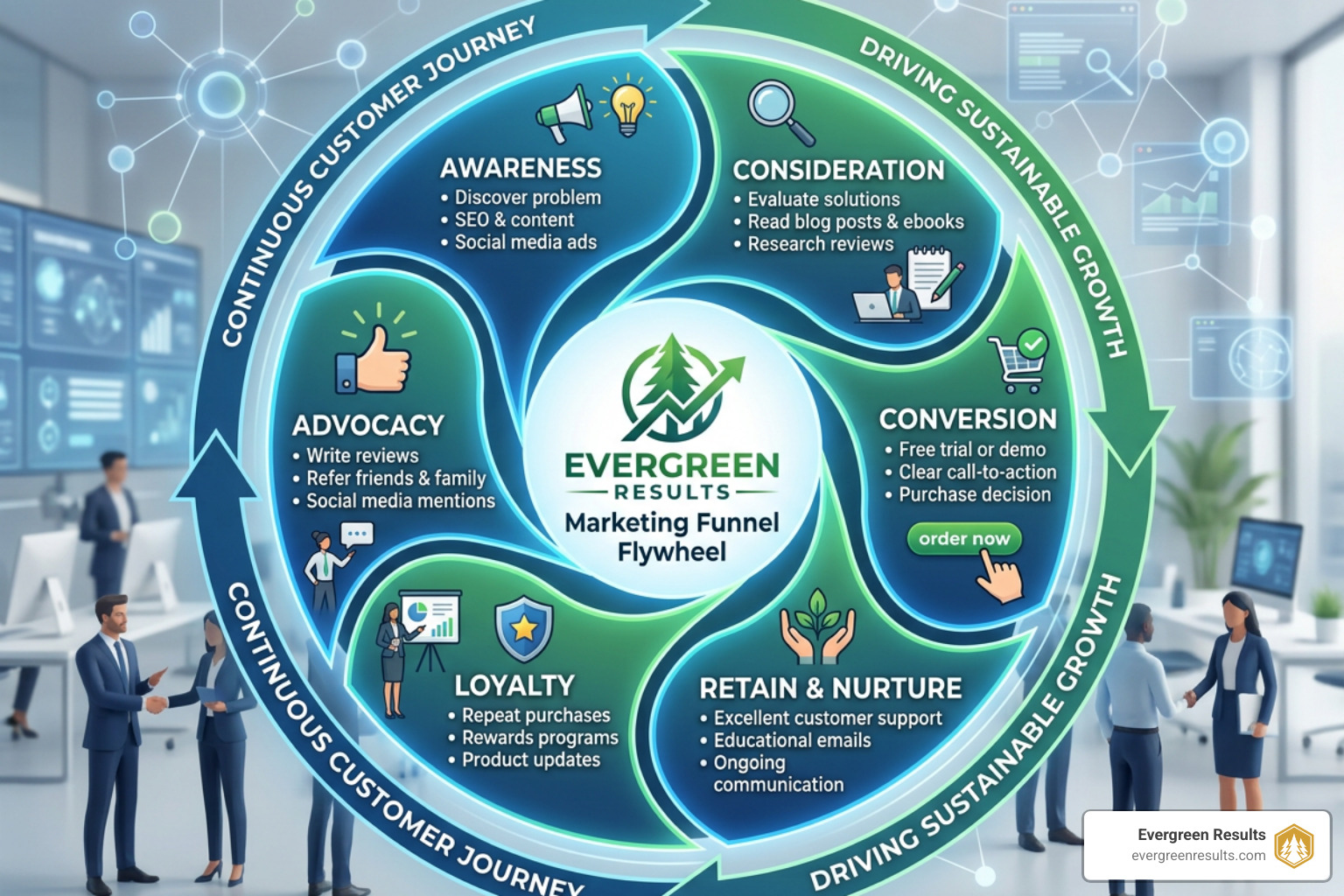
Many businesses hit a “performance plateau” where lower-funnel digital advertising channels become saturated, customer acquisition costs (CAC) climb, and return on ad spend (ROAS) diminishes. To break through this ceiling, we must shift from transactional, short-term performance marketing to a balanced, full-funnel brand building model.
Breaking the Performance Plateau with Sustainable Growth Strategies
The 95/5 rule in marketing states that at any given moment, only about 5% of your target audience is actively in-market to buy. If your marketing strategy focuses entirely on direct-response, lower-funnel channels, you are competing aggressively for that 5% while leaving 95% of your potential market untapped.
Investing in upper-funnel brand awareness builds long-term brand equity, making your downstream conversion channels significantly more efficient. By refining your audience-first messaging and building real emotional connections, you can systematically reduce your long-term CAC. To explore how to balance these efforts, read about the Importance of a well-rounded marketing strategy.
Furthermore, combining brand building with a robust search strategy ensures that when those upper-funnel audiences eventually enter the market, your business is the first one they find. You can Unlock SEO success with data-driven strategies to capture this high-intent organic demand.
Measuring Marketing Success and Incrementality
To justify upper-funnel marketing investments to stakeholders, we must move beyond last-click attribution models. Instead, we use advanced measurement frameworks to track true business impact:
- Brand Lift Studies: Measuring changes in brand awareness, consideration, and purchase intent directly resulting from your awareness campaigns.
- Marketing Mix Modeling (MMM): Using historical data to evaluate how different marketing channels interact and contribute to overall revenue.
- Always-On Incrementality Testing: Running lift tests to compare conversion rates between audiences exposed to your brand campaigns and those who were not, ensuring your marketing dollars are driving real, incremental growth.
To learn how to establish these measurement frameworks in your own business, check out our guide on how to Measure the success of your digital marketing.
Financing and Scaling Sustainable Ecosystems
Achieving sustainable growth at scale requires innovative financial mechanisms. Businesses are increasingly leveraging blended finance, which combines private capital, public funds, and philanthropic resources to de-risk green investments. These sovereign-aligned strategies allow companies to align their commercial goals with municipal or national development priorities.
Even at the local level, sustainable growth is driven by structured policy and economic development frameworks. For example, communities across Colorado are actively implementing localized sustainability and economic plans:
- The Cherry Hills Village master plan highlights how long-term land-use and community planning can preserve local ecosystems while fostering stable economic health.
- The Castle Pines Economic Development Strategic Plan focuses on building low-impact, high-value local business ecosystems.
- The Town of Superior’s Sustainability Action Plan provides a clear roadmap for reducing municipal emissions, conserving water, and supporting local businesses in their green transitions.
By aligning corporate operations with these local and regional frameworks, businesses can unlock unique partnerships, community goodwill, and sustainable financing opportunities.
Corporate Strategic Planning and Value Creation
To deliver sustainable value to shareholders and customers alike, forward-thinking enterprises are building highly disciplined, multi-year strategic plans. These plans balance aggressive pipeline-led growth with rigorous cost optimization.
A prime example of this structured approach is the Astellas CSP2026, a five-year corporate strategic plan designed to accelerate pipeline development, optimize operational costs, and establish the company as a highly resilient, sustainable growth entity in the global healthcare space.
Frequently Asked Questions about Sustainable Growth
What is the difference between traditional business growth and sustainable growth?
Traditional business growth focuses primarily on top-line revenue volume, often leading to increased operational complexity, higher key-person risk, and a larger environmental footprint. Sustainable growth, on the other hand, prioritizes the quality of earnings (EBITDA), operational scalability, cash-flow durability, and minimizing environmental impact. It is growth that can be maintained long-term without burning out your team or depleting natural resources.
How do supply chains impact a company’s sustainability targets?
Supply chains typically account for 50% to 70% of a company’s total emissions (categorized as Scope 3 emissions). To meet ambitious net-zero targets, businesses must implement green procurement practices, regularly evaluate suppliers on their environmental and ethical practices, and transition toward circular supply models that reduce waste and resource consumption.
Why is upper-funnel brand building considered a sustainable growth strategy?
Relying solely on lower-funnel, direct-response advertising leads to a performance plateau where customer acquisition costs (CAC) rise and ad channels become saturated. Upper-funnel brand building addresses the 95% of your target market that is not currently in-market to buy. By building brand equity and awareness early, you create a self-reinforcing flywheel that lowers long-term CAC and drives consistent, compounding organic demand.
Conclusion
Building a future-proof business in 2026 requires a fundamental shift in how we define success. By moving away from “growth at all costs” and embracing balanced, sustainable growth strategies, you can create a business that is highly profitable, operationally resilient, and deeply connected to its community.
At Evergreen Results, we are passionate about helping active lifestyle and food/beverage brands navigate this transition. Based in Colorado — with deep roots in outdoor-centric communities like Evergreen, Cherry Hills Village, Superior, Castle Pines, and beyond — we combine our love for the outdoors with data-driven marketing expertise to build strategies that drive real, lasting impact.
If you are ready to stop chasing short-term metrics and start building a brand that lasts, Stop guessing and start growing with digital marketing or Partner with us for sustainable growth today. Let’s build something enduring together.