
The Ultimate Guide to Google SEO Marketing
Why Google SEO Marketing Is the Foundation of Online Visibility
Google SEO marketing is the practice of optimizing your website so it ranks higher in Google’s organic (unpaid) search results — bringing in more relevant traffic without paying for ads.
Here’s a quick summary of what it involves:
- Crawling & Indexing — Getting Google’s bots to find and understand your pages
- Technical SEO — Site speed, mobile-friendliness, HTTPS, and clean structure
- Content Optimization — Creating helpful, relevant content that matches what people search for
- E-E-A-T — Demonstrating Experience, Expertise, Authoritativeness, and Trustworthiness
- Link Building — Earning quality backlinks that signal credibility to Google
- Measurement — Using tools like Google Search Console to track and improve performance
Why does it matter? Google holds over 93% of the search engine market share in markets like the UK, and the vast majority of online experiences still start with a search. If your website isn’t showing up, your competitors are getting that traffic instead.
SEO isn’t about gaming an algorithm. As Google’s own documentation puts it, the goal is simple: create helpful, reliable, people-first content — and make sure Google can find and understand it.
I’m Adam Bocik, founder of Evergreen Results, and I’ve spent years helping active lifestyle brands grow through smart, sustainable google seo marketing strategies that drive real business results. In this guide, I’ll walk you through everything you need to know — from the basics to the latest AI-era changes — so you can build organic visibility that actually lasts.
What is Google SEO Marketing?

To truly master search engine optimization, we have to look closely at the single most dominant player in the digital landscape: Google. While search engine optimization covers a broad spectrum of platforms, google seo marketing specifically focuses on aligning your website with the algorithms, systems, and guidelines laid out by Google.
Every second, thousands of search queries flood Google’s servers. Users are looking for everything from the best hiking boots for Colorado’s rugged trails to the crispest local craft beers. When we optimize for Google, we ensure that our brands are the ones answering those questions. This process requires a holistic blend of technical performance, content relevance, and brand authority. To dive deeper into how this differs from other digital marketing strategies, you can Learn more about SEO meaning and how it forms the bedrock of online growth.
Understanding the Basics of Google SEO Marketing
While search engines like Yandex dominate specific regions—accounting for at least 63.8% of the search engine market share in Russia as of December 2023—Google maintains an iron grip on the western world. As of March 2024, Google secured an 89.85% market share in Germany and an astounding 93.61% in the UK. In the United States, and particularly for businesses operating in our home base of Colorado, Google is the undisputed gateway to consumer discovery.
Because of this overwhelming dominance, “SEO” and “Google SEO” are often used interchangeably. However, focusing specifically on Google means tracking its massive, rapid evolution. For example, back in 2010, Google made over 500 algorithm changes—averaging nearly 1.5 updates per day. Today, in June 2026, those updates are even faster, more continuous, and deeply integrated with artificial intelligence. If you are just starting out on this journey, we recommend you Read our basic SEO guide to build a solid foundation before tackling advanced concepts.
How Google Search Works: Crawling, Indexing, and Serving
To optimize your site effectively, you must understand how Google actually processes information. The journey from a newly published blog post to a top-ranking search result happens in three distinct phases:
- Crawling: Google uses automated software programs called crawlers (or spiders, specifically Googlebot) to constantly scour the web. They find pages primarily by following links from pages they have already crawled.
- Indexing: Once a page is crawled, Google tries to understand what it is about. It analyzes the text, images, video files, and overall layout to catalog the page in the massive Google Index—a digital library of billions of web pages.
- Serving: When a user types a query, Google’s ranking systems search the index to find the most relevant, high-quality answers, serving them up in a fraction of a second.
Historically, PageRank was the primary algorithm Google used to measure a page’s importance based on the quantity and quality of links pointing to it. While PageRank remains a core component, modern Google search relies on hundreds of complex, AI-driven signals to rank content.
To help Google navigate your site efficiently, submitting XML sitemaps is vital. Sitemaps act as a roadmap for crawlers, telling them which pages are most important. For a definitive look at these fundamentals directly from the source, check out the official SEO Starter Guide: The Basics provided by Google Search Central.
Technical SEO and Core Web Vitals
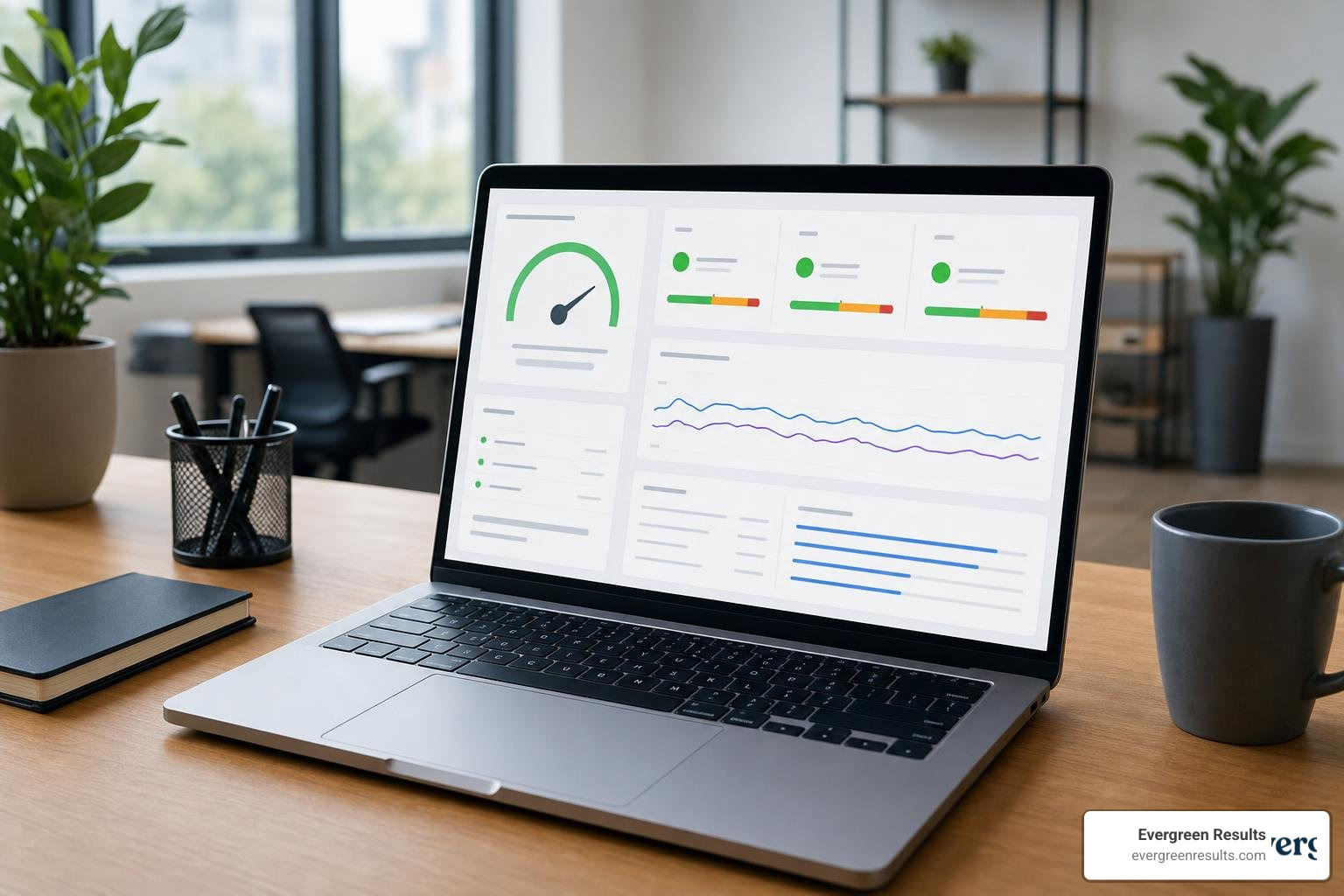
No matter how incredible your content is, Google will not rank your site if it provides a frustrating user experience. This is where technical SEO and page experience come into play. Google wants to reward sites that load quickly, respond immediately to user inputs, and remain visually stable. For an in-depth dive into these technical mechanics, explore the official documentation on Technical SEO Techniques and Strategies.
Essential Technical SEO Requirements
Technical SEO is all about clearing the path between your web pages and Google’s index. If Googlebot runs into crawl errors or gets stuck in endless redirect chains, your rankings will slip. Here are the non-negotiable technical requirements for modern search success:
- Mobile-First Indexing: Mobile web usage officially overtook desktop for the first time in November 2016, with 51.3% of pages loaded by a mobile device. Today, Google crawls and indexes the web using a mobile-first approach. If your mobile site is broken or slow, your desktop rankings will suffer too.
- HTTPS Security: Security is a lightweight ranking signal. Moving your site from HTTP to HTTPS protects your users’ data and earns Google’s trust.
- Robots.txt Management: Use your robots.txt file to guide crawlers away from state-changing URLs (like shopping carts or admin login pages), but never use it to prevent indexing of public pages.
- Eliminating Crawl Blockers: Routinely audit your site for broken 404 links, redirect loops, and server errors that drain your crawl budget.
To get a clear picture of how to implement these optimizations step-by-step, you can Unlock Google’s Secrets and transform your site’s backend performance.
Creating Search-Friendly URLs and Site Structure
Your site’s architecture should be intuitive for both humans and search engine crawlers. A clean, logical folder structure helps Google understand topically similar pages and assign authority across your site.
Always use descriptive, human-readable URLs. For example, a URL like evergreenresults.com/hiking-gear/backpacks is infinitely better than evergreenresults.com/product?id=98734. Grouping your pages into clear directories not only helps users navigate but also allows Google to learn your crawl frequencies more efficiently.
Additionally, keep a close eye on duplicate content. If you have multiple URLs displaying the same product or article, Google may struggle to decide which page to rank. Use canonical URLs (rel=”canonical”) to tell Google exactly which version of a page is the master copy. To master the art of site structure and technical planning, read our Search Engine Optimization Complete Guide.
Content Optimization, E-E-A-T, and AI Search
As the search landscape shifts, content remains king—but the definition of “good” content has changed. Today, Google prioritizes depth, first-hand experience, and clear alignment with user intent.
| Feature | Traditional SEO | AI Search Era Optimization (GEO/AEO) |
|---|---|---|
| Primary Focus | Keyword matching and backlink quantity | Entity clarity, user intent, and trust signals |
| Content Type | Standard informational articles | Non-commodity content with unique expert viewpoints |
| Formatting | Standard paragraphs and lists | Highly structured, schema-ready, direct answers |
| Discovery Surface | Standard Google SERP (Blue links) | AI Overviews, Gemini, ChatGPT, Conversational Search |
To win in this modern environment, your content must align with Google’s E-E-A-T guidelines: Experience, Expertise, Authoritativeness, and Trustworthiness. This is especially critical for topics that impact a reader’s health, finances, or happiness (often referred to as Your Money or Your Life, or YMYL). To learn how to build an authoritative presence that meets these strict standards, you can Unlock SEO Success with Data-Driven Strategies.
Keyword Research and On-Page SEO Elements
On-page SEO is the process of optimizing individual web pages to rank higher and earn more relevant traffic. It begins with keyword research—identifying the exact terms and phrases your audience uses when looking for your products or services. Rather than chasing raw search volume, focus on mapping keywords to user intent (informational, commercial, navigational, or transactional).
Once you have your target keywords, optimize these core on-page elements:
- Title Tags: Keep your title tags between 40 and 60 characters. Research shows that titles within this range receive an average of 8.9% more clicks. Ensure your primary keyword is near the front.
- Meta Descriptions: Write compelling, click-worthy summaries that encourage searchers to choose your link over others.
- Header Tags (H1, H2, H3): Use a clear hierarchical structure to break up your content logically.
- Structured Data: Implement schema markup to help Google understand your content’s entities, making your site eligible for rich snippets (like review stars or recipe details).
For practical tips on crafting perfect, click-magnet headings, check out our guide on Crafting Clickable Titles and discover the finer technical points of Meta Tag Optimization.
Optimizing Content for Google SEO Marketing in the AI Era
With the rapid rollout of AI Overviews (formerly known as Search Generative Experience, or SGE), search engines are now capable of synthesizing complex answers directly on the search results page. This has led to the rise of Generative Engine Optimization (GEO) and Answer Engine Optimization (AEO).
To stand out in AI-driven search results, you must avoid creating “commodity content”—generic, regurgitated summaries of existing web pages. Instead, focus on publishing high-quality, non-commodity content that features:
- First-hand, real-world case studies and experiments
- Direct quotes and opinions from internal industry experts
- Rich media, including original infographics, images, and videos
- Clear, structured data that makes your content easily digestible for large language models
According to Google’s official guidelines, you do not need special files like llms.txt or complex chunking strategies to rank in AI features. Simply focus on human-first value. For official insights on this new paradigm, refer to Google’s Guide to Optimizing for Generative AI Features and learn how to position your brand for the future with The 2026 Guide to Marketing in the AI Era.
Frequently Asked Questions about Google SEO
Navigating google seo marketing can feel overwhelming, especially with the search landscape evolving so rapidly. To help you find your footing, we have answered some of the most common questions we hear from business owners across our Colorado locations, from Greenwood Village to Castle Rock. For a deeper look at moving your brand from invisible to indispensable, check out Get Found Online.
How long does it typically take to see results from Google SEO?
SEO is a long-term investment, not an overnight fix. According to Google’s official documentation, it typically takes anywhere from four months to a year to see the full impact of your SEO efforts.
The exact timeframe depends heavily on your site’s starting authority, the competitiveness of your industry, and how quickly you can resolve technical issues. While quick fixes on high-potential pages can yield faster wins, sustainable growth requires consistent optimization and patience through regular algorithm updates. For a realistic breakdown of what to expect, read our guide on Demystifying SEO.
What is the relationship between Google Ads and organic SEO rankings?
There is no direct relationship between running Google Ads (paid search) and your organic search rankings. Google’s search algorithms operate completely independently of its advertising systems. You cannot pay Google to improve your organic placement.
However, paid search and organic SEO can support each other beautifully. Running Google Ads allows you to test keyword conversion rates in real-time, helping you identify high-value terms to target with your organic strategy. Additionally, appearing in both the paid and organic sections of a search results page builds massive brand trust and maximizes your overall search real estate. To explore how to balance these two channels, check out how to Increase Website SEO.
What are the most common Google SEO mistakes to avoid?
When building out your search strategy, avoiding critical errors is just as important as implementing best practices. Here are the most common mistakes to watch out for:
- Keyword Stuffing: Artificially cramming keywords into your content makes it unreadable for humans and signals spam to Google.
- Ignoring Core Web Vitals: A slow website directly hurts your rankings. Sites with good LCP scores receive an average of 23% more organic traffic than poorly performing sites.
- Toxic Backlinks: Buying cheap, automated links or participating in link schemes can trigger manual actions and drop your rankings entirely.
- Neglecting Old Content: When HubSpot began optimizing old content, the brand grew organic views on those posts by an average of 106%. Keep your existing pages fresh and up-to-date.
To ensure you are investing in a legitimate, high-quality campaign, read our guide on What to Expect from a Basic SEO Package to avoid getting burned by low-quality providers.
Conclusion
Mastering google seo marketing is a continuous journey of technical refinement, creative content production, and strategic brand building. As search engines become more conversational and AI-driven, the businesses that succeed will be those that prioritize real human experience, authority, and trust.
At Evergreen Results, we are a digital marketing agency specializing in active lifestyle and food/beverage brands. From our locations in Evergreen, Cherry Hills Village, Bow Mar, Columbine Valley, Greenwood Village, Castle Pines, Superior, Lone Tree, Erie, Louisville, Timnath, Snowmass Village, Breckenridge, Telluride, Steamboat Springs, and Castle Rock, we offer personalized marketing strategies, technical SEO solutions, and engaging campaigns designed to drive sustainable growth and build thriving communities.
Are you ready to build an organic search presence that stands the test of time? Partner with our Denver SEO Company today, and let’s turn your website into your most powerful growth engine.