
Why UGC in Social Media is Your New Best Friend
The New Word-of-Mouth: Why UGC in Social Media Changes Everything
UGC in social media is any content — photos, videos, reviews, or comments — created by real customers or fans about a brand, and shared on social platforms like Instagram, TikTok, YouTube, or Facebook.
Here’s a quick snapshot of what that means in practice:
- What it includes: Customer unboxing videos, product reviews, tagged photos, testimonials, and even forum discussions
- Who creates it: Everyday people — your actual customers
- Why it matters: It’s the digital version of a friend’s recommendation, and people trust it far more than polished brand ads
- Where it lives: Anywhere on social media — Reels, Stories, TikTok feeds, YouTube comments, and beyond
The numbers back this up. The average American spends 39% of their weekly media time consuming user-generated content. For teens, that jumps to 56%. And nearly half of all shoppers say customer reviews are the most influential content when they’re deciding what to buy.
Think about the last time a friend’s Instagram post made you curious about a product. That’s UGC doing exactly what it’s designed to do — building trust without a sales pitch.
When consumers are tuning out traditional advertising, authentic peer content cuts right through the noise.
I’m Adam Bocik, founder of Evergreen Results, and I’ve spent years helping active lifestyle brands grow through smarter, more authentic digital marketing — including building effective strategies around ugc in social media. Let’s break down exactly how it works and how your brand can use it to build real trust and drive real results.
Similar topics to ugc in social media:
What is UGC in Social Media?
At its core, ugc in social media represents the democratization of content. Gone are the days when only big-budget production houses could dictate a brand’s narrative. Today, anyone with a smartphone and an opinion is a content creator.

To be technically considered user-generated content, the OECD (Organisation for Economic Co-operation and Development) suggests three main criteria:
- Accessibility: The content must be published on a publicly accessible website or a social networking site.
- Creative Effort: There must be a certain amount of creative effort put into the work. It’s not just a link or a copy-paste; it’s a photo, a video, or a written review with a personal touch.
- Non-Professional Creation: It is created outside of professional routines and practices. It’s a fan talking about a product because they love it, not because they’re on the company payroll.
For brands, this translates into Engaging Social Media Content that feels real. Whether it’s a “fan-created” meme or a digital advocacy post from a long-time customer, this content serves as powerful social proof. It tells the world, “People like me use and enjoy this product.” In the food and beverage industry, for example, Serving Up Content Social Media often means resharing a customer’s photo of their perfectly plated meal or their refreshing drink at a local Denver brewery.
Why UGC in Social Media Outperforms Traditional Ads
We’ve all experienced “marketing fog”—that state of mind where we subconsciously tune out banner ads, TV commercials, and overly polished corporate videos. UGC in social media acts as a lighthouse in that fog. Because it comes from a peer rather than a corporation, it feels safe and trustworthy.
Take a look at how user-created content stacks up against the traditional stuff:
| Feature | Brand-Generated Content | User-Generated Content (UGC) |
|---|---|---|
| Trust Level | Low (only 11% influenced) | High (47% influenced by reviews) |
| Production Cost | High (studios, editors, actors) | Low to Free (customer-created) |
| Authenticity | Polished/Scripted | Raw/Relatable |
| Conversion Rate | Standard | 85% higher than studio content |
| Purchase Likelihood | Baseline | 270% higher (with 5+ reviews) |
The statistics are staggering. About 78% of millennials and 70% of Gen-Z rely specifically on UGC to make their purchasing decisions. These younger demographics can spot a “salesy” ad from a mile away and prefer the unvarnished truth of a 15-second TikTok video.
When you understand What is Social Media ROI and Why Does it Matter?, you realize that UGC is a goldmine for efficiency. It provides a massive volume of content that you don’t have to produce yourself, all while driving higher Social Media Brand Engagement. It’s the ultimate win-win: your customers feel seen and valued, and your brand gains a library of high-converting assets.
Main Types and Examples of UGC Across Platforms
UGC in social media isn’t a one-size-fits-all strategy. Different platforms cater to different formats, and understanding these nuances is key to UGC Services that actually move the needle.
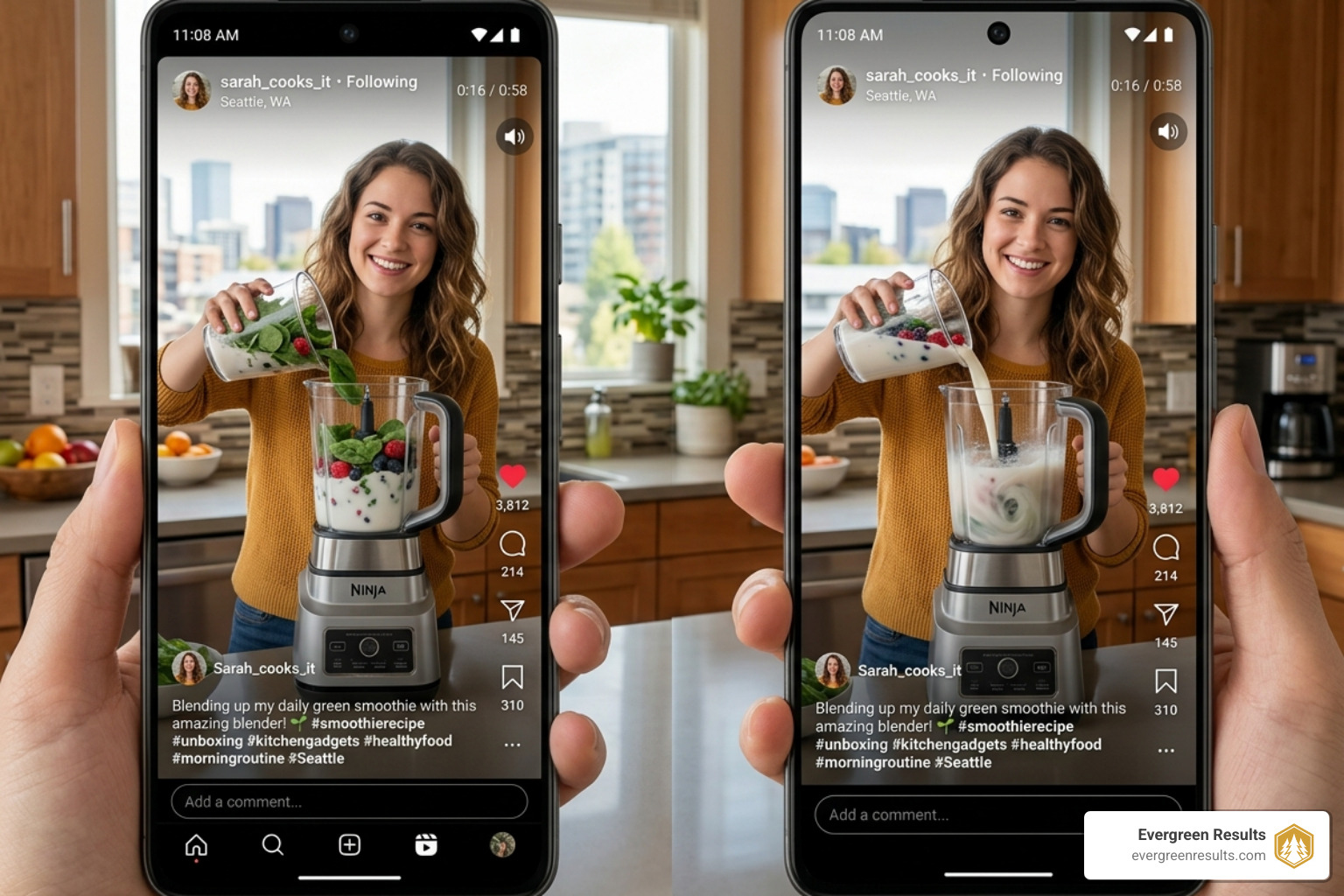
- Video Testimonials and Reviews: Short-form videos (15-30 seconds) on TikTok or Instagram Reels are currently the “king” of engagement. These “problem solved” moments or “how-to” clips feel like a FaceTime call from a friend.
- Product Unboxings: There is a visceral excitement in watching someone open a new package. It showcases the packaging, the product quality, and the initial reaction all at once.
- TikTok Hauls: Common in the fashion and active lifestyle space, hauls show how products look in real-world settings rather than on a mannequin.
- YouTube Long-form Reviews: For more technical products, like outdoor gear or high-end kitchen appliances, YouTube provides the space for deep dives that build massive authority.
- Instagram Stories and Lifestyle Photography: A simple tag in a Story might seem small, but it’s a vote of confidence that reaches a creator’s inner circle.
- Employee-Generated Content (EGC): Don’t overlook your own team! In places like Boulder or Fort Collins, your employees are often your biggest brand advocates. An employee sharing a “day in the life” or a behind-the-scenes look at a product can outperform official brand accounts 10-to-1.
- Q&A Forums: Platforms like Reddit or Quora are hubs for UGC where users troubleshoot and recommend products in a highly detailed, text-based format.
To truly Optimize Content for Social Media, you should look for content that captures your brand’s “vibe” in an unscripted way. A blurry photo of a hiker using your water bottle on a trail in Colorado Springs often carries more weight than a 4K studio shot of the same bottle.
Best Practices for Collecting and Sharing Content Ethically
Just because someone tagged you in a photo doesn’t mean you have the legal right to use it in your paid advertising. Navigating the legal and ethical side of ugc in social media is crucial for maintaining your brand’s reputation.
- Always Get Explicit Consent: While some argue that a hashtag implies consent, it is much safer and more professional to ask. A simple DM like, “We love this photo! Can we share it on our social channels and website? Reply with #YesBrand to give us the thumbs up!” goes a long way.
- Give Clear Credit: Always tag the original creator and mention their handle in the caption. This isn’t just polite; it builds community and encourages others to share their own content.
- Manage Rights Properly: If you plan to use a customer’s video in a paid ad or on a billboard, you may need a more formal rights-clearance agreement.
- Use Branded Hashtags: Create a specific hashtag for your community (e.g., #EvergreenOutdoors) to make it easier to find and curate content.
- Moderate for Quality and Alignment: Not all UGC is good UGC. Ensure the content aligns with your brand values and community guidelines before resharing.
- Respect Privacy: If a photo features identifiable faces of people who didn’t post the content, be extra cautious.
Understanding How to Feature User-Generated Content (UGC) on Social Media involves a mix of transparency and gratitude. When you treat your creators with respect, they become long-term advocates. Implementing these Social Media ROI Strategies ensures that your UGC program is sustainable and legally sound.
Frequently Asked Questions about UGC
What is the difference between organic and paid ugc in social media?
Organic UGC is completely unsolicited. It’s a customer who bought your product, loved it, and decided to post about it without any incentive. Paid UGC, on the other hand, involves hiring “UGC creators.” These are freelancers who specialize in making content that looks like organic UGC.
While paid UGC gives you more control over the “brief” and ensures high-quality lighting and sound, it must be disclosed as an ad on most platforms. Organic UGC is the “holy grail” of authenticity, but paid UGC is a great way to kickstart a campaign if you don’t have much organic buzz yet.
How do I encourage more ugc in social media from my audience?
The best way to get UGC is simply to ask! Here are a few proven methods:
- Contests and Giveaways: Run a photo contest where the best entry wins a prize.
- Interactive Stories: Use “Add Yours” stickers on Instagram to prompt users to share their own photos.
- Product Sampling: Send your latest product to your most loyal customers and ask for their honest feedback.
- Direct Requests: If you see a great post, reach out and thank them—often, that recognition is enough to inspire more posts.
- Community Building: When people feel like they belong to a tribe, they are much more likely to share their experiences.
Is ugc in social media more effective than influencer marketing?
It depends on your goal. Influencer marketing is fantastic for reach—it puts your brand in front of a large, pre-built audience. However, ugc in social media often wins on trust and relatability.
Consumers sometimes view influencers as “celebrities” who are just doing a job. In contrast, a “normal” person sharing a review feels like a peer. UGC is also significantly more scalable and cost-effective; you can’t hire 1,000 influencers, but you can certainly have 1,000 customers sharing their stories.
Conclusion
In the digital landscapes of Denver, Boulder, and beyond, staying relevant means staying authentic. UGC in social media is no longer just a “nice-to-have” tactic; it is the foundation of modern community building. It bridges the gap between a faceless corporation and a living, breathing brand that people actually care about.
At Evergreen Results, we specialize in helping active lifestyle and food/beverage brands navigate this shift. We don’t just want to help you post more content; we want to help you build a sustainable engine of growth fueled by the real voices of your customers. From Colorado Springs to Fort Collins, we are passionate about the outdoors and the proactive strategies that help local brands thrive.
Ready to stop shouting into the void and start a real conversation? Build your brand with authentic UGC and let’s turn your customers into your best marketing team.