
Add SEO to Website: Unlock 2026 Secrets Now!
Why Adding SEO to Your Website Changes Everything
Add seo to website strategies right, and you’ll tap into the largest source of organic traffic available—search engines. Here’s what you need to do:
- Set up the basics – Install Google Search Console and Analytics to track performance
- Research keywords – Find what your customers are actually searching for
- Optimize on-page elements – Update titles, descriptions, URLs, and content with relevant keywords
- Fix technical issues – Ensure your site is fast, mobile-friendly, and secure with HTTPS
- Create quality content – Write helpful, complete answers to user questions
- Build authority – Earn backlinks from reputable sites and promote your content
- Monitor and adapt – Track results and continuously improve your approach
The reality is stark: around 64% of organic traffic comes from search, while social media drives only about 10%. If you’re not showing up in search results, you’re missing the vast majority of potential customers who are actively looking for what you offer.
SEO isn’t some mysterious black box. It’s about making your website easy for search engines to understand and ensuring your content genuinely helps people. When you do both well, rankings follow.
The challenge for most active lifestyle brands isn’t understanding that SEO matters—it’s knowing how to implement it without getting lost in technical jargon or outdated tactics. Search engines like Google use automated programs called crawlers to explore the web, index your pages, and rank them based on relevance and quality. Your job is to make their job easier while creating content that satisfies what people are actually searching for.
I’m Adam Bocik, founder of Evergreen Results, where I’ve helped dozens of outdoor and active lifestyle brands add seo to website strategies that drive sustainable growth. Over the past decade, I’ve learned that the most successful SEO approaches combine technical excellence with genuine value for your audience—and that’s exactly what this guide will show you how to do.
Add seo to website vocab explained:
What is SEO and Why Does Your Website Need It?
At its core, Search Engine Optimization (SEO) is the process of making your site better for search engines. It’s about optimizing your website so that search engines understand its relevance and value, and then rank it accordingly in search results. Think of it as making your website fluent in “search engine speak” so it can effectively communicate its purpose and value.
Why is this so important? Because SEO helps your pages rank higher in search results, which directly leads to increased traffic to your site. Consider this: most users only click on results from the first page of search results. If your website isn’t there, it’s virtually invisible to a massive audience actively seeking what you offer. For businesses in Denver, Colorado, this means connecting with local customers who are searching for specific products or services right in their neighborhood.
Effective SEO isn’t just about getting clicks; it’s about getting qualified clicks. It ensures that the people finding your site are genuinely interested in your products, services, or content. This leads to a better user experience, higher engagement, and ultimately, more conversions for your business.
Understanding How Search Engines Work
To truly add seo to website strategies, we first need a peek behind the curtain of how search engines operate. It’s a fascinating and complex dance of technology designed to deliver the most relevant information to users.
Here’s the simplified version:
- Crawling: Google, for instance, is a fully automated search engine that uses programs called “crawlers” (or spiders, or bots) to constantly explore the web. These crawlers follow links from page to page, finding new content. Google primarily finds pages through links from other pages it already crawled. This is why having a well-connected website is so important.
- Indexing: As crawlers find pages, they process the information and add it to Google’s massive index – essentially, a giant digital library of all the content on the internet. Most sites are found and added automatically as Google crawls the web. For Google to properly understand your page, it should ideally see the page the same way an average user does. This means ensuring Google can access the same resources like CSS and JavaScript that make up your website’s visual and interactive elements.
- Ranking Algorithms: When someone types a query into Google, the search engine doesn’t just pull up every page it has on the topic. Instead, it uses sophisticated ranking algorithms to sort through billions of indexed pages and present the most relevant, high-quality results. There are no “secrets” to automatically ranking first; it’s about consistently meeting Google’s Search Essentials and providing value to users.
While historical concepts like PageRank (based on links) still play a role, it’s just one of many ranking signals. Modern SEO also emphasizes E-E-A-T (Experience, Expertise, Authoritativeness, and Trustworthiness). Though not a direct ranking factor, creating helpful, reliable content that demonstrates these qualities is vital for long-term success.
The Foundation: Keyword Research and User Intent
Before optimizing, we must understand what our audience is searching for. Keyword research is the bedrock of any successful SEO strategy, helping us find relevant terms our potential customers in Denver, Colorado, and beyond are using. This guides our content creation.
We typically categorize keywords into two main types:
- Primary Keywords: These are the broad, high-volume terms that define the core topic of your page or website. For example, “active lifestyle gear” or “food delivery Denver.”
- Long-tail Keywords: These are more specific, often longer phrases that users type when they have a very particular need. Examples might include “waterproof hiking boots for Colorado trails” or “gluten-free bakeries downtown Denver.” While long-tail keywords generally have lower search volume, they often indicate higher user intent, meaning people searching for them are closer to making a purchase or conversion. We can find these by looking at “Google Suggest” (the autocomplete feature) and by tapping into online communities like Reddit and Quora where people ask specific questions.
Aligning content with user search intent is crucial. Google’s job is to satisfy user questions, and if our content fails, it won’t rank well. We must anticipate search terms and tailor our content to meet those needs. For instance, a search for “best hiking trails near Denver” expects a list, map, or reviews. Fortunately, Google’s language matching systems can relate our page to many queries, even without exact keyword matches.
A great way to refine our keyword strategy is through competitive analysis. Understanding what keywords our competitors are ranking for can uncover new opportunities and help us refine our own approach. Learn more about this in our guide on How can Colorado Businesses Utilize Competitor Keyword Analysis?
How to Add SEO to Your Website with On-Page Optimization
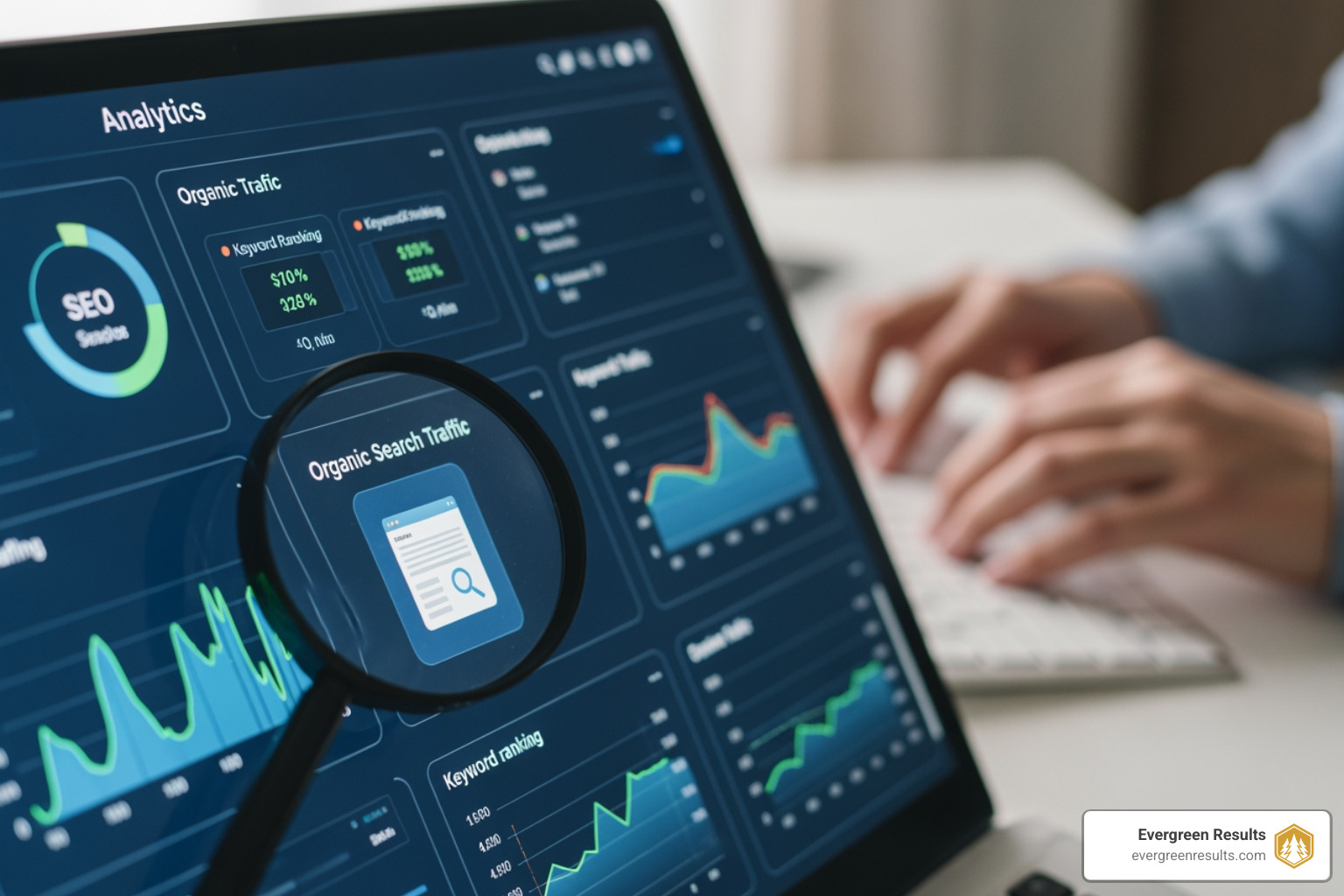
Now that we understand our audience, it’s time for on-page SEO—optimizing elements on your pages to improve rankings. This involves sending clear signals to search engines about your page’s topic and value. Effective on-page SEO starts with content quality. Our goal is to create in-depth content that answers audience needs, which leads to better user engagement—a positive signal for search engines.
Crucially, every page should guide the user. This is where Calls to Action (CTAs) come into play. Well-placed CTAs help keep our site relevant, make it easier to create a good conversion strategy, and can positively impact both bounce rate and conversion rate.
Essential On-Page Steps to Add SEO to Your Website
To effectively add seo to website pages, we focus on a series of on-page elements:
- Meta Titles: The clickable headline in search results. Include your focused keyword, keep it under 60 characters, and ensure it’s unique, clear, and accurately describes the page.
- Meta Descriptions: The short paragraph under the title in search results. While not a direct ranking factor, a compelling description boosts Click-Through Rate (CTR). Include your keyword and keep it unique, informative, and enticing.
- Heading Tags (H1, H2, etc.): These structure content for users and crawlers. Use one H1 per page with your target keyword. Use H2s and H3s for subtopics and secondary keywords.
- URL Optimization: Keep URLs clean, short, and descriptive. Include the primary keyword, use dashes between words, and remove unnecessary characters. A good URL helps Google understand the page and can improve CTR.
- Logical Site Structure: A clear, intuitive structure helps users and search engines. Group similar pages in directories to create a logical flow, which helps Google understand page relationships and crawl frequencies. For more on this, check out our Guide to Crafting User-Friendly Website.
Creating High-Quality, SEO-Friendly Content
The content on our website is arguably the most critical component for SEO. To truly add seo to website success, our content needs to be exceptional.
What makes content “high-quality” and “SEO-friendly”?
- Interesting and Useful: Your content must be easy-to-read, well-organized, unique, up-to-date, helpful, and reliable. Focus on topics that resonate with your audience in Denver and beyond.
- Satisfying User Intent: As mentioned, your content should satisfy user questions. Aim to be the “last click” by providing a comprehensive answer so the user doesn’t need to search again.
- Avoiding Keyword Stuffing: Excessively repeating keywords is against Google’s spam policies and harms user experience. Use natural language, incorporating keywords and synonyms organically to avoid penalties.
- Content Length vs. Completeness: There’s no magic word count for ranking. What matters is completeness. While more words don’t equal higher quality, in-depth coverage that fully answers a user’s query is what helps you rank.
- Regular Content Updates: Outdated content can harm rankings. Regularly auditing and updating your pages keeps them relevant and authoritative, which is crucial for sustained SEO performance.
For active lifestyle and food/beverage brands, creating compelling narratives and helpful guides can be a game-changer. Learn more about tailoring content for specific niches in our Food and Beverage SEO guide.
Optimizing Visuals: Images and Videos
In a visually-driven world, optimizing our images and videos is non-negotiable if we want to effectively add seo to website pages. Search engines are getting smarter, but they still need our help to understand visual content.
- Image Alt Text: This is a text description of an image that serves two crucial purposes: accessibility (for users with screen readers) and SEO. Image ALT-Text will make sure that Google will index it for that specific keyword. We ensure every image includes descriptive alt text that incorporates relevant keywords where natural.
- Descriptive File Names: Before uploading, we give our images readable and descriptive file names (e.g.,
denver-hiking-trail.jpginstead ofIMG_1234.jpg). This provides another signal to search engines about the image’s content. - Image Compression: Website speed is critical for SEO, and large image files can significantly slow down our pages. Compressing our images is an important factor. We aim to keep images under 500 KB to ensure our site loads quickly. Many free image compression tools can help with this.
- Video Optimization: Video content is a powerful engagement tool. We create high-quality video content and embed it on standalone pages near relevant text. We also optimize our videos by using descriptive titles and descriptions that include keywords, making them findable in both Google and YouTube search.
To dive deeper into making your visuals work harder for your SEO, you can learn more about image optimization.
Mastering the Technical Side of SEO
Content and keywords are vital, but a technically sound website is the foundation. Technical SEO ensures search engines can access, crawl, index, and rank your content efficiently. Without this foundation, other SEO efforts may fail, as it directly impacts user experience signals that Google uses as ranking factors.
Ensuring Your Site is Fast, Secure, and Mobile-Friendly
These three pillars are non-negotiable for modern SEO and user experience:
- Website Speed: Users expect a site to load in 2-3 seconds; any longer and they’re likely to leave. Page speed has been a ranking factor by Google since 2018 and directly impacts bounce and conversion rates. Continuously monitor and optimize your site’s loading times to meet this crucial threshold.
- Mobile Responsiveness: With the majority of internet users accessing content via mobile devices, a mobile-friendly website is no longer optional—it’s essential. Google announced it will soon be starting with mobile-first indexing of websites, meaning their algorithms primarily use the mobile version of our site for indexing and ranking. Ensuring our website is mobile-friendly leads to longer sessions and better search engine rankings, supporting both SEO and user experience.
- Website Security (SSL/HTTPS): Security builds trust, and trust is a huge factor for both users and search engines. SSL (Secure Sockets Layer) provides protection and security by encrypting data shared between a website and a browser. Websites with HTTPS (the secure version of HTTP, enabled by SSL) are preferred by Google and receive a small Google ranking signal. Implementing HTTPS is crucial for safeguarding user data and establishing authority.
For businesses in Colorado, ensuring a fast, secure, and mobile-friendly online presence is paramount to reaching local customers and standing out in a competitive digital landscape. Our services include Web Design and Development Colorado to ensure these foundations are solid.
Guiding Search Engines: Sitemaps, Robots.txt, and Links
Beyond speed and security, we need to actively guide search engines through our site:
- XML Sitemaps: An XML sitemap is a file that lists all the important pages on our website, helping search engines understand our site’s structure and ensuring they can find and crawl all our content. Submitting a sitemap to Google via Search Console is a fundamental step.
- Robots.txt File: This file tells search engine crawlers which pages or sections of our site they should not crawl. It’s useful for preventing search engines from wasting crawl budget on unimportant pages (like admin areas or duplicate content) or from indexing private content.
- Internal Links: These are links from one page on your website to another. They are a powerful SEO tool, connecting pages, helping crawlers find all your content, and passing “link equity” (ranking power) throughout your site. They also improve user experience by helping visitors steer.
- Anchor Text Best Practices: The visible, clickable text of a link is called anchor text. It sends signals to search engines regarding the content of the destination page. We use keyword-rich anchor text that accurately describes the linked page’s content. However, we avoid generic phrases like “click here” and vary our anchor text to appear natural, not manipulative.
- Duplicate Content & Canonicalization: This occurs when the same content appears on different URLs. While not a spam violation, it can create a poor user experience and waste crawl budget. Search engines will choose one version to show, but you can specify the preferred (canonical) URL with a canonical tag to guide them.
A well-planned internal linking strategy is crucial for guiding both users and search engines. To learn more about structuring your site for optimal navigation and SEO, explore our insights on Website Navigation Food and Beverage.
Expanding Your Reach: Off-Page SEO and Promotion

While on-page and technical SEO focus on what happens on our website, off-page SEO encompasses all the activities that happen outside our website to influence its search engine rankings. Think of it as building our website’s reputation across the internet. The primary goals here are to build our domain authority and foster trust with both users and search engines.
Building Authority with Backlinks and Promotion
The internet is a vast network, and connections matter.
- Backlinks: These are links from other websites pointing back to ours. Backlinks are often considered “votes of confidence” and are a critical signal of a website’s authority and relevance. Earning backlinks by building relationships with reputable websites and sharing expertise can significantly beef up our off-page SEO. Backlinks give authority to our website, which is important for SEO. Google primarily finds pages through links from other pages it already crawled, so quality backlinks are essential for findability as well.
- Content Promotion: Creating amazing content is only half the battle; we also need to get it in front of the right eyes. One of the most effective and lasting ways to do this is word of mouth: people familiar with our site tell their friends about it, who in turn visit our site. This can take time, and usually, we need to invest some effort in other practices first, such as community engagement and social media promotion. Promoting our content on social media platforms, through email newsletters, and even through traditional advertising can amplify its reach and attract natural backlinks.
At Evergreen Results, we believe in Sustainable Digital Marketing that focuses on building genuine connections and authority, rather than chasing quick, unsustainable gains.
Advanced Techniques to Add SEO to Your Website
Once the fundamentals are in place, we can explore more advanced techniques to improve our search presence:
- Structured Data (Schema Markup): This is code that helps search engines understand and categorize the content of web pages. While not a direct ranking factor, schema markup can help us to rank by making our pages eligible for rich snippets—improved search results that display additional information like star ratings, product prices, or event dates directly in the SERP. This can significantly improve our Click-Through Rate (CTR). We can use various schemas like
Article,Local Business(crucial for Denver-based businesses),FAQ, orVideo. - Local SEO: For businesses with a physical location in Denver, Colorado, Local SEO is paramount. It’s about optimizing our online presence to attract more local customers from search engines. A key component of this is creating and optimizing a Google Business Profile. This allows us to manage online listings for our business’ physical location, serviced areas, and hours of operation, helping us show up in “near me” searches and on Google Maps.
These advanced strategies, particularly relevant for specialized niches like those in our portfolio, can dramatically improve visibility. Dive deeper into how we optimize for specific industries with our Health and Wellness SEO insights.
Frequently Asked Questions about Adding SEO
We often encounter similar questions from clients looking to add seo to website strategies. Here are some of the most common ones:
How long does it take for SEO changes to show results?
This is perhaps the most common question, and the answer, unfortunately, isn’t a quick fix. SEO is a marathon, not a sprint. Some changes might take effect in a few hours, others could take several months. In general, we likely want to wait a few weeks to assess whether our work had beneficial effects in Google Search results. Significant improvements, especially for new websites or highly competitive keywords, can take anywhere from 4 to 12 months, or even longer. Patience, consistent effort, and continuous monitoring are key.
What are common SEO mistakes to avoid?
Even with the best intentions, it’s easy to fall into common SEO traps:
- Keyword Stuffing: As mentioned earlier, excessively repeating the same words is tiring for users and is against Google’s spam policies.
- Buying Links: While backlinks are crucial, attempting to manipulate rankings by buying links can lead to severe penalties from search engines. Focus on earning them naturally.
- Ignoring Mobile Users: With mobile-first indexing, neglecting mobile responsiveness is a critical mistake that can tank our rankings.
- Duplicate Content Issues: While not a direct “penalty,” having too much duplicate content wastes crawl budget and can dilute our ranking signals.
- Forgetting Alt Text: Missing alt text for images is a missed opportunity for both accessibility and SEO.
- Misconceptions about Meta Keywords: Google Search doesn’t use the keywords meta tag. Spending time on this is a waste of effort.
How can I track my website’s SEO performance?
Measuring our efforts is crucial to understand what’s working and what needs adjustment. We rely on powerful tools:
- Google Search Console: This free tool from Google is indispensable. It allows us to monitor and optimize how our website performs on Google Search. We can use it to identify crawling and indexing errors, submit sitemaps, and check our site’s performance for specific keywords.
- Google Analytics: Integrated with our website, Google Analytics helps us track our site traffic, understand user behavior, and measure conversions. It shows us where our visitors come from, what pages they visit, and how long they stay.
- URL Inspection Tool: Within Google Search Console, this tool lets us check how Google sees a specific page on our site. It helps us troubleshoot indexing issues and ensure Google can render our page correctly.
- Checking Indexing Status: A quick way to see if Google has indexed our content is to use the
site:search operator (e.g.,site:yourwebsite.com). If results point to our site, it’s in the index. - Monitoring Rankings: While not the be-all and end-all, tracking our keyword rankings for targeted terms helps us understand our visibility. Various SEO tools can assist with this.
Effective measurement is the cornerstone of any successful digital marketing strategy. Learn more about how we Measure the Success of Your Digital Marketing efforts.
Start Driving Sustainable Growth Today
Adding SEO to your website isn’t a one-time task; it’s a continuous journey of optimization, adaptation, and improvement. The digital landscape is constantly evolving, with new updates like Google’s AI Summaries changing how users interact with search results. Our proactive approach ensures we stay ahead, focusing on creating exceptional value for users while making our site technically impeccable for search engines.
The key takeaways are clear:
- Prioritize User Intent: Create content that thoroughly answers your audience’s questions.
- Master the Fundamentals: Optimize titles, descriptions, headings, and URLs with keywords.
- Ensure Technical Excellence: Make your site fast, secure, and mobile-friendly.
- Build Authority: Earn quality backlinks and promote your content widely.
- Monitor and Adapt: Use analytics tools to track performance and refine your strategy.
At Evergreen Results, we specialize in helping active lifestyle and food/beverage brands in Denver, Colorado, implement robust SEO strategies that drive sustainable growth and build strong online communities. We combine our passion for the outdoors with deep technical expertise to craft personalized marketing strategies and engaging campaigns.
Ready to open up your website’s full potential and connect with your ideal audience? Let us help you add seo to website strategies that truly make a difference. Get a personalized SEO strategy today and let’s start building your evergreen online presence.